Empty Corners Singapore – empty corners of a crowded island

My boyfriend and I went to Singapore for a week and didn’t take a single photo of the Merlion. Instead, we took photos of people taking photos of the Merlion: hundreds of people formed a wall of phones and tablets held up at the same angle, with a few selfie sticks reaching higher than the rest. The statue itself was somewhere in there, but it was mostly blocked by everyone trying to prove they had seen it. More than any other photos from the trip, these photos explain why we went to Singapore: to play it meta. Unintentionally.
But from the beginning: we left Sài Gòn on the morning of April 17th and came back the following Friday. Seven days, one hotel in Geylang, no rental car, no tourist bus, no checklist. Our plan, if you can call it that, was to walk a lot, ride the MRT, eat where the locals ate, and spend most of our time in places where we’d be alone or nearly so. I find beauty in nature, architecture, and contrasts, as well as in my boyfriend – and this city of 5.9 million people, paved and policed and meticulously curated, turned out to have all four in surprising abundance – as long as you were willing to walk past the things everyone else was photographing.
A morning at Sungei Buloh
One of the first things we encountered at the Sungei Buloh Wetland Reserve was a snake. It was two to three meters of olive-brown muscle sliding out of the leaf litter and onto the boardwalk, maybe five meters ahead of us. Instead of disappearing immediately, as snakes are supposed to do in tourist anecdotes, it turned and traveled in our direction along the trail for several minutes. We kept our distance. It kept its distance, too. We walked at her pace and she slid at ours. For a while, there was just this quiet, shared corridor of attention until she finally slipped sideways into the undergrowth and disappeared.
I’m no snake specialist (no punchline), but at first, I thought it was some sort of cobra. Its size, the shape of its head, and the way it carried itself were all similar. However, after speaking with good ol’ Claude at the hotel that evening, I’m fairly certain it was a rat snake – most likely an Oriental Rat Snake (Ptyas mucosa) – which is often mistaken for a king cobra because of its size. It is non-venomous and not interested in humans. The internet calls them harmless. I’m not sure “harmless” is the right word for something that long that accompanies you with so much patience. But they’re not going to bite you, which is what most people mean by “harmless”. Lucky us – a cobra would have reacted less calmly, tho.
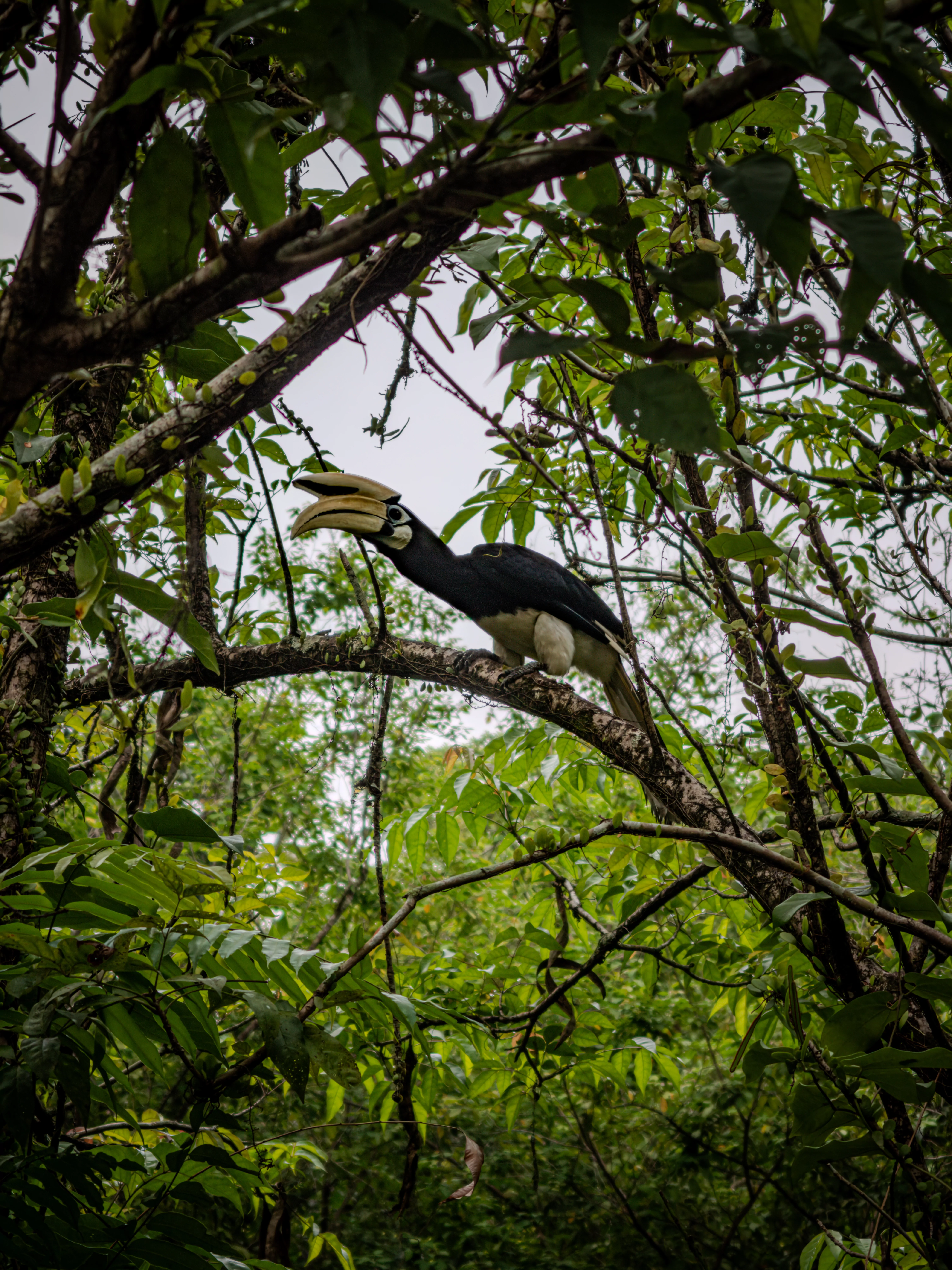
The hornbill arrived about an hour later. Or rather, we arrived under the hornbill. We were resting on a wooden platform when we heard a hollow, resonant, almost cartoonish honking coming from directly above us. There she was, perched maybe three meters up: an Oriental Pied Hornbill (Anthracoceros albirostris) with a yellow casque on her bill catching the gray light. She sang for almost fifteen minutes (get a glimpse here). It turns out that the casque is mostly hollow inside and works as a resonance chamber, which explains why hornbills sound the way they do – like they’re broadcasting from inside a, well, slightly damaged trumpet.
The Oriental Pied Hornbill’s lore is better than the bird itself: it went locally extinct in Singapore sometime in the mid-1800s. Logging and hunting were to blame, as usual. In March 1994, they returned on their own when a single pair was sighted on Pulau Ubin – presumably island-hopping from Malaysia – and then Singapore launched the Singapore Hornbill Project in 2006 to provide them with a nesting site. As of 2026, there are around 100 hornbills on the mainland and 50 on Ubin. They are still listed as critically endangered in the local Red Data Book. The female seals herself in a tree cavity for about three months while she breeds, leaving only a small opening through which the male can feed her. If the male dies, the family dies with him. It’s a lot to think about while standing under one of these birds as she sings about her morning. Or her husband.
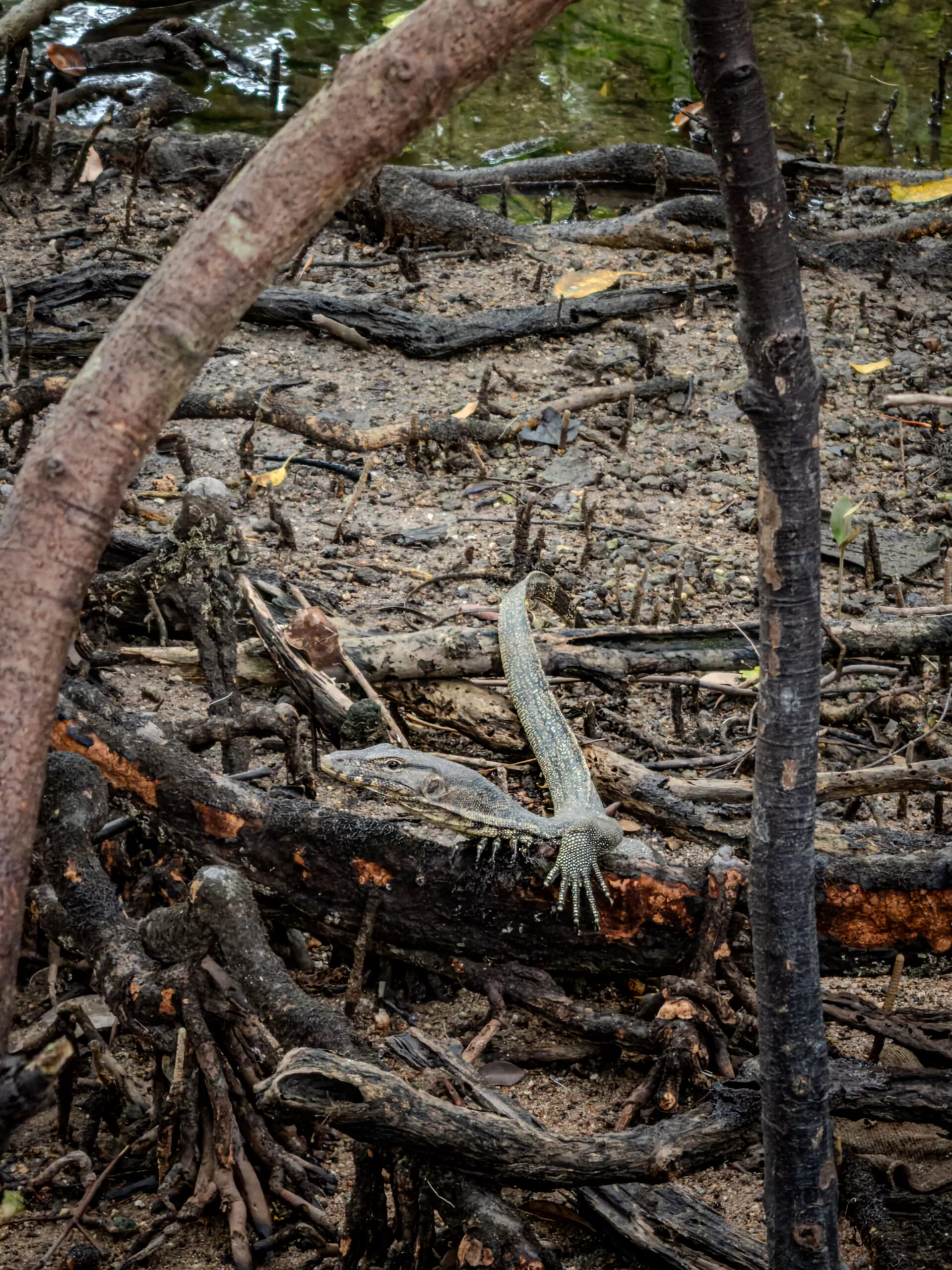
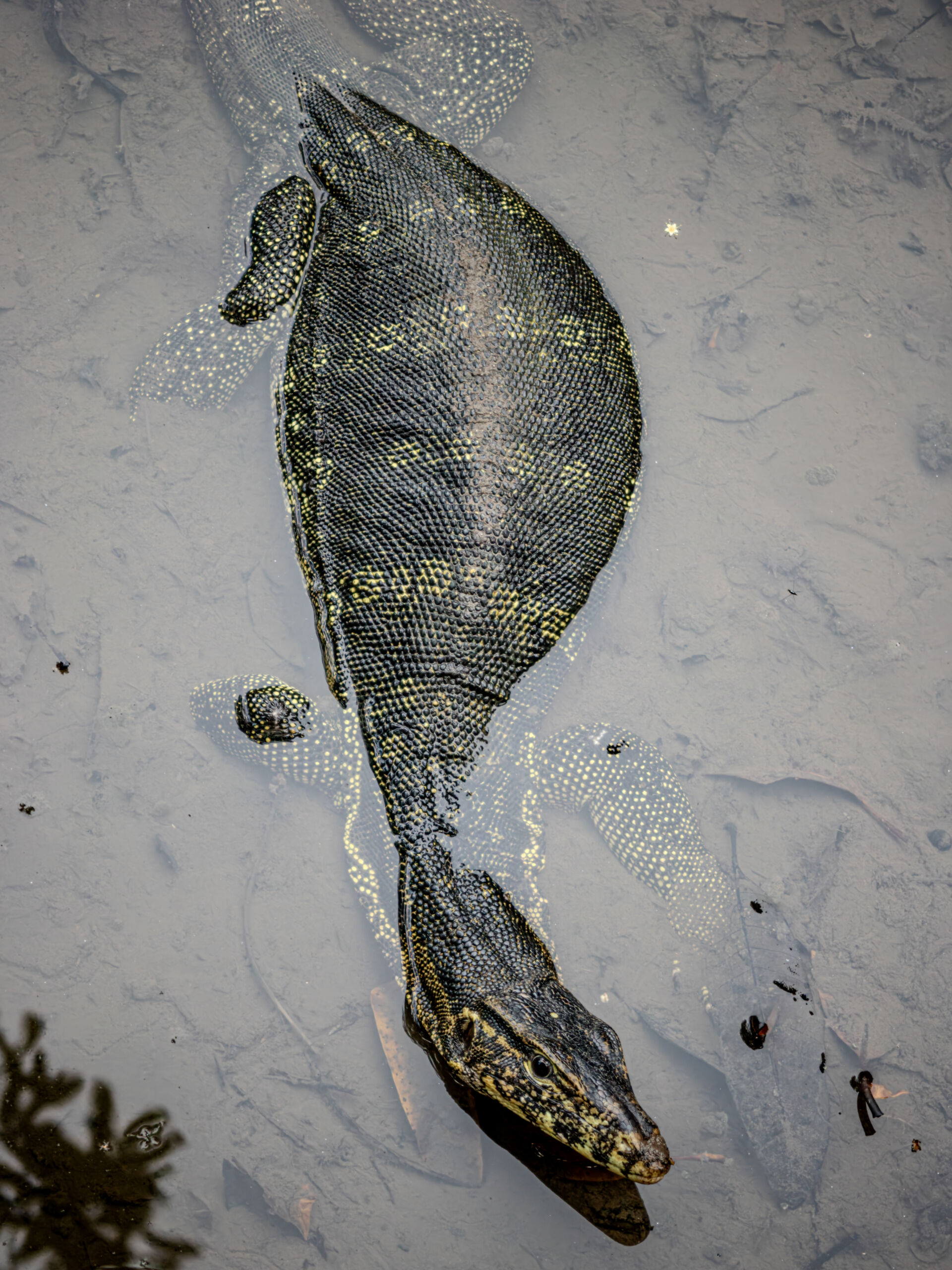
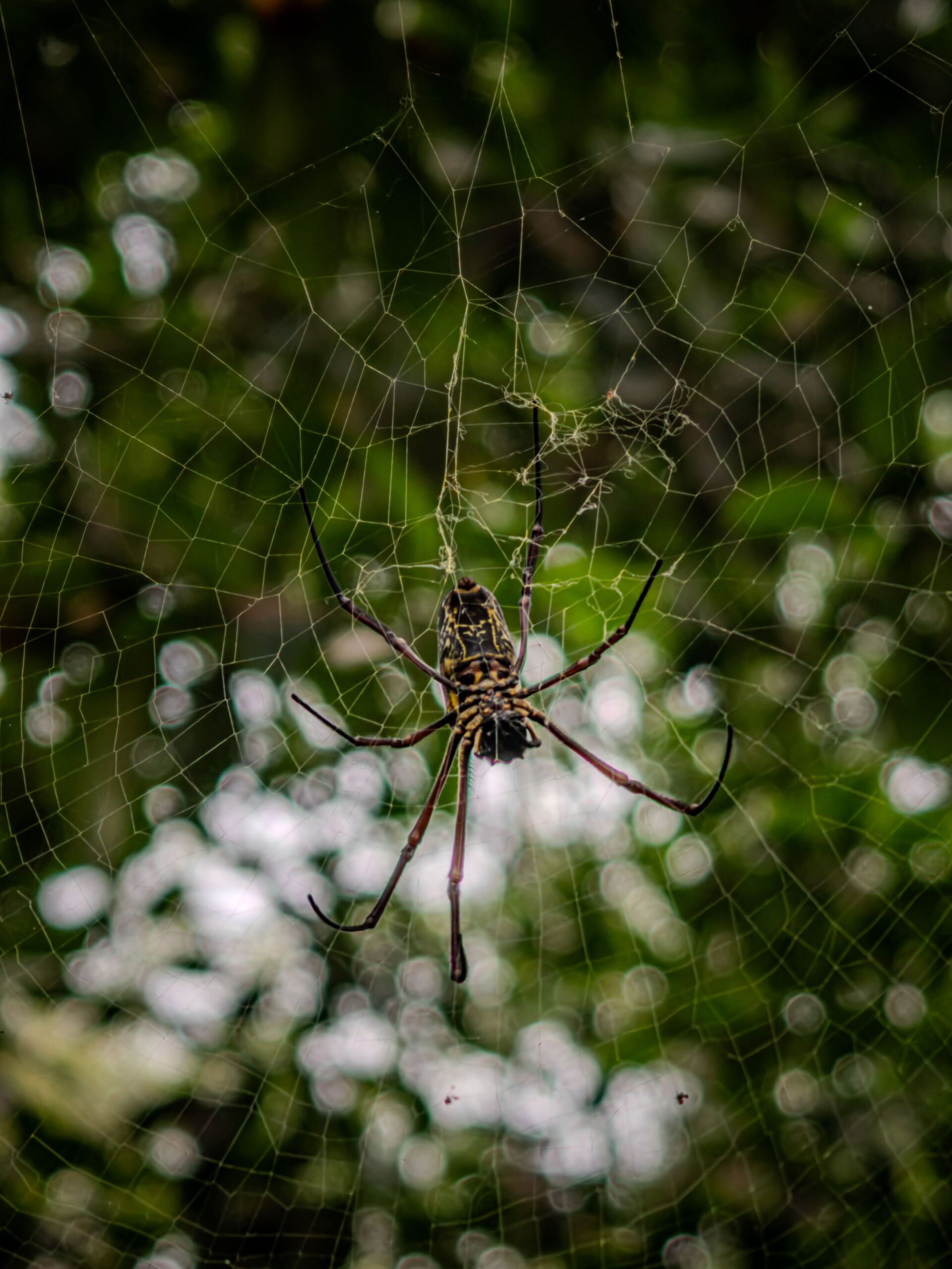
Sungei Buloh kept giving. Dozens of Malayan water monitors (Varanus salvator) pushed through the muddy water with their flattened tails, or simply relaxed in the shadows. These amphibians are the second-largest lizard species in the world after Komodo dragons and have been around longer than primates. Additionally, there were golden silk orb-weavers everywhere – dozens of them – with females up to 20 cm long suspended in webs that shimmered gold in the sun. They were in the trees and sometimes right in front of my face – keeping my eyes open was key to avoiding an unpleasant encounter *shudder*. Their silk has a tensile strength comparable to Kevlar; it has been studied for biomedical applications, and Pacific Islander cultures used to use the webs as fishing lures.
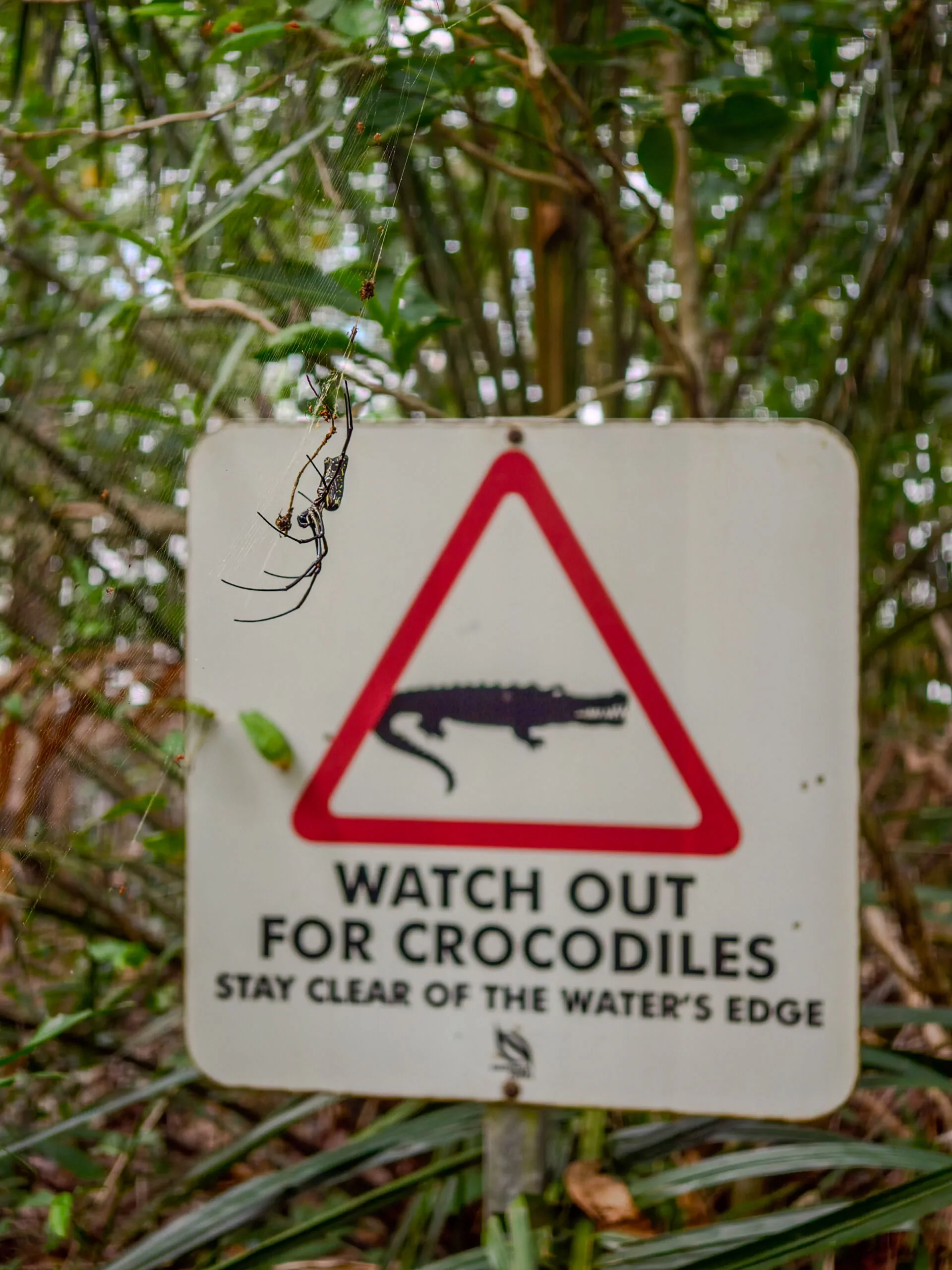
The picture that ended up being my favorite from the Sungei Buloh trip was actually a sign. There’s a red warning sign at Sungei Buloh that says WATCH OUT FOR CROCODILES – STAY CLEAR OF THE WATER’S EDGE, because around 20 saltwater crocodiles live in the mangroves. Saltwater crocodiles are the largest species of crocodile on Earth, thus nothing you’d like to stumble across. Perched on the frame of the sign was a golden silk orb-weaver, doing nothing in particular, but carefully protecting the wildlife warning sign with an equally wild aura. No caption could improve this image. The sign is doing its job. The spider is doing its job. The crocodiles are presumably doing their job somewhere out of frame. Everyone respects the boundaries, except me, the guy with a phone (btw, Singapore has lost over 90% of its original mangrove ecosystem. At 1.17 km², Sungei Buloh is the largest remaining patch, representing only about 1.5% of what used to be there. It’s worth knowing while you’re walking through it).
The empty places
For a few dollars, you can take a bumboat from Changi Point to Pulau Ubin. The boat runs when there are enough passengers, so sometimes you have to wait – the wait is part of the slowing-down experience. Pulau Ubin is the offshore island that most people in Singapore have heard of, but that most tourists never visit. It is largely undeveloped and partially overgrown, and it’s a kind of accidental time capsule of pre-industrial kampung Singapore. Granite was quarried here until the 1970s, and the abandoned quarries have since been reclaimed by secondary forest. I love the phrase “secondary forest” because it encompasses so much – nature doesn’t wait for permission, it simply spreads and grows.
The southeastern tip of Ubin is Chek Jawa, a 100-hectare wetland where six ecosystems converge: sandy beach, rocky beach, seagrass lagoon, a coral rubble area, mangroves, and a coastal forest. Chek Jawa is one of the last places in Singapore with a natural rocky shore. It almost didn’t survive: reclamation was approved in 2001 and scheduled for early 2002. In December 2000 however, a botanist named Joseph Lai “discovered” the area’s biodiversity, meaning he was the first person to document what was obvious to anyone who looked. He and a handful of volunteers spent the next year conducting rapid surveys and organizing public tours. In October 2001, more than a thousand people showed up to one of these tours. Days before reclamation was due to begin, the Ministry of National Development announced that Chek Jawa would be left alone “for as long as Pulau Ubin is not required for development”. As Singaporean naturalist Rajathurai Subaraj put it, Chek Jawa became the first nature area in Singapore saved by the public. The protection is political rather than legal – the URA’s 2030 master plan still marks the site as a reserve for reclamation – but it has now lasted nearly a quarter century, which is permanent by Singaporean standards.
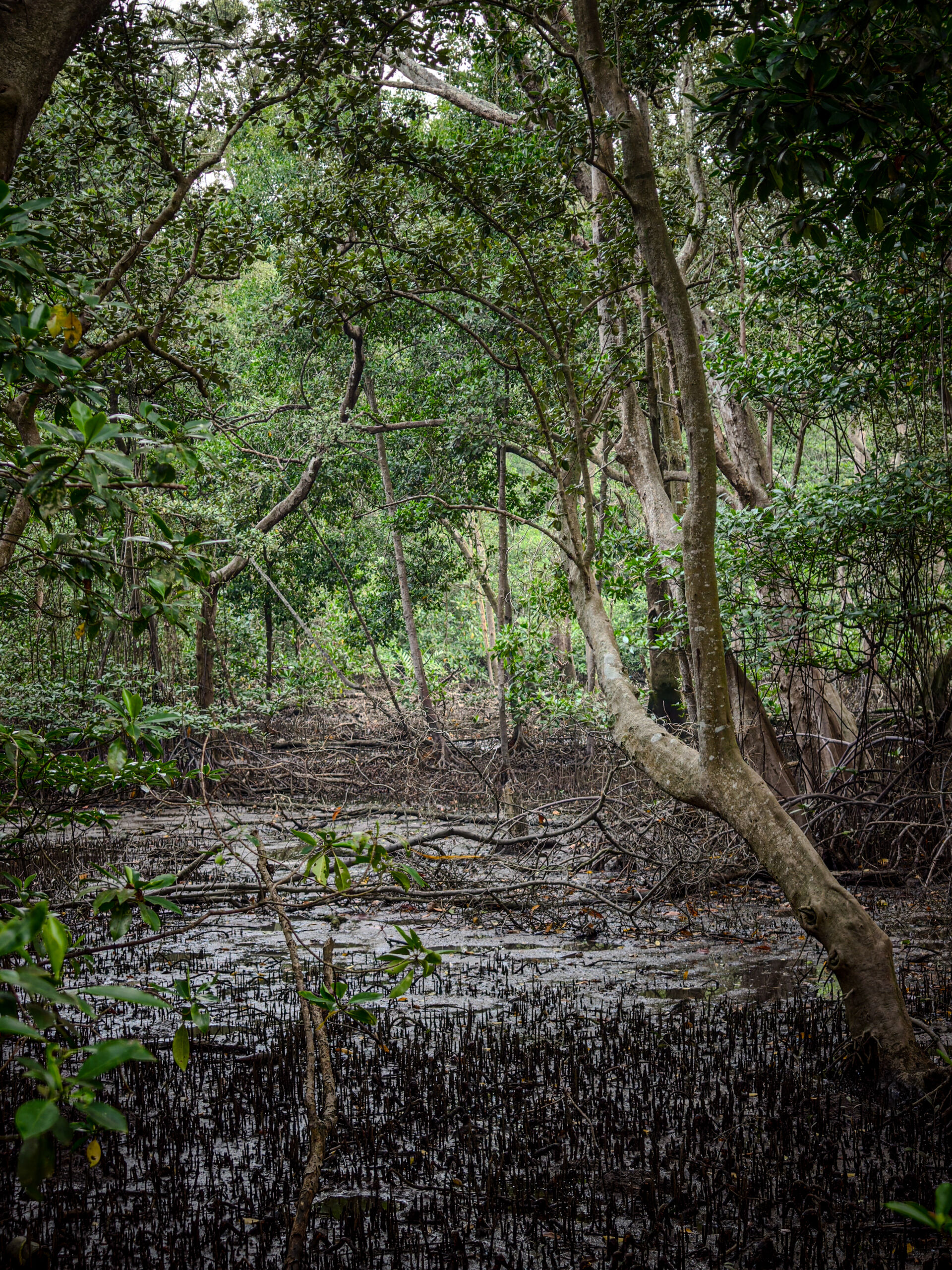
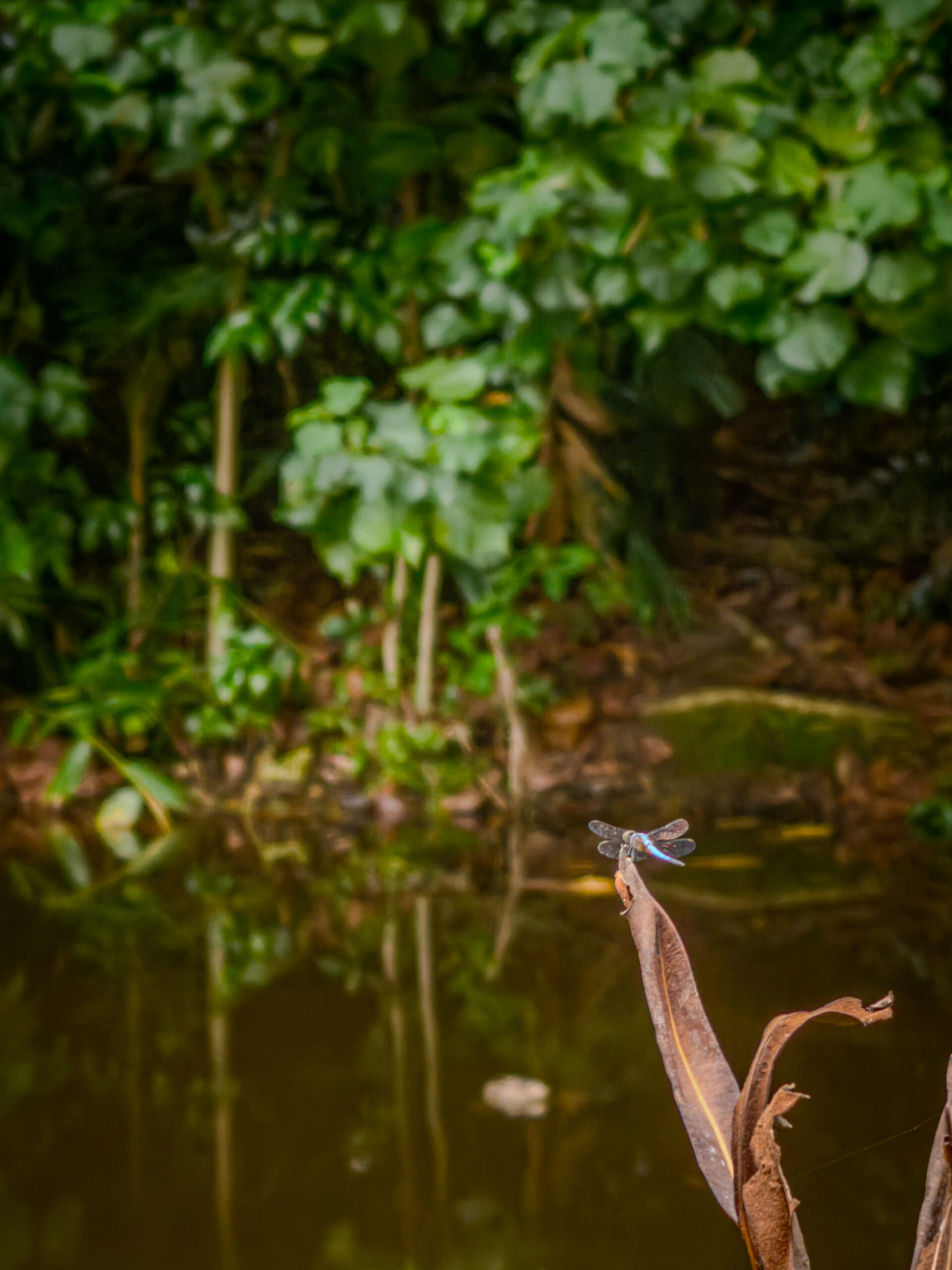
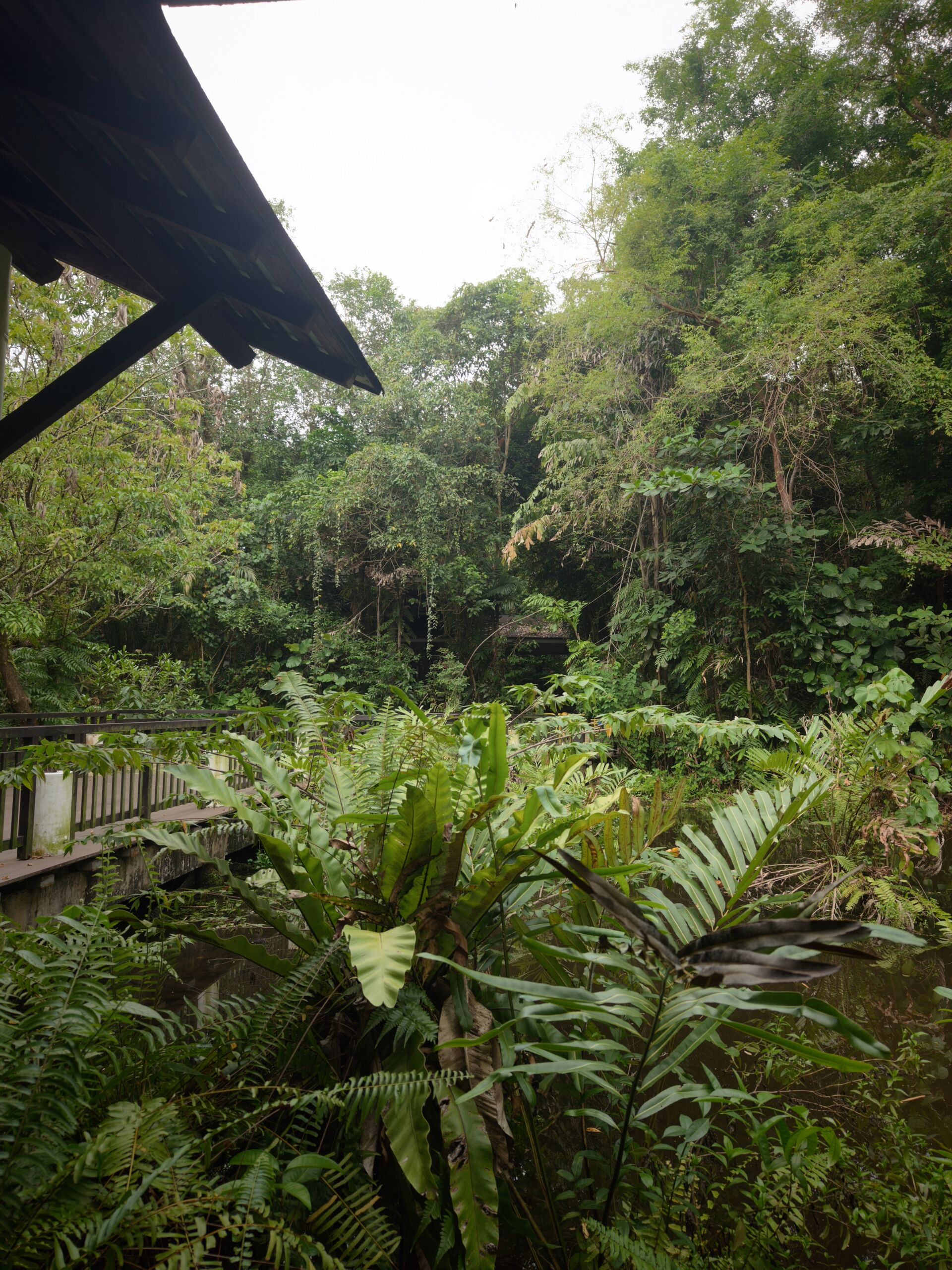
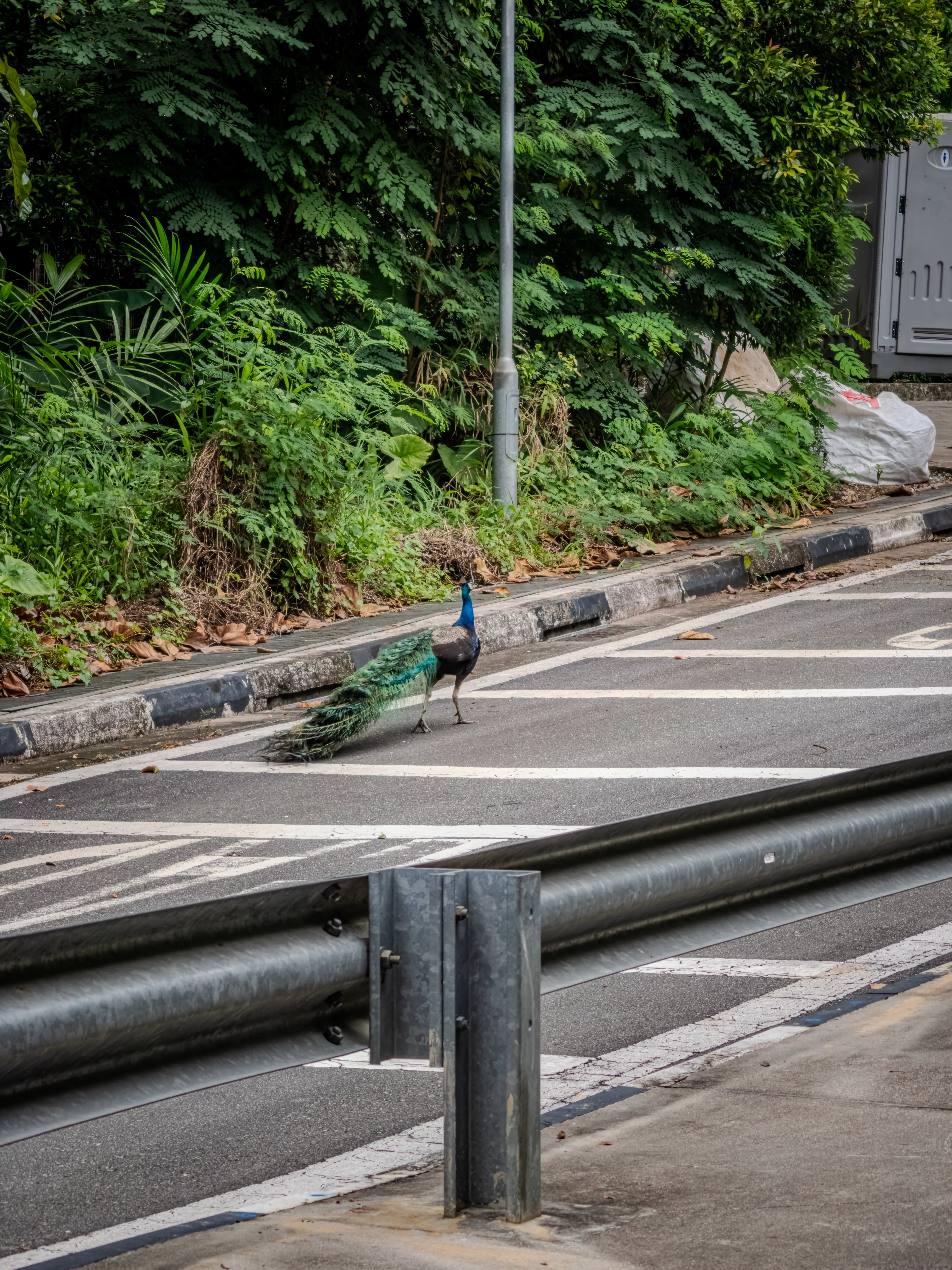
Then there was Sentosa, which honestly surprised me. I’d written it off as just another boring resort island with Universal Studios, casinos, and a cable car. On the surface, that’s what it is. However, Sentosa was once Pulau Blakang Mati, meaning “island of death from behind”. It was a British military base and then a Japanese POW camp. In the 1970s, it was renamed Sentosa, meaning “peace and tranquility”, and rebuilt into the leisure destination it is today. Around 70% of the island used to be secondary rainforest, and parts of it are still there, threaded with lush and green hiking trails that most visitors never find. We walked on them. We saw almost no one. At one point, an Indian peafowl (Pavo cristatus) crossed the road in front of us near a guardrail with the slow, unbothered stride of an animal that has correctly understood its position in the local power structure – drivers stop for them on Sentosa because they were introduced in 1980 and have been doing whatever they want ever since.
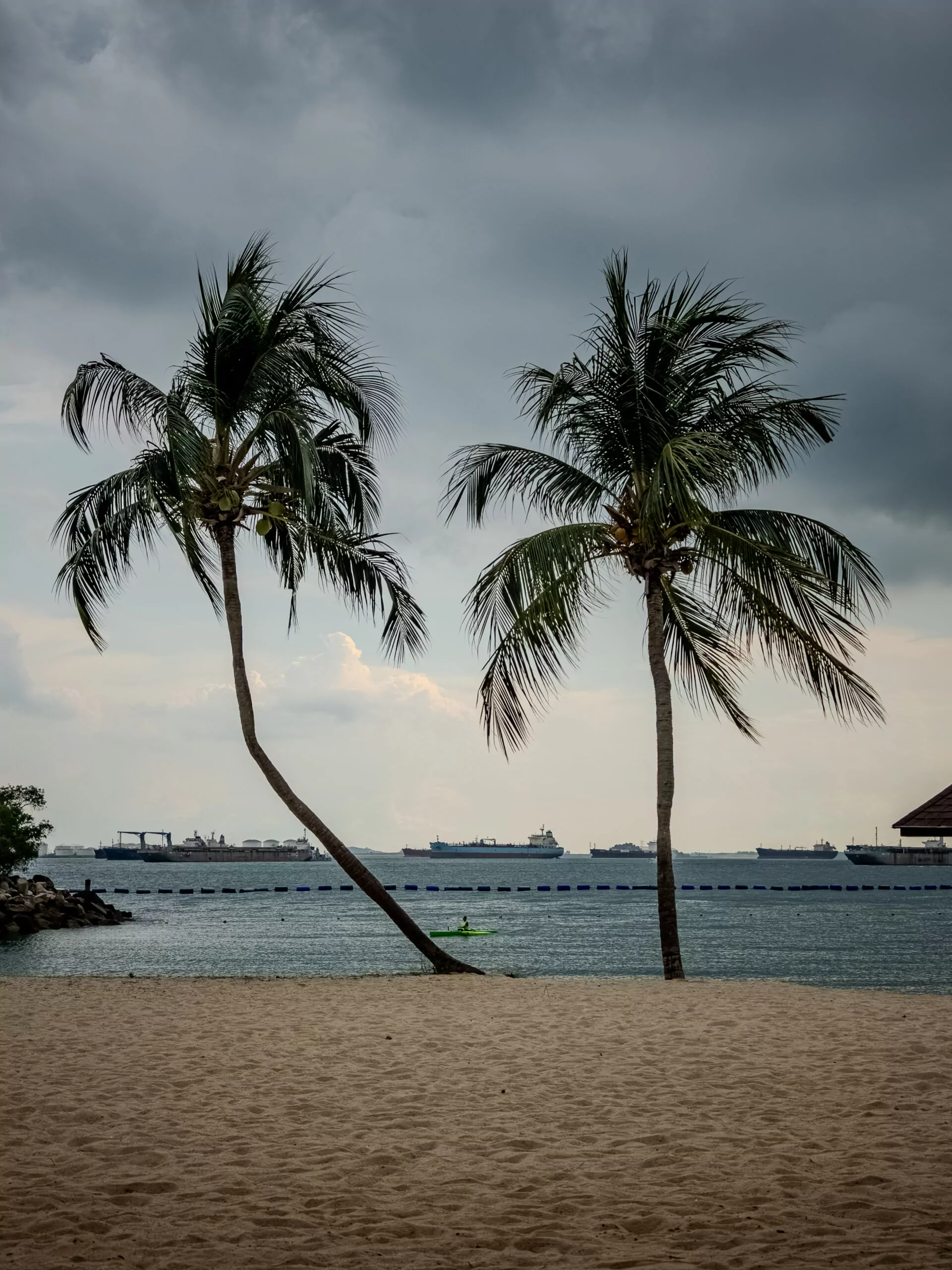
We also spent some time hanging out on the beach. Tanjong Beach turned out to be the most deserted – just a few minutes’ walk from the crowded beaches near the Sentosa Express station and nearly empty when we arrived. It has the same sand and sea but no crowds. This is how Singapore usually works as a tourist destination: the peaceful alternative is usually right there, a few hundred meters off the marked path, and almost always refreshingly silent.
Speaking of silence, the other day, a thunderstorm caught us at Pearl’s Hill City Park near the city center. We had walked up there to see the reservoir – a small, overgrown lake surrounded by massive trees – when the rain hit hard enough to clear the park entirely. There was no one. Not a jogger, not a maintenance worker, not even a couple under an umbrella. Only the growling thunder, the noise of the rain, and the chirping of exotic birds and buzzing of crickets remained. The reservoir turned silver under the rain. The towers of Outram, visible through the trees, had become vague gray shapes. We stood there for a while because there was nowhere else to go. The sound of tropical rain on tropical leaves is a texture that cannot be captured on recordings – it’s too dense, too layered, too physical. In a city of nearly six million people, we had a whole park to ourselves because of the conveniently inconvenient weather.
The Botanic Gardens, and two people
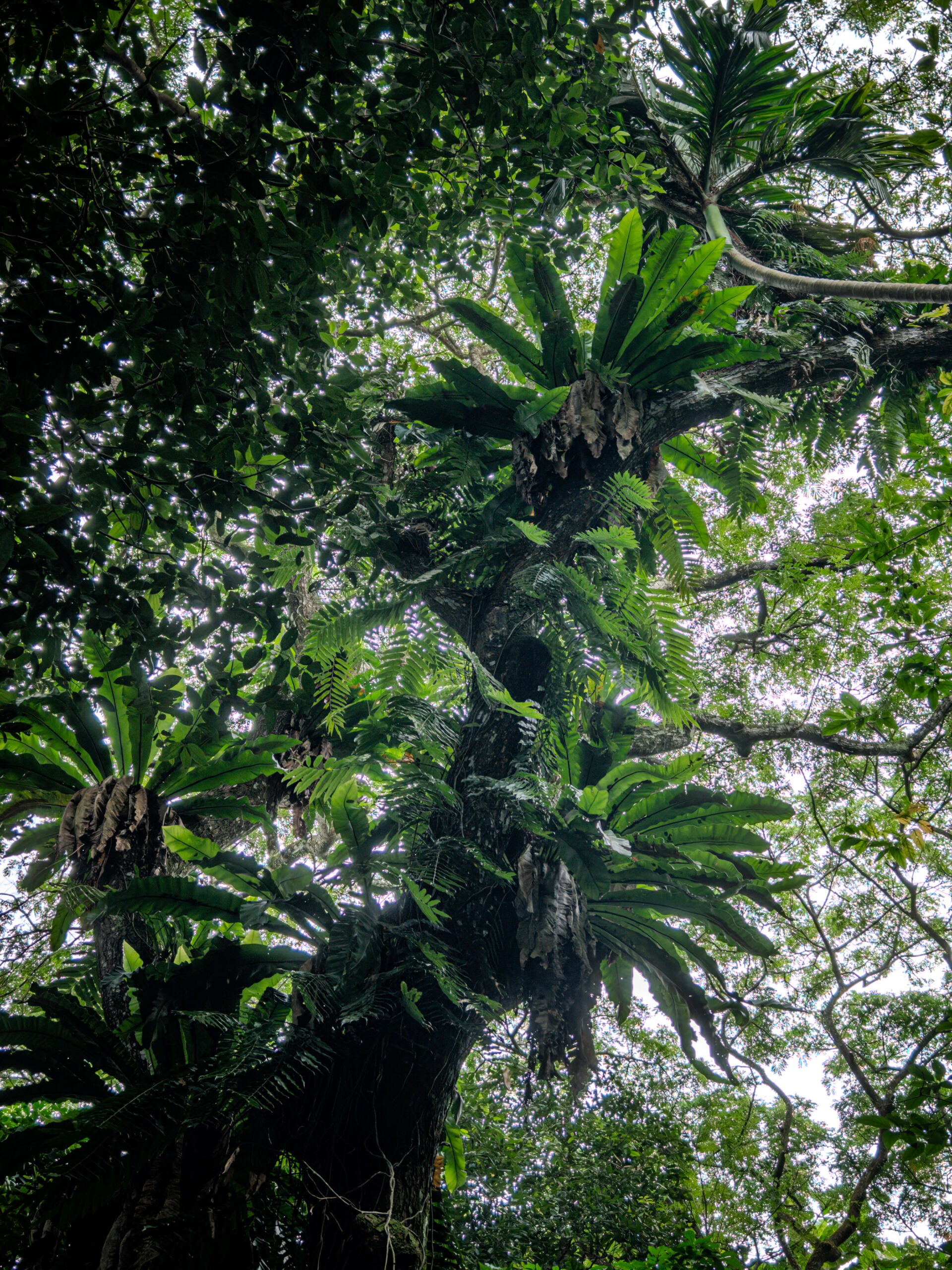
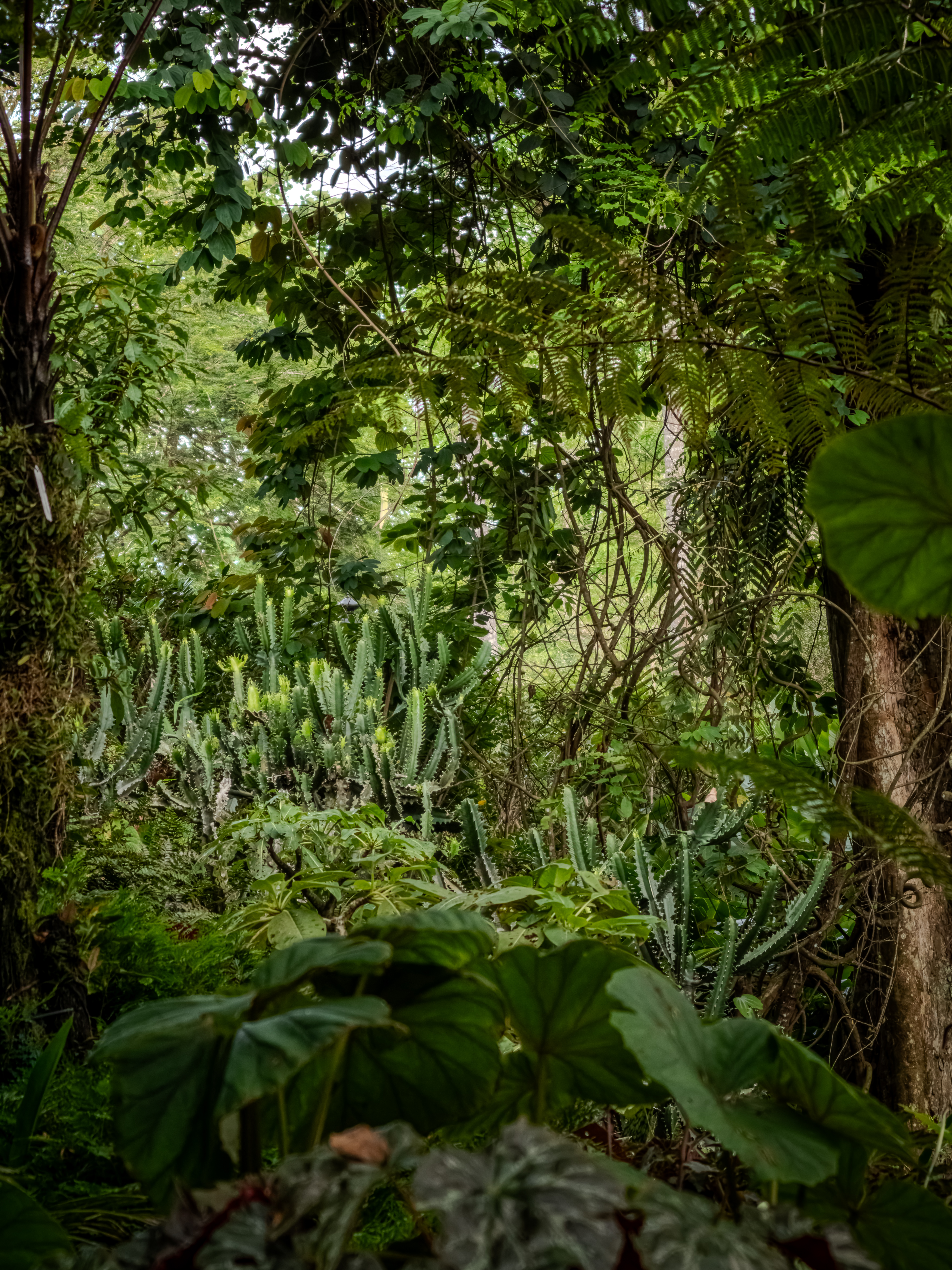
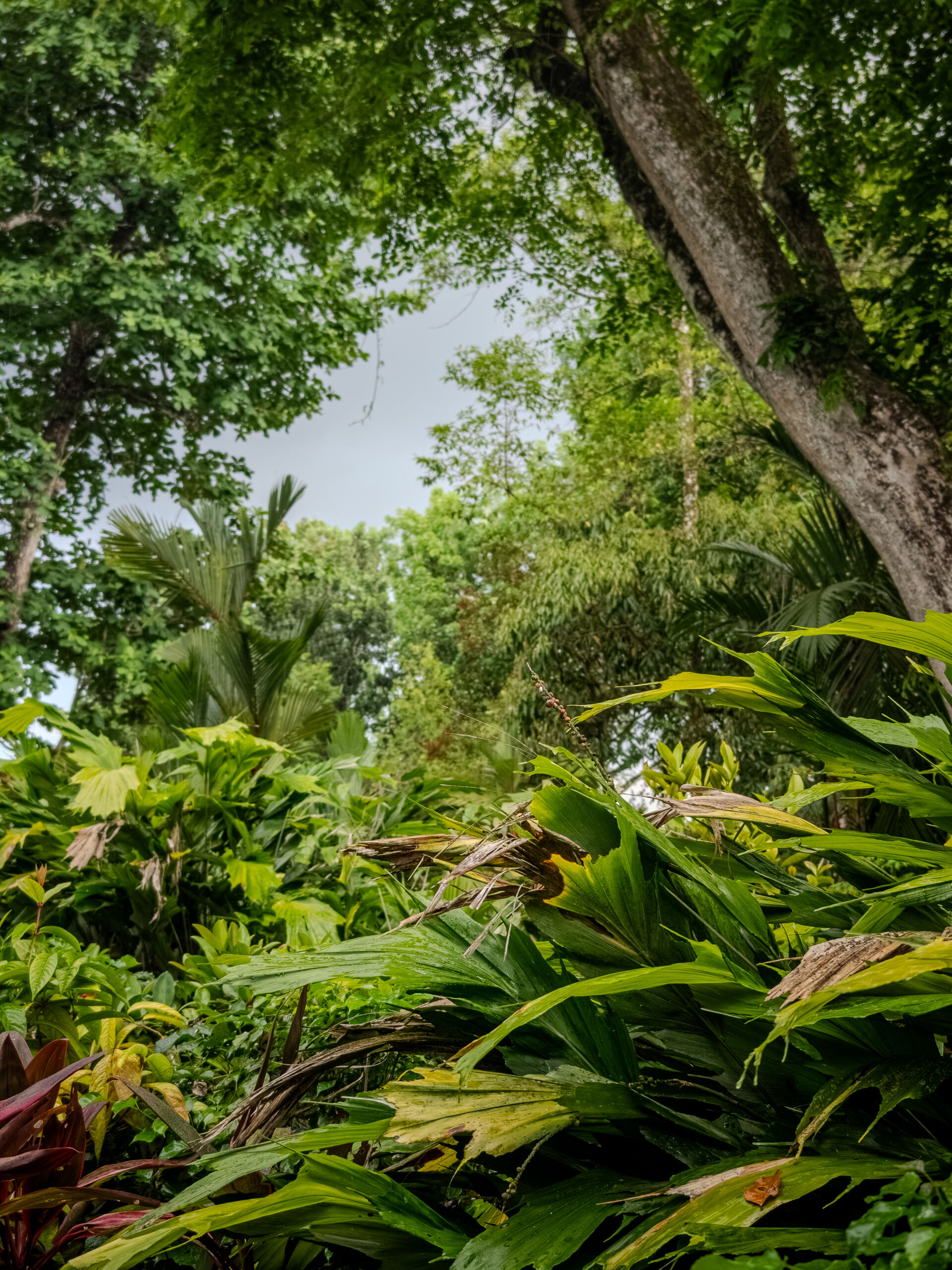
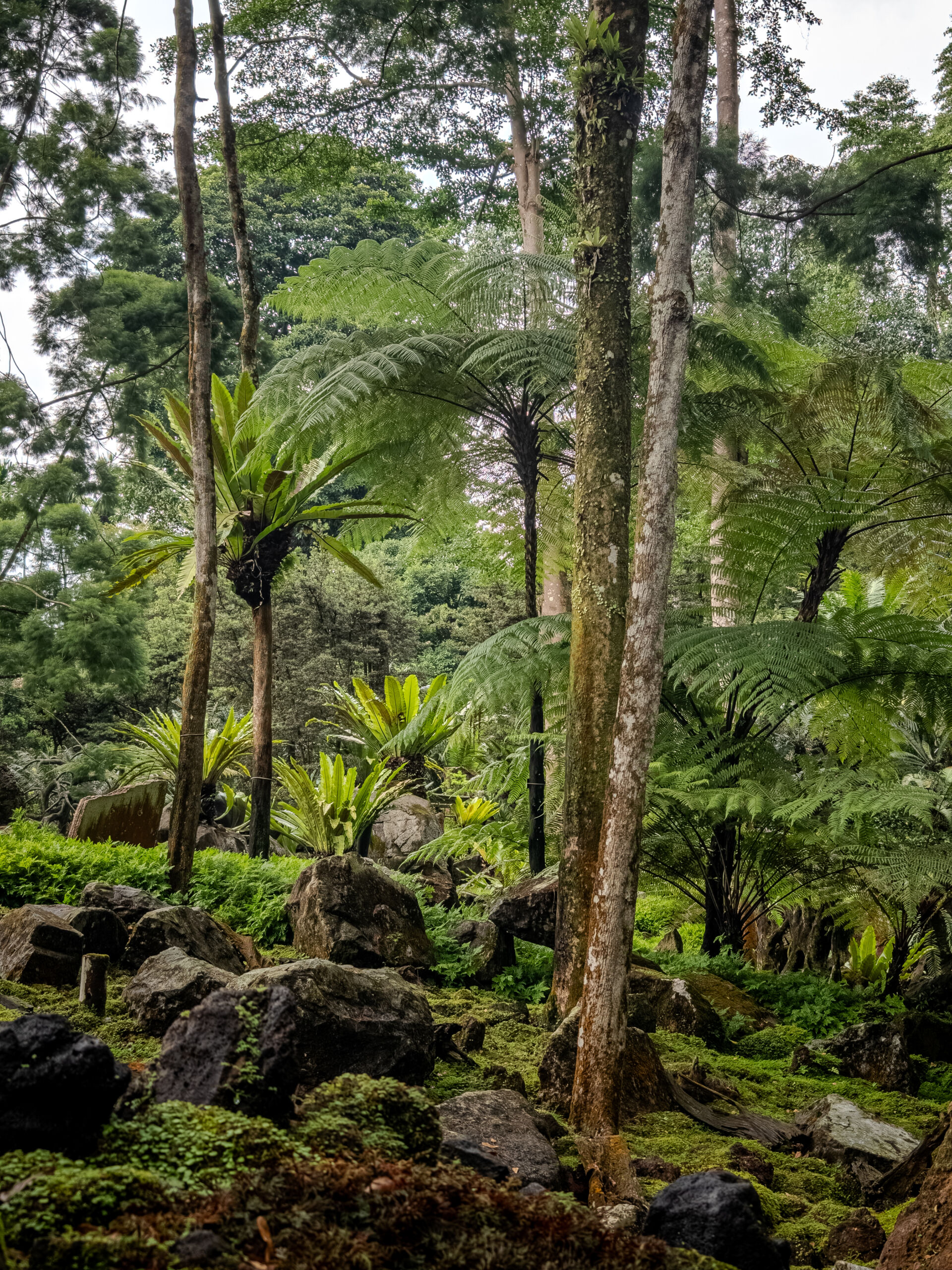
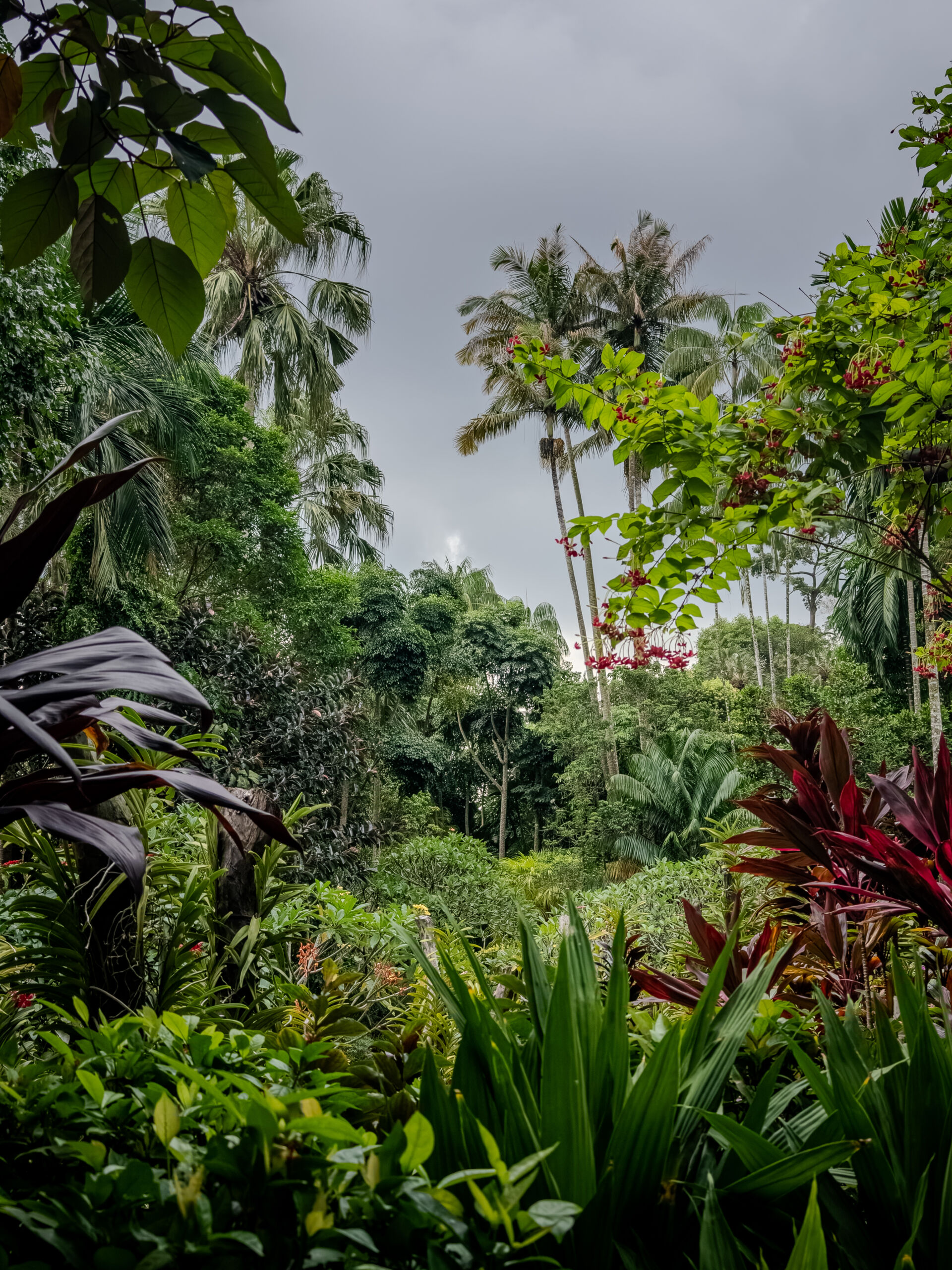
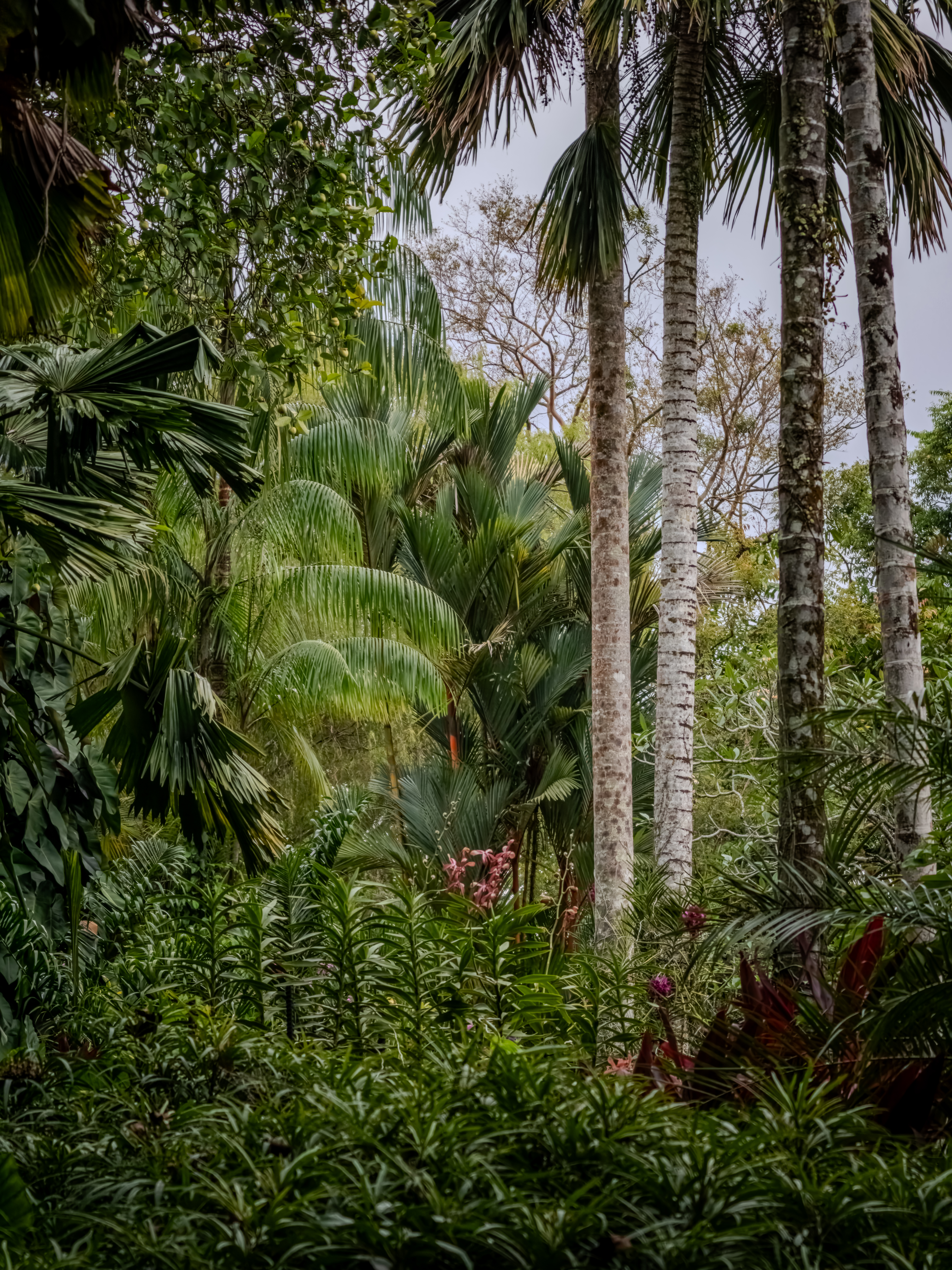
Ah, the Botanic Gardens! Founded in 1859, the Singapore Botanic Gardens became the first botanical garden in Asia and the third in the world (after Padua and Kew). In 2015, the gardens became Singapore’s first UNESCO World Heritage Site – the only tropical botanic garden on the entire UNESCO list. But that is not the catch; the interesting thing is that the gardens contain a six-hectare patch of primary tropical rainforest that predates the institution itself – a pocket of the original Singapore that has survived and is now surrounded by 82 hectares of cultivated gardens. Walking through it is like walking through the island as it was before people turned it into a concrete jungle.
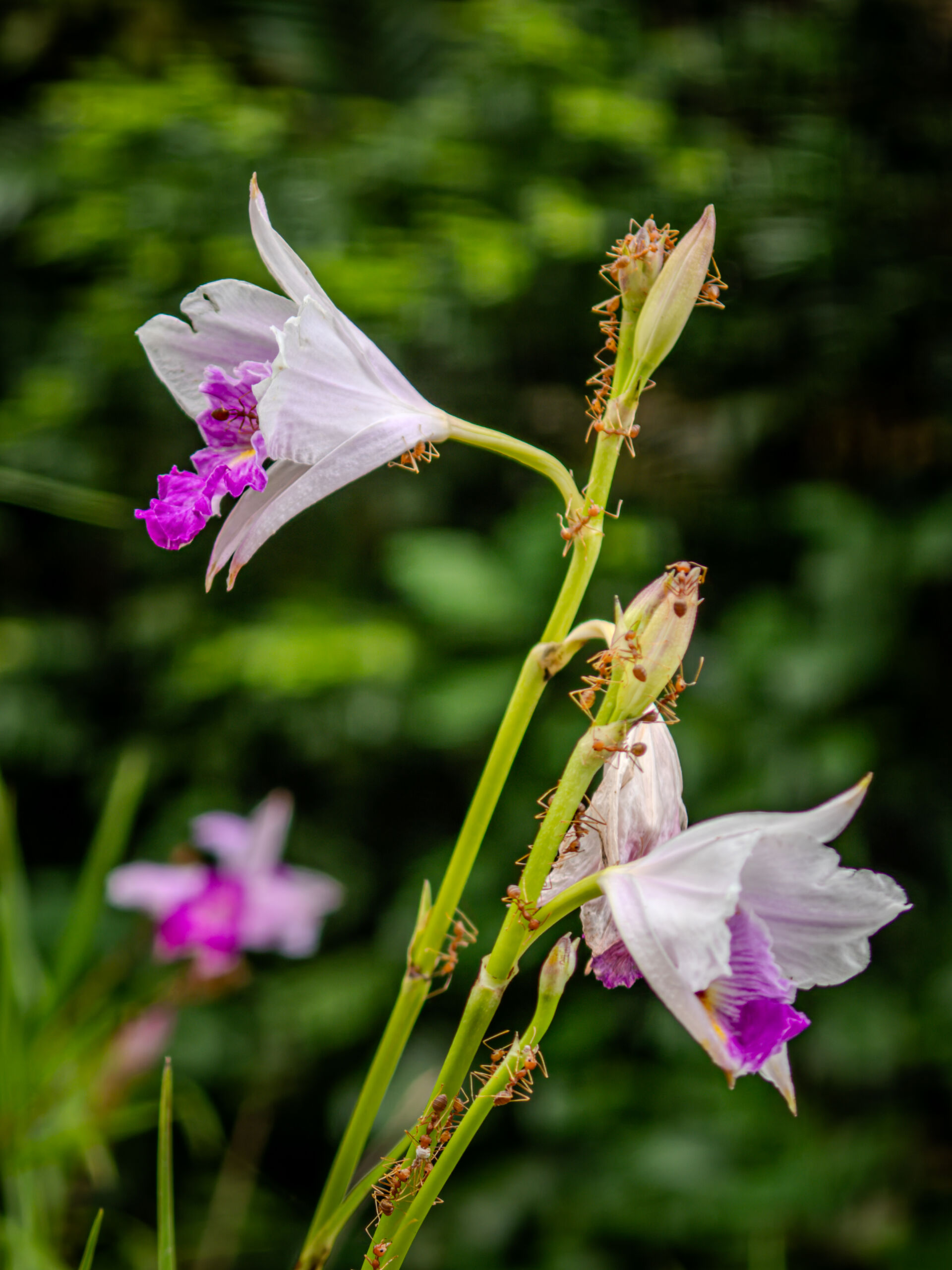
You can also walk past cycads in the Evolution Garden area. Cycads first appeared around 280 million years ago; they predate the dinosaurs. The cycads we saw were towered over by araucaria pines, essentially the same plant pairing you would have seen in the late Permian – a living tableau older than the concept of vertebrate land animals figuring out how to become mammals. Tree ferns of the genus Cyathea have been around for 300 million years and have barely changed. Bird’s nest ferns grow as epiphytes on tree trunks. We also saw plenty of bamboo orchids with weaver ants climbing the stems. These ants build their nests by sewing leaves together with silk extruded from their larvae held in their mandibles. They supposedly taste sour and citrusy (haven’t tried), and are eaten in some Vietnamese cuisines as kiến vàng. They’ve also been used historically in citrus pest control. But mostly, they’re just small marvels that nobody has time for.
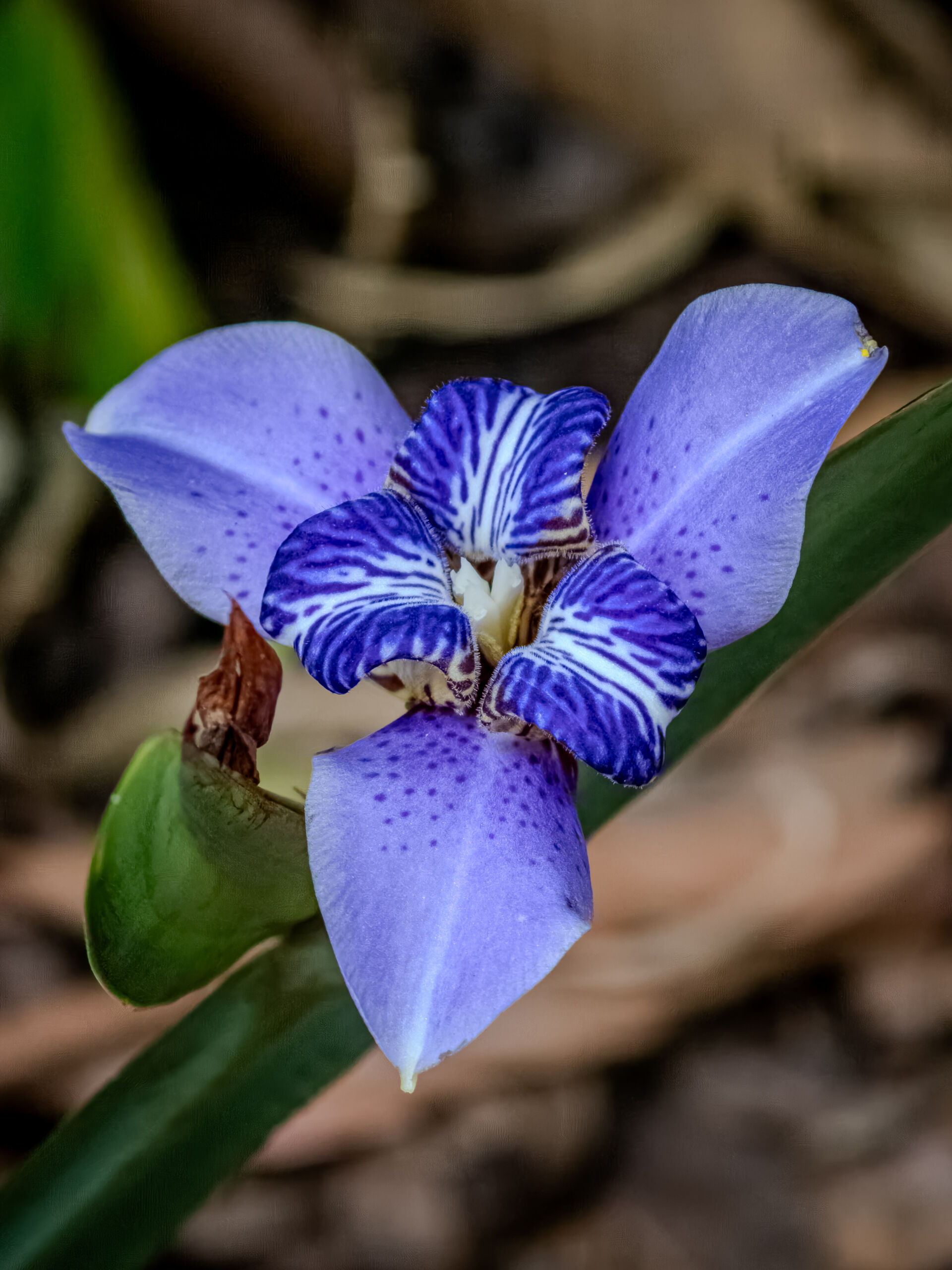
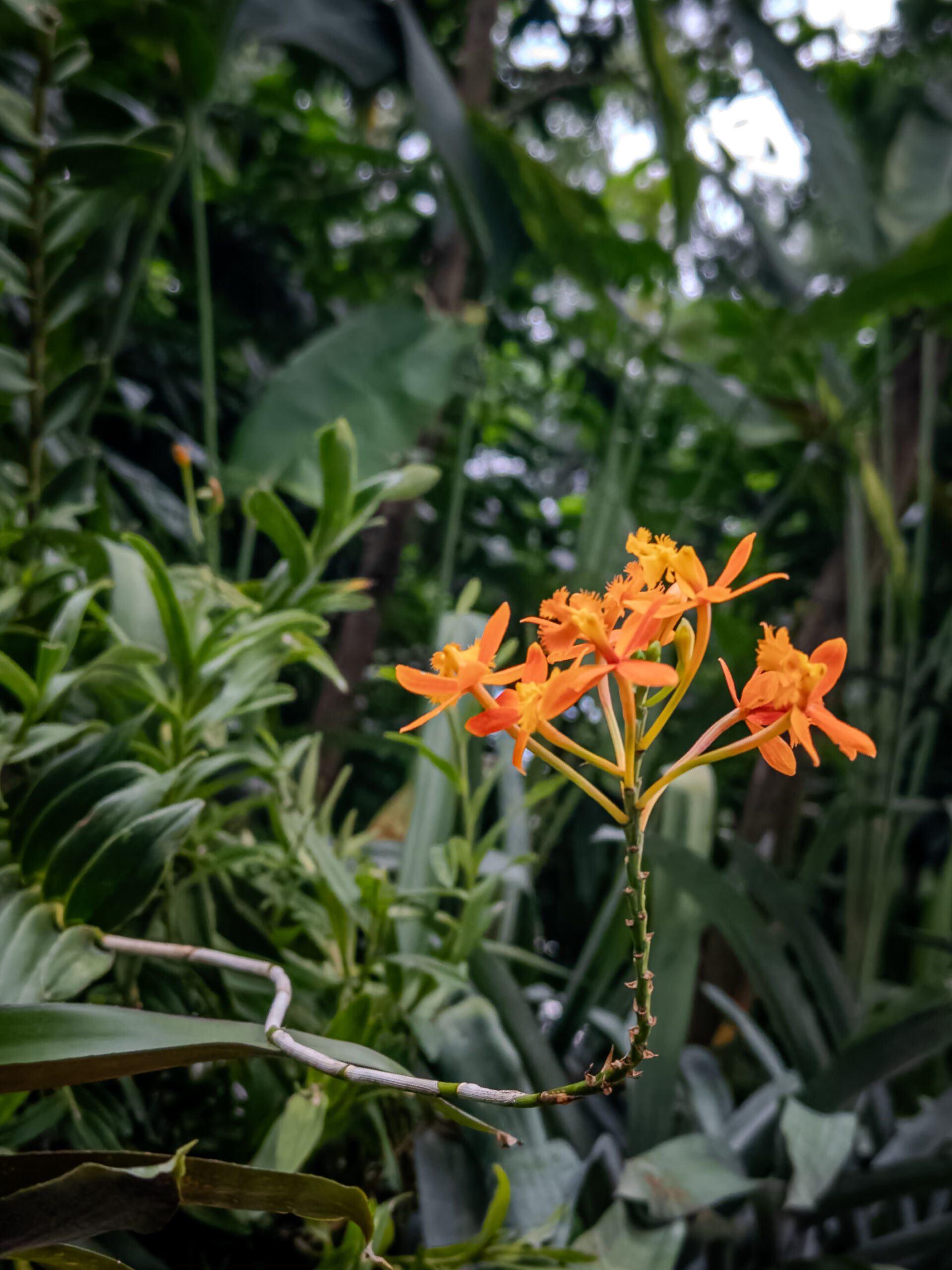
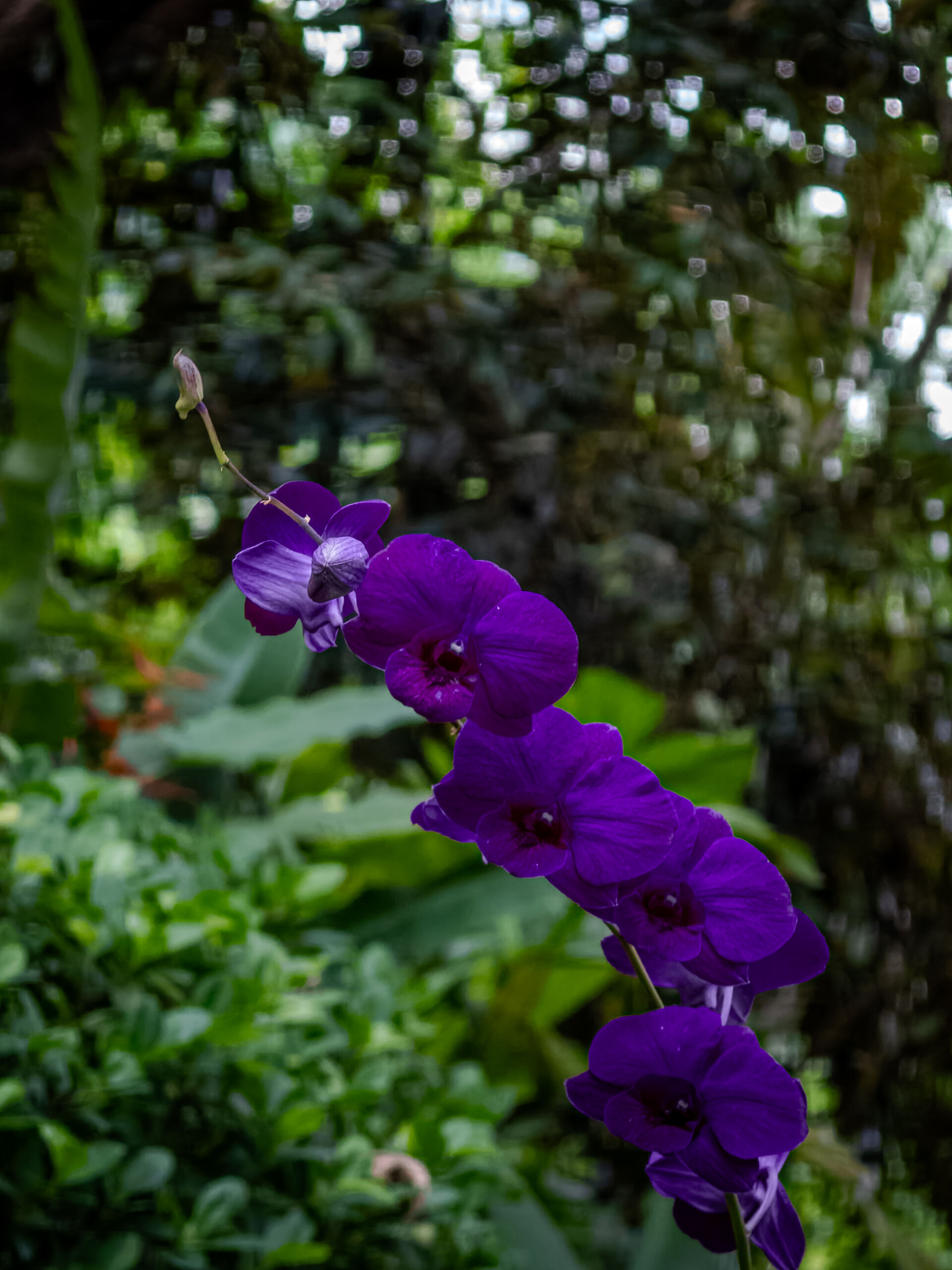
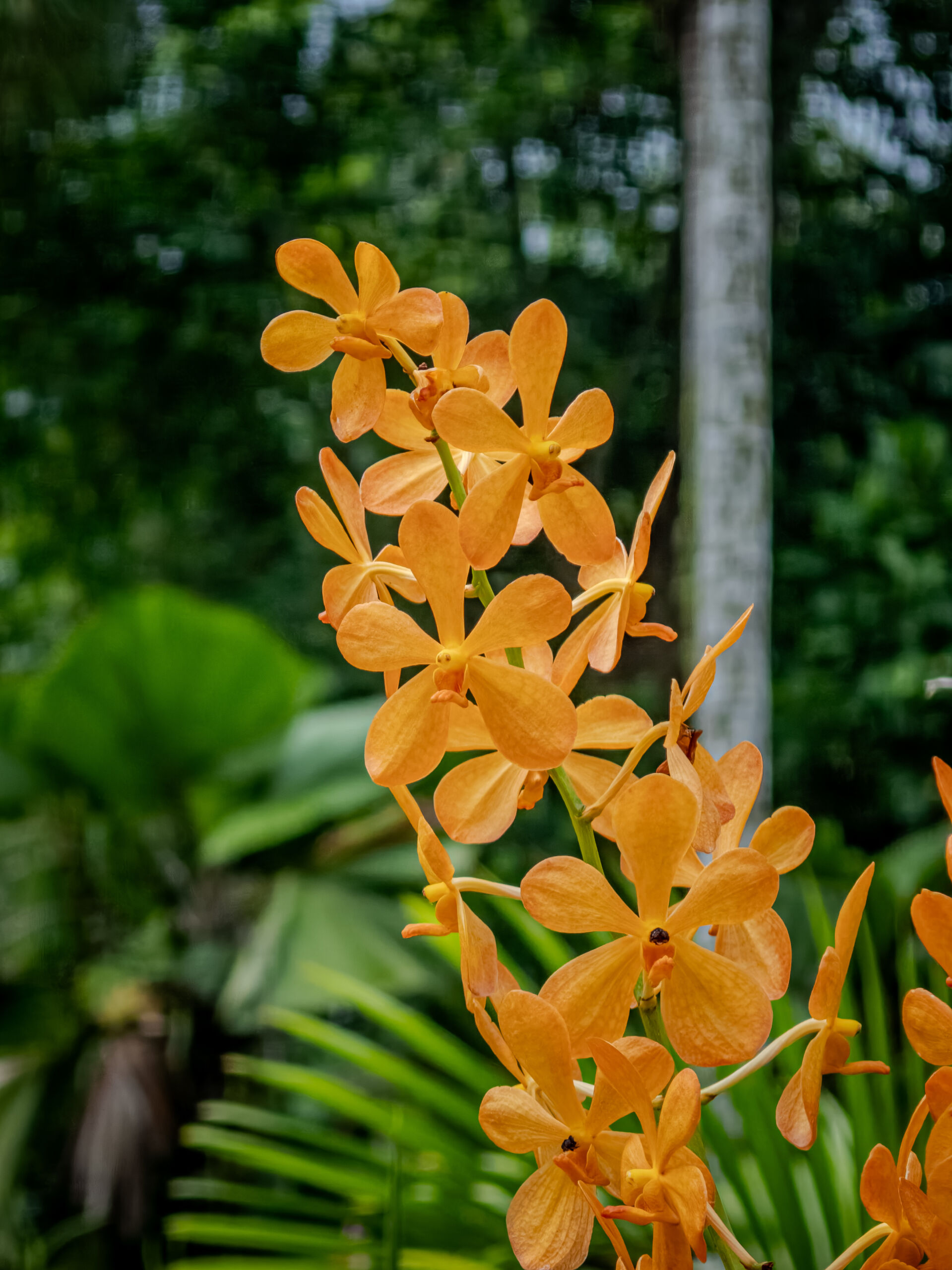
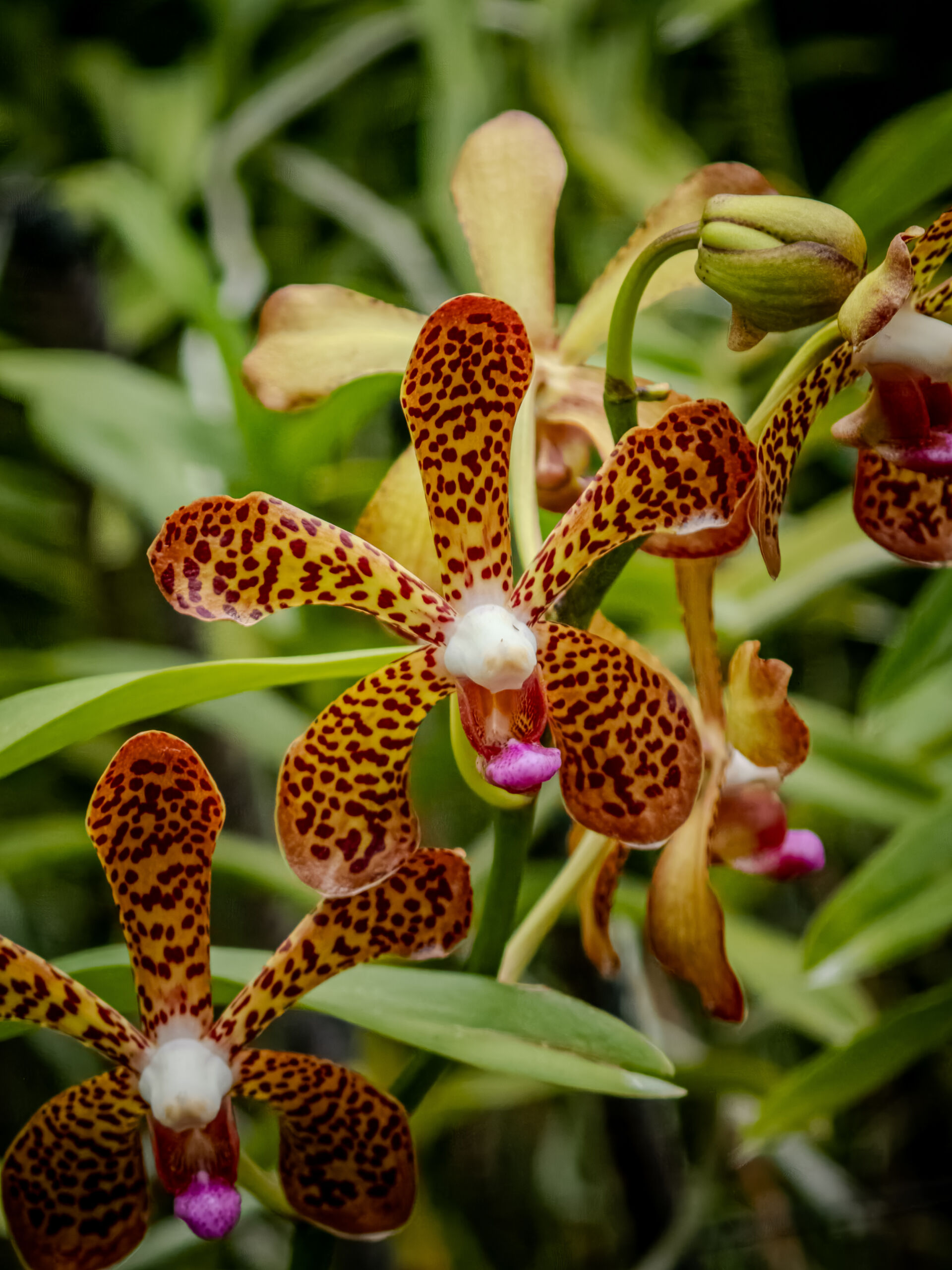
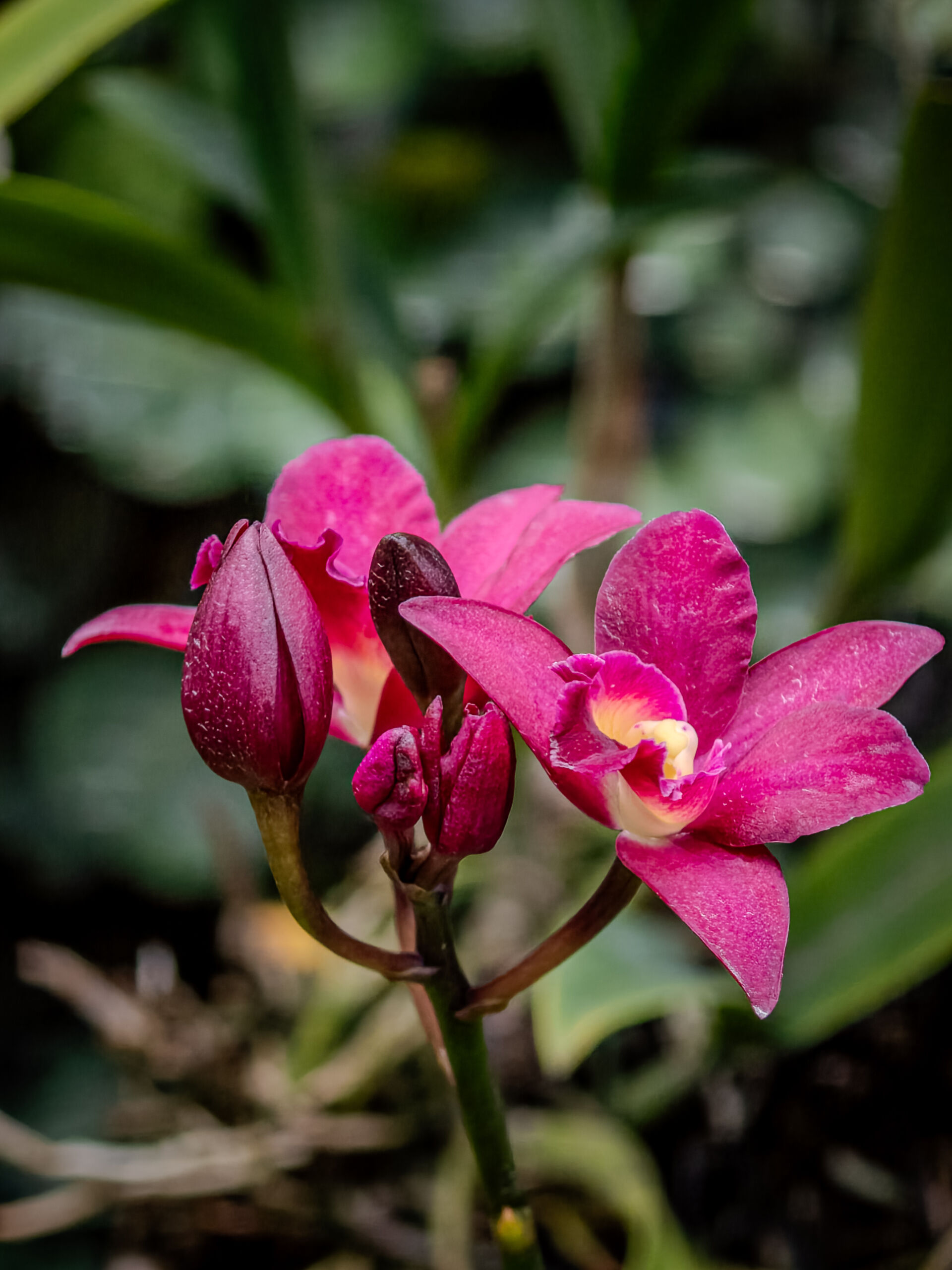
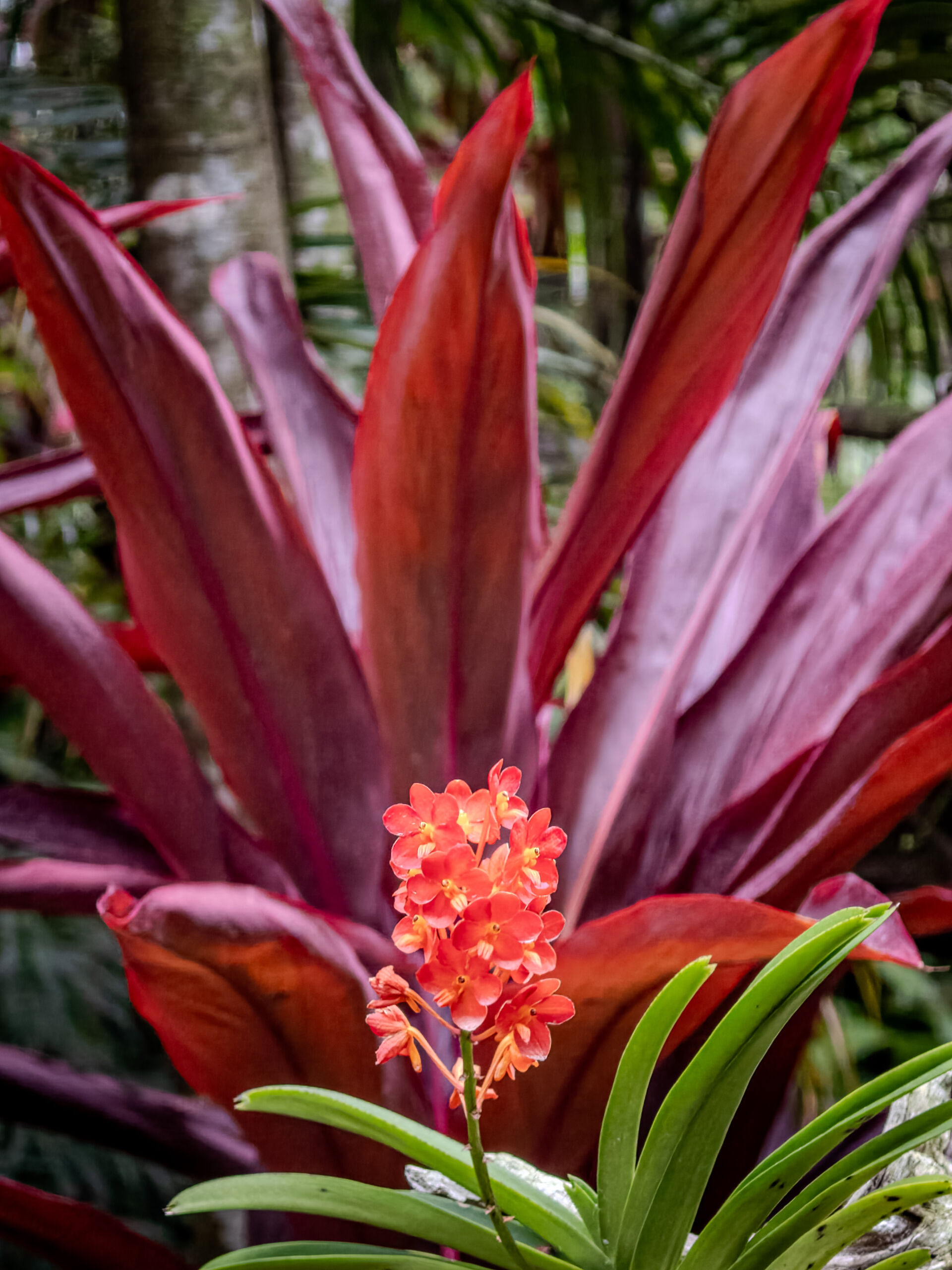
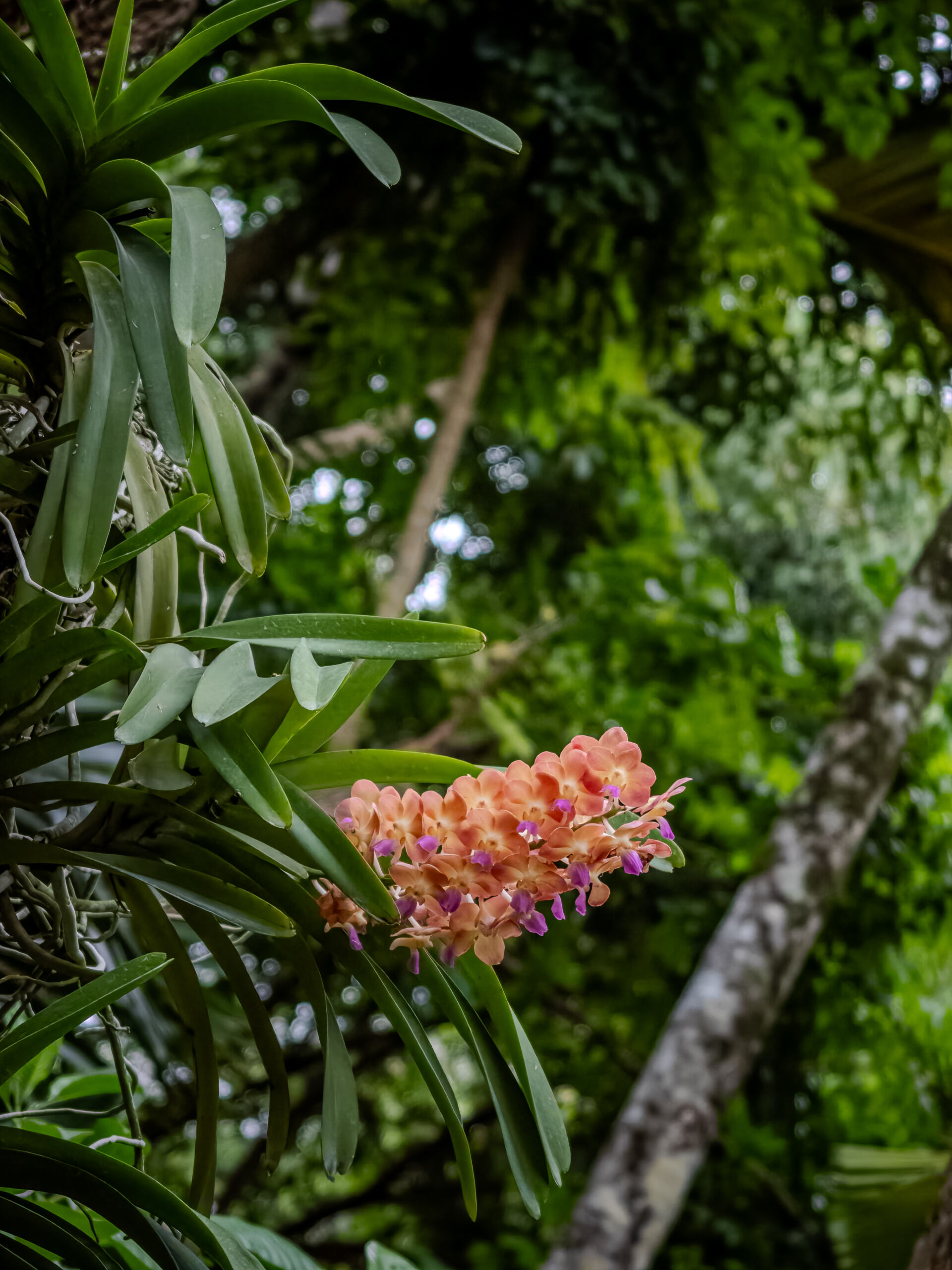
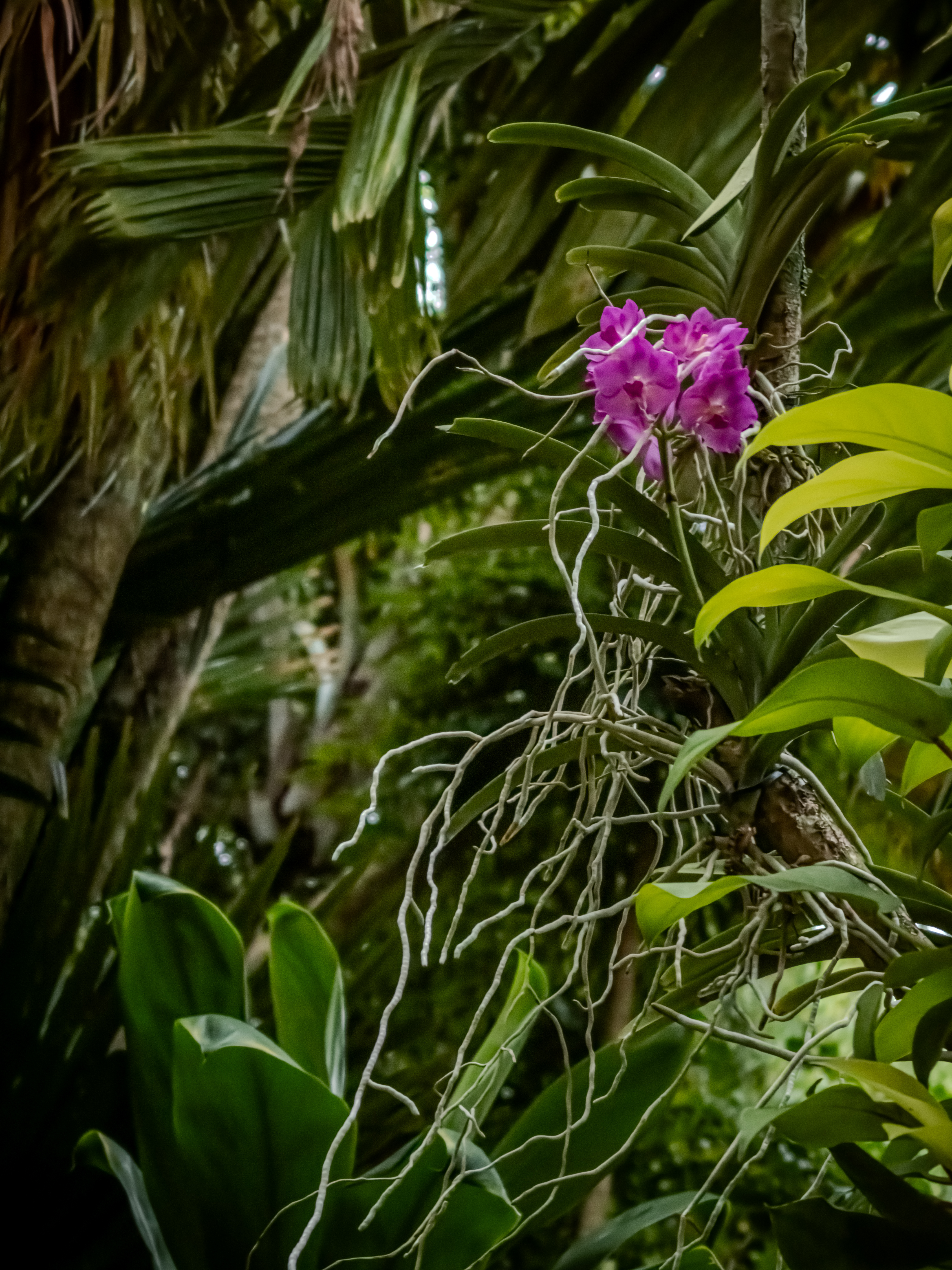
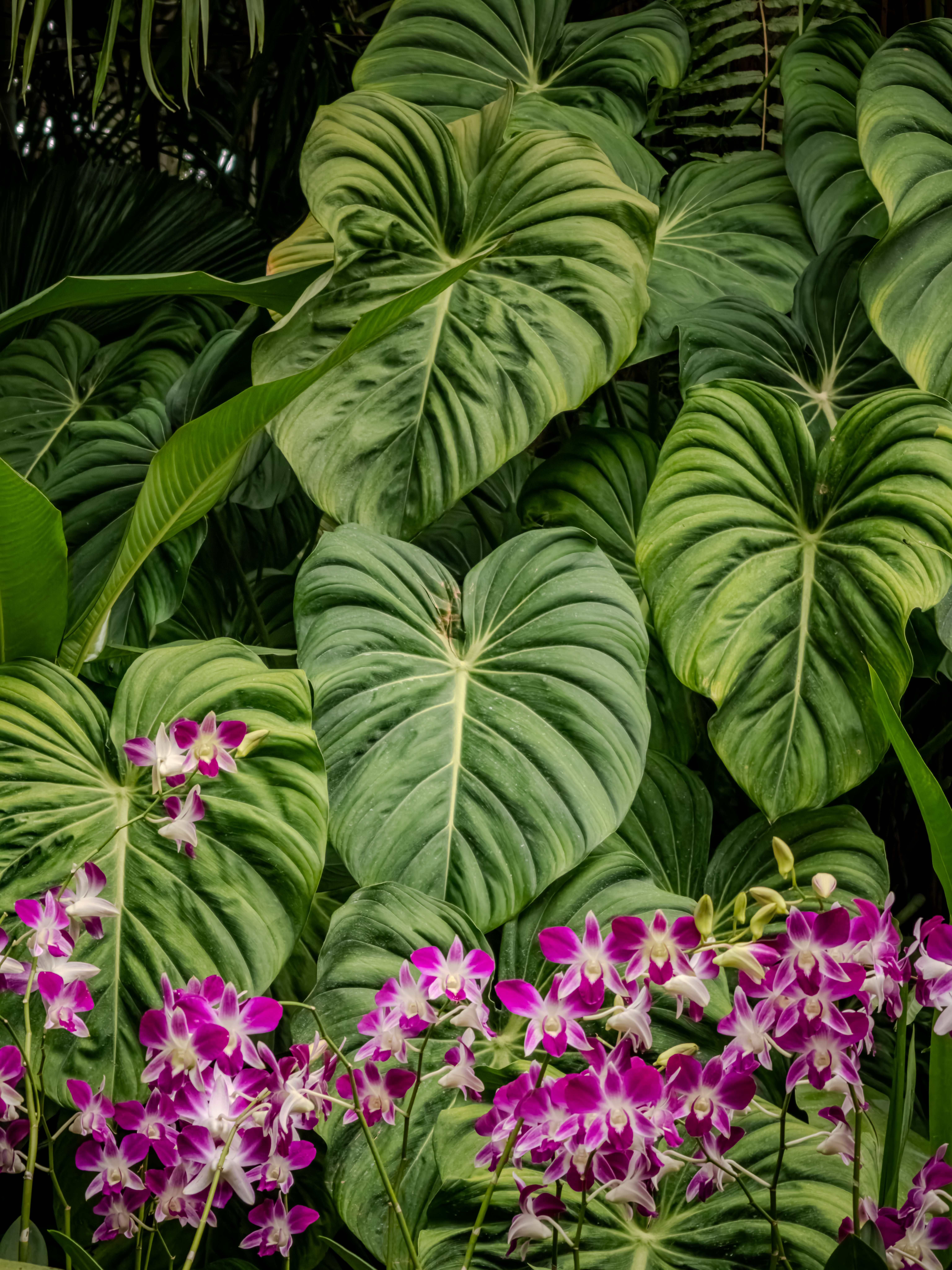
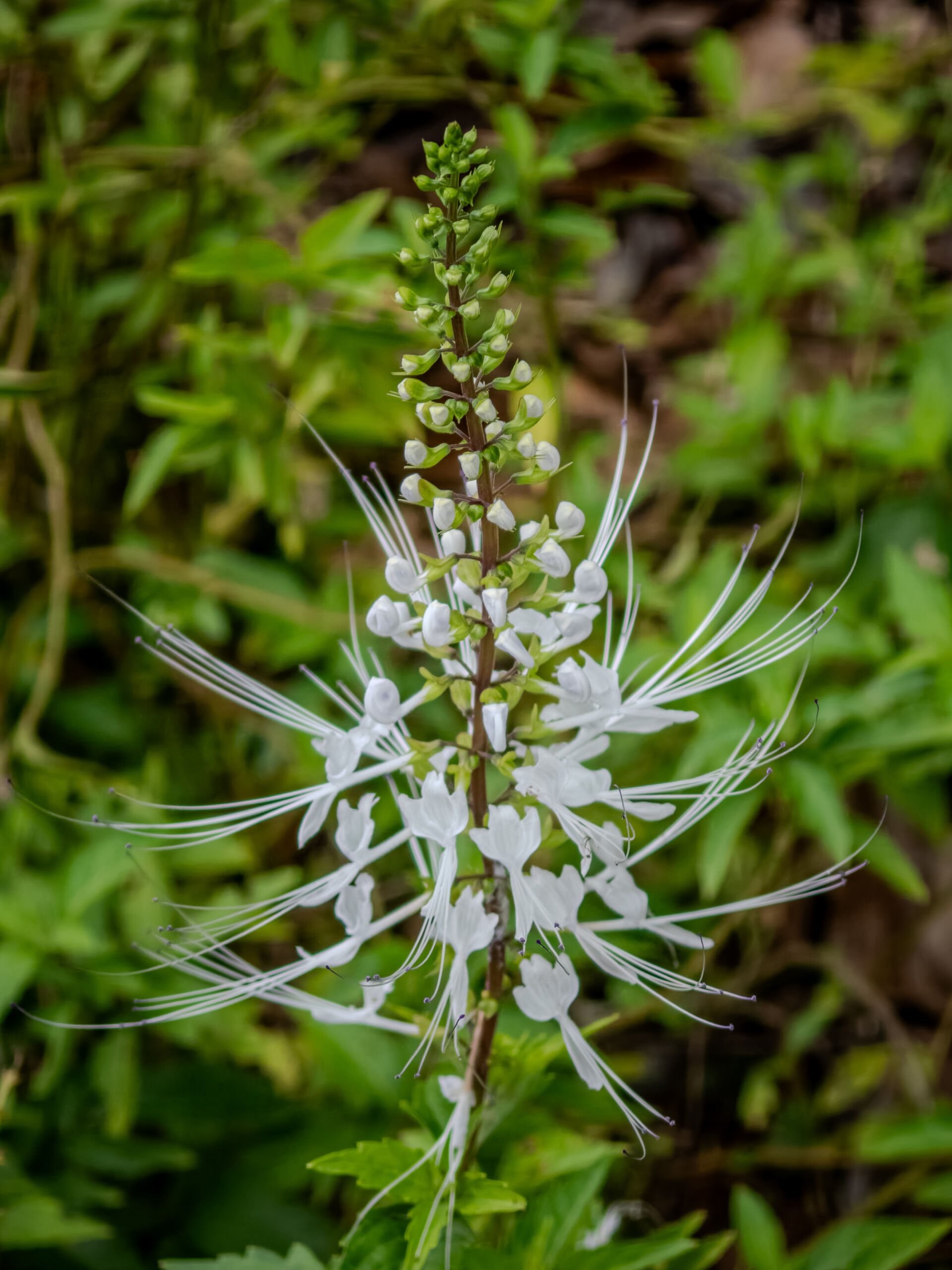
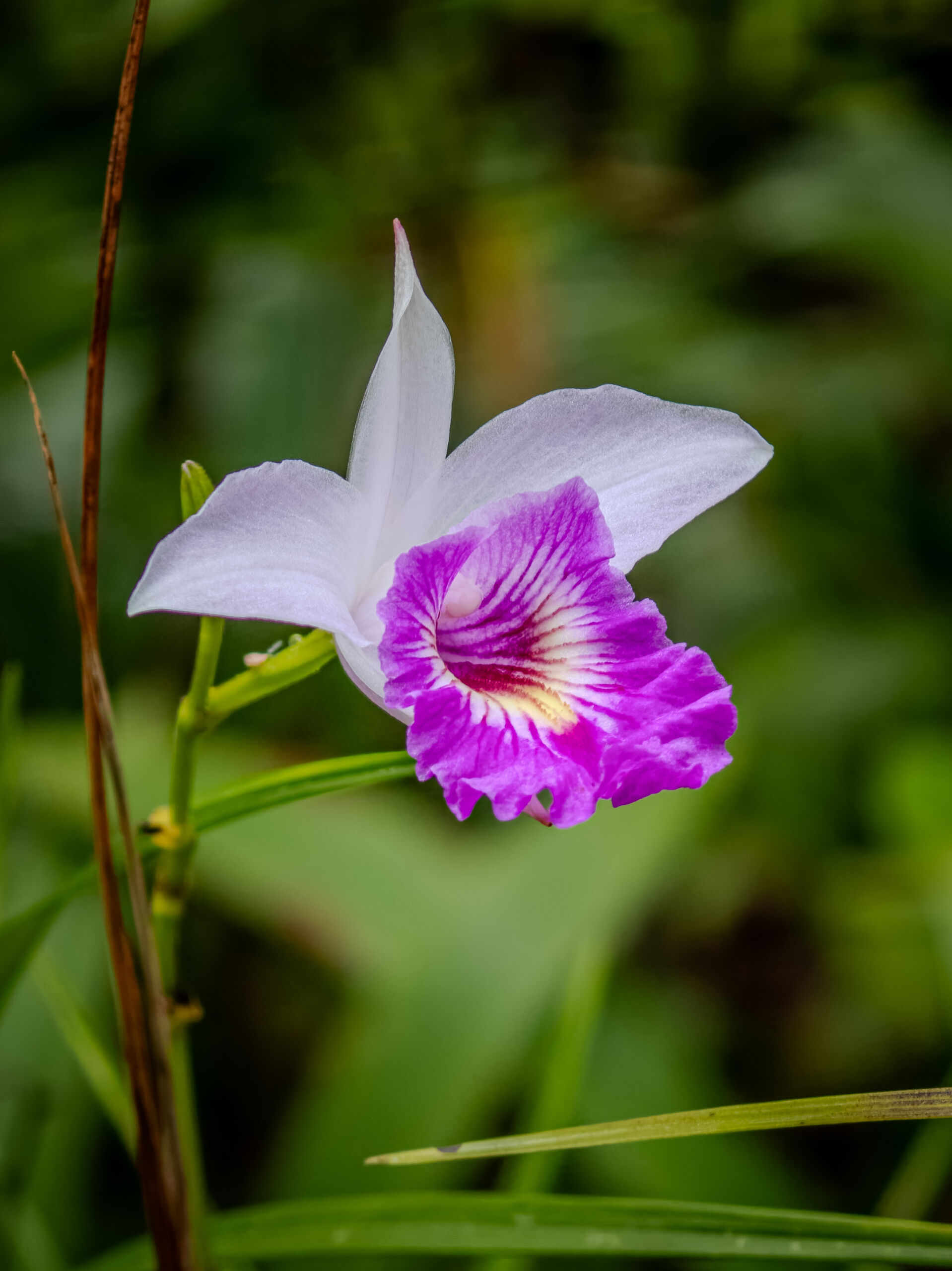
It was closing time at the National Orchid Garden when an older security guard found us – super friendly and in no rush. He walked with us at our pace toward the gate rather than at his own pace, and while walking, he started talking. He told us that he had worked there for 40 years. When we asked him about the orchids, he said something that I’ve been thinking about ever since: the beauty of the place was no longer spectacular or interesting to him. “It’s just normal, a job environment like any other, the magic has long faded away”, he said without bitterness or regret. It was just true. Forty years of orchids – over a thousand species and two thousand hybrids, the largest collection of its kind in tropical Asia – and at some point, they became just another hallway on the way to clocking out. I don’t know what to do with that exactly; part of me wants it to be a tragedy, but the part of me that has lived in Saigon long enough to stop noticing the smell of a fresh bánh mì cart at nine in the morning knows perfectly well that it’s just a fact.
The person I’ll remember even longer was a woman running a small drink stand between districts. We bought something – I don’t remember what – and got into conversation. She told us she was Catholic. And she also said that she prayed at Buddhist and Hindu temples. Often. She said this is considered normal in Singapore – many people visit places of worship of other religions – because “we’re all praying to the same God“, she said, “just with different names and stories“.
This isn’t her personal weirdness. According to Singapore’s 2020 census, 31% of the population is Buddhist, 20% is nonreligious, 19% is Christian, 15% is Muslim, 10% is Taoist, and 5% is Hindu. No faith holds a majority, and public holidays come from at least five traditions. There’s a temple in Loyang that houses Buddhist, Taoist, Hindu, and Malay-Chinese Datuk Kong deities under one roof. Roadside shrines feature Ganesha, the Monkey God, Jesus, Mary, and Mazu sitting side by side. The Inter-Religious Organization was founded here in 1949. Regardless of your views, the city produces women who cheerfully pray in three traditions in the same week, and that struck me as one of the small, daily, low-key miracles of the place. People CAN live together if they choose to overcome their ideological and religious biases.
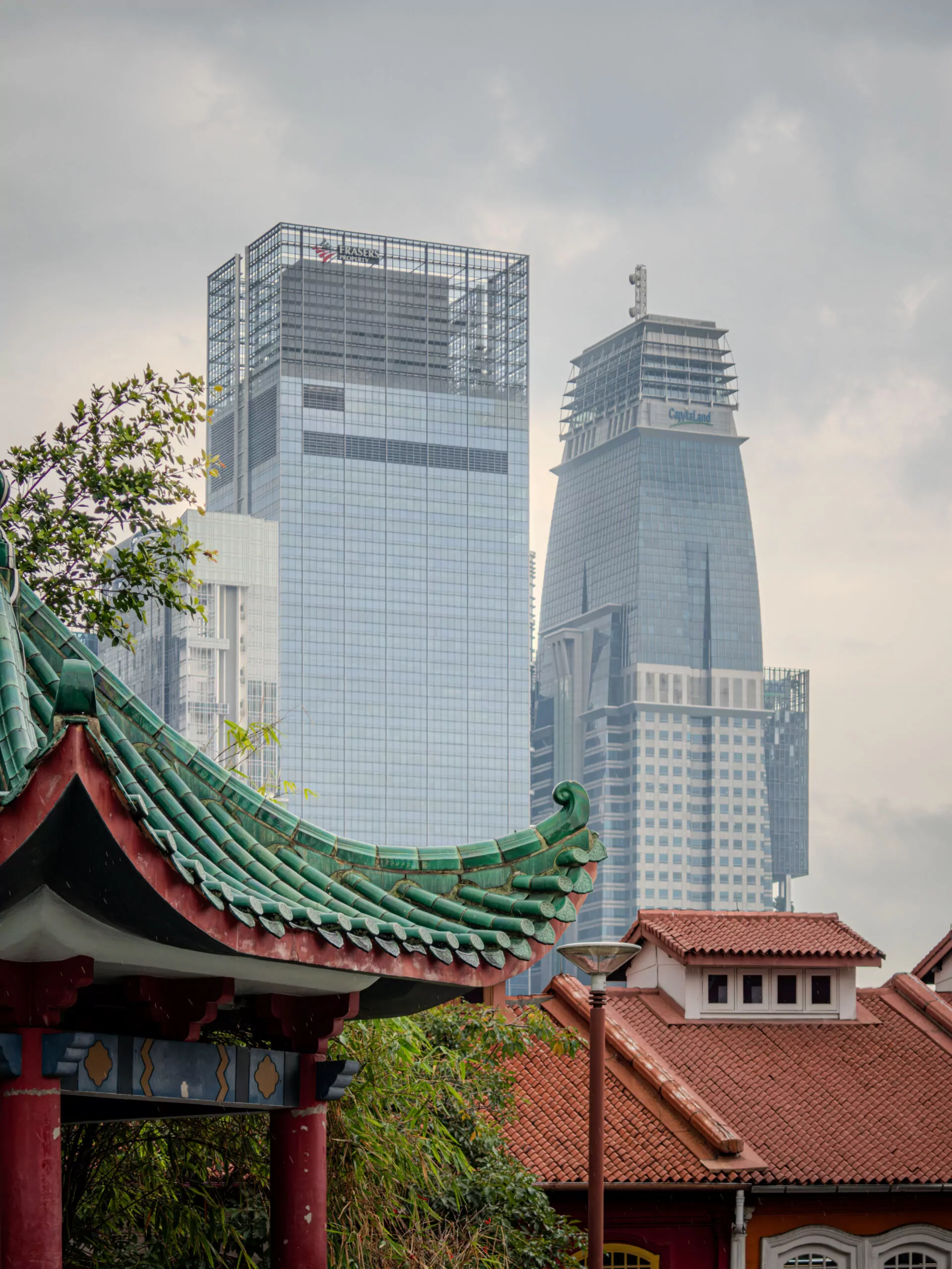
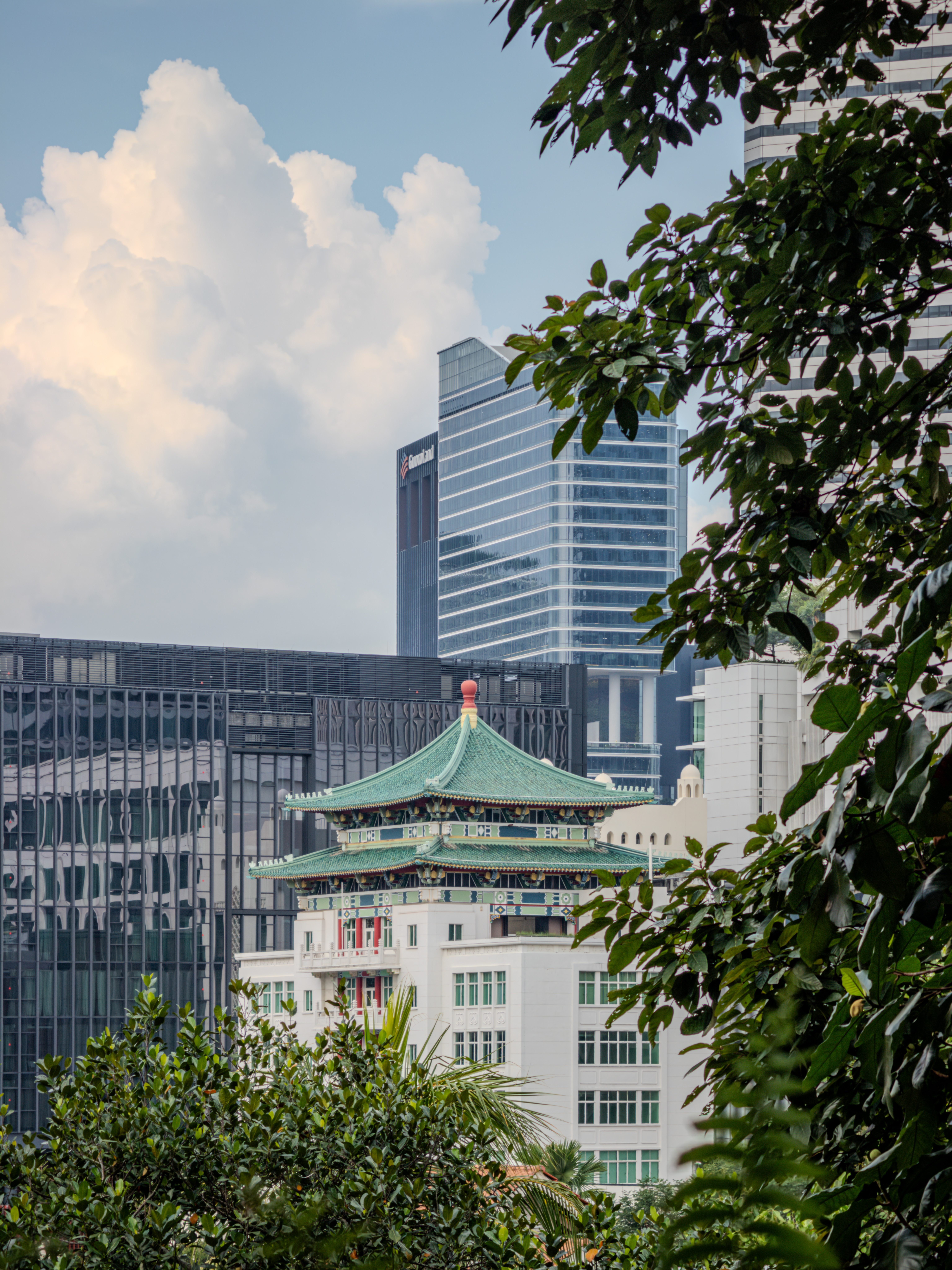
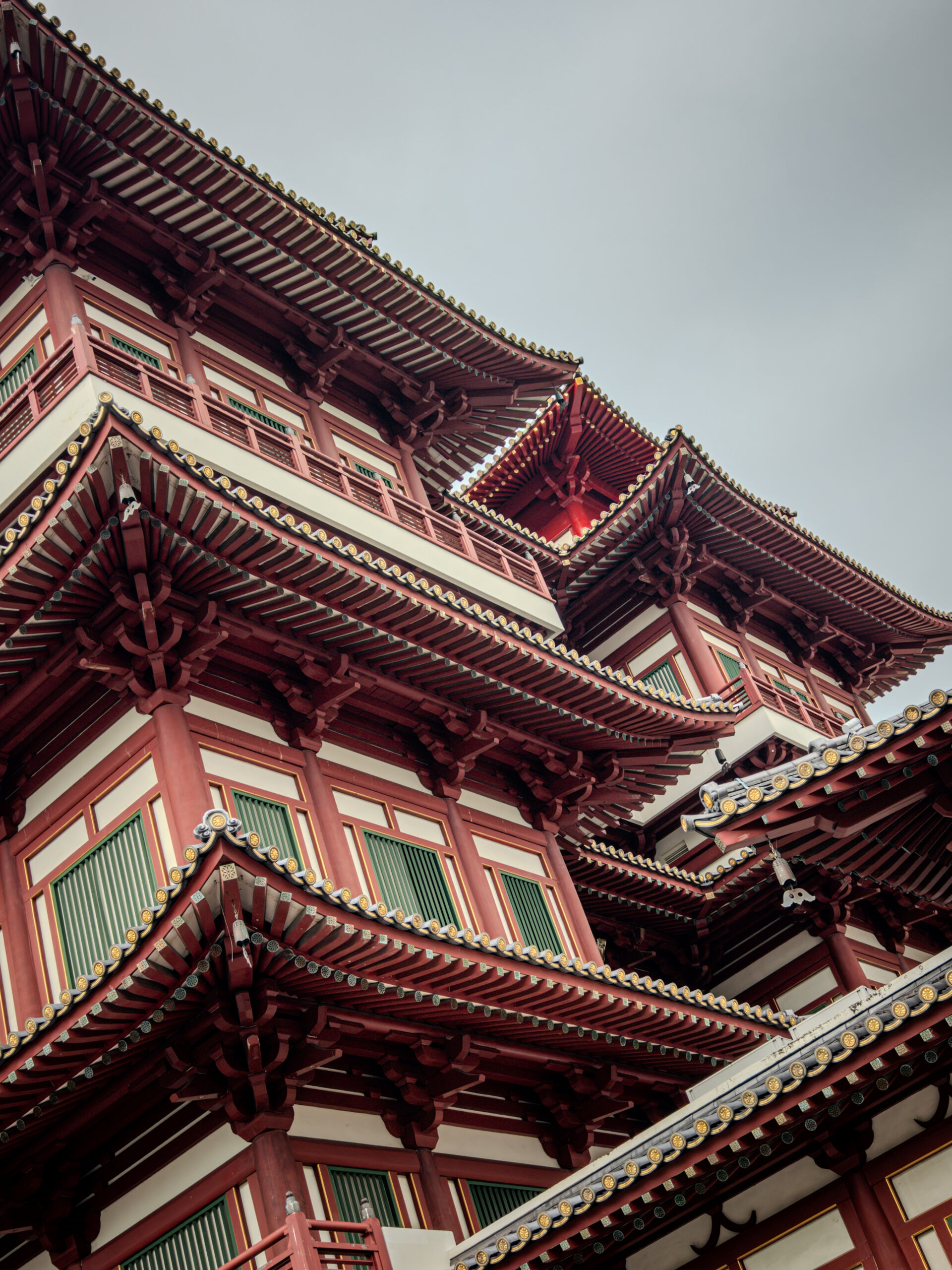
Later that day, we walked past Thian Hock Keng Temple. It is Singapore’s oldest Hokkien temple. Built without a single nail, its craftsmen and materials were brought from Fujian in 1839. It once faced the sea, but the sea is now several blocks away due to land reclamation. The temple remains, with its green tiles and red pillars. Guoco Tower rises directly behind it, its glass and steel stacked on top of a sea goddess shrine that predates the country in which it now sits. A striking contrast.
The city we slept in
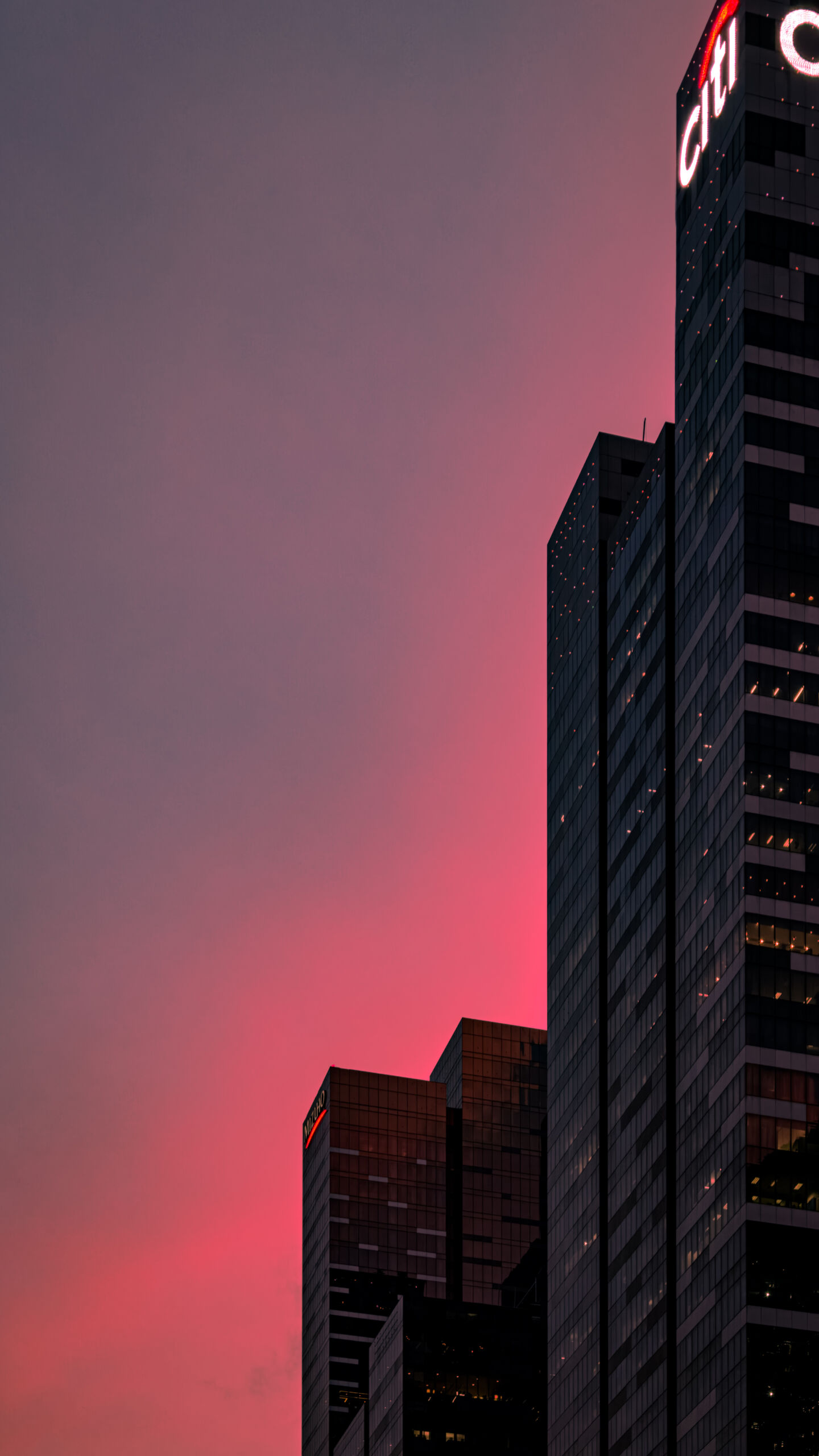
Although we didn’t spend much time admiring buildings, but Singapore made it hard to avoid. As you walk past Daniel Libeskind’s Reflections at Keppel Bay, you pass through an atmospheric haze that makes the high-rises look like watercolors. The complex consists of six undulating, curved towers, and no two floors are aligned. This deliberate design ensures that the building won’t dissolve into the standard high-rise monoculture. You walk down a tree-lined avenue in the rain, and the DUO Towers are at the end of it. Their honeycomb façade makes it look like Ole Scheeren let a beehive design the building. As you walk through a residential block in Little India during the golden hour, HDB Block 632 stands before you in finest 1970s Brutalist symmetry. The building’s number is painted on the façade at a scale matching the building itself, and you suddenly remember that approximately 80% of Singaporeans live in this or similar HDB public housing. At sunset, you catch a Citi tower against a magenta sky, and the whole financial district does something briefly tender. The contrasts between nature and architecture that I came here to see are what make this city interesting: a 200-year-old temple under a glass tower, a wetland reserve next to an industrial port, and a primary rainforest fenced inside a UNESCO botanical garden.
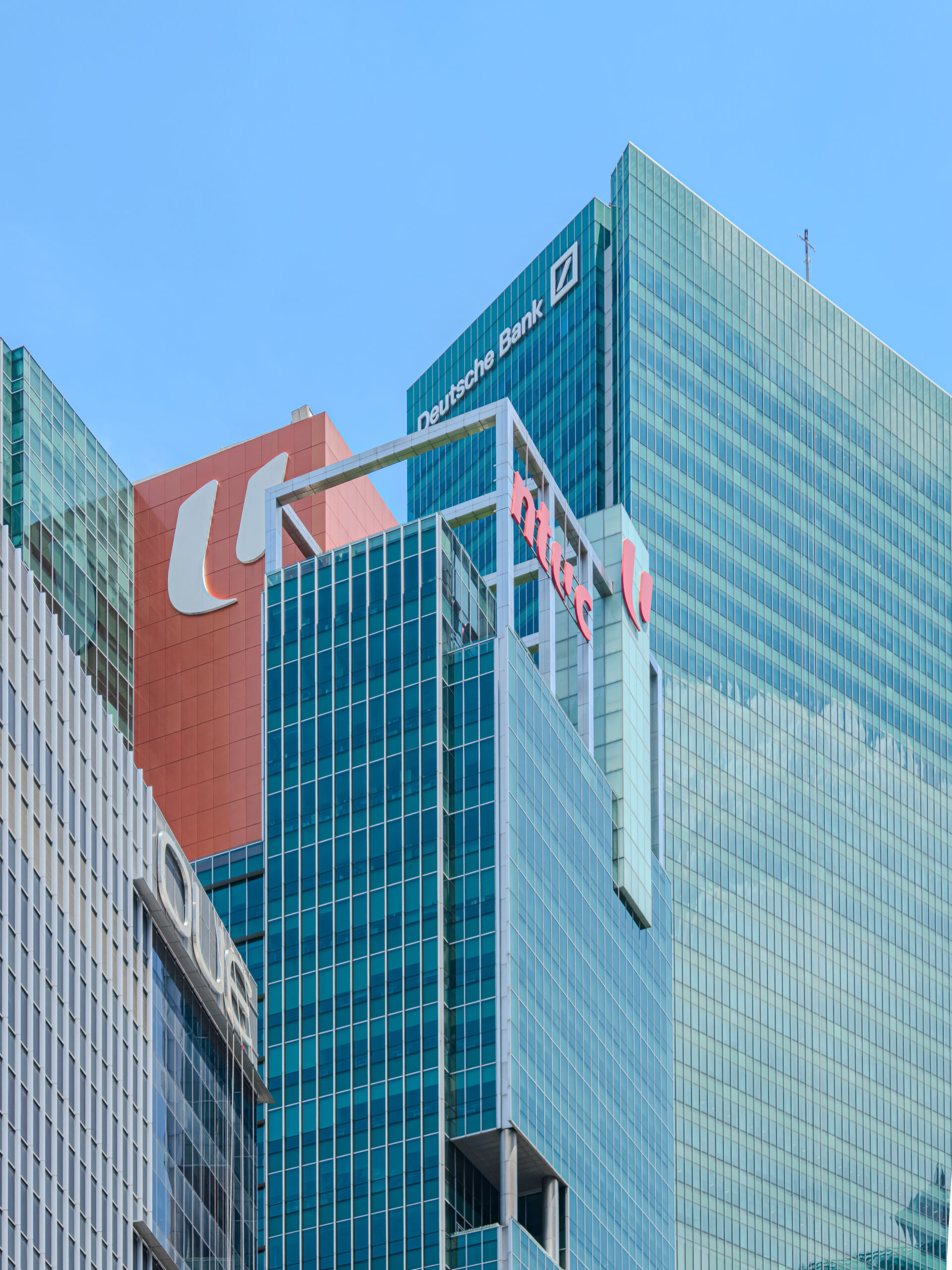
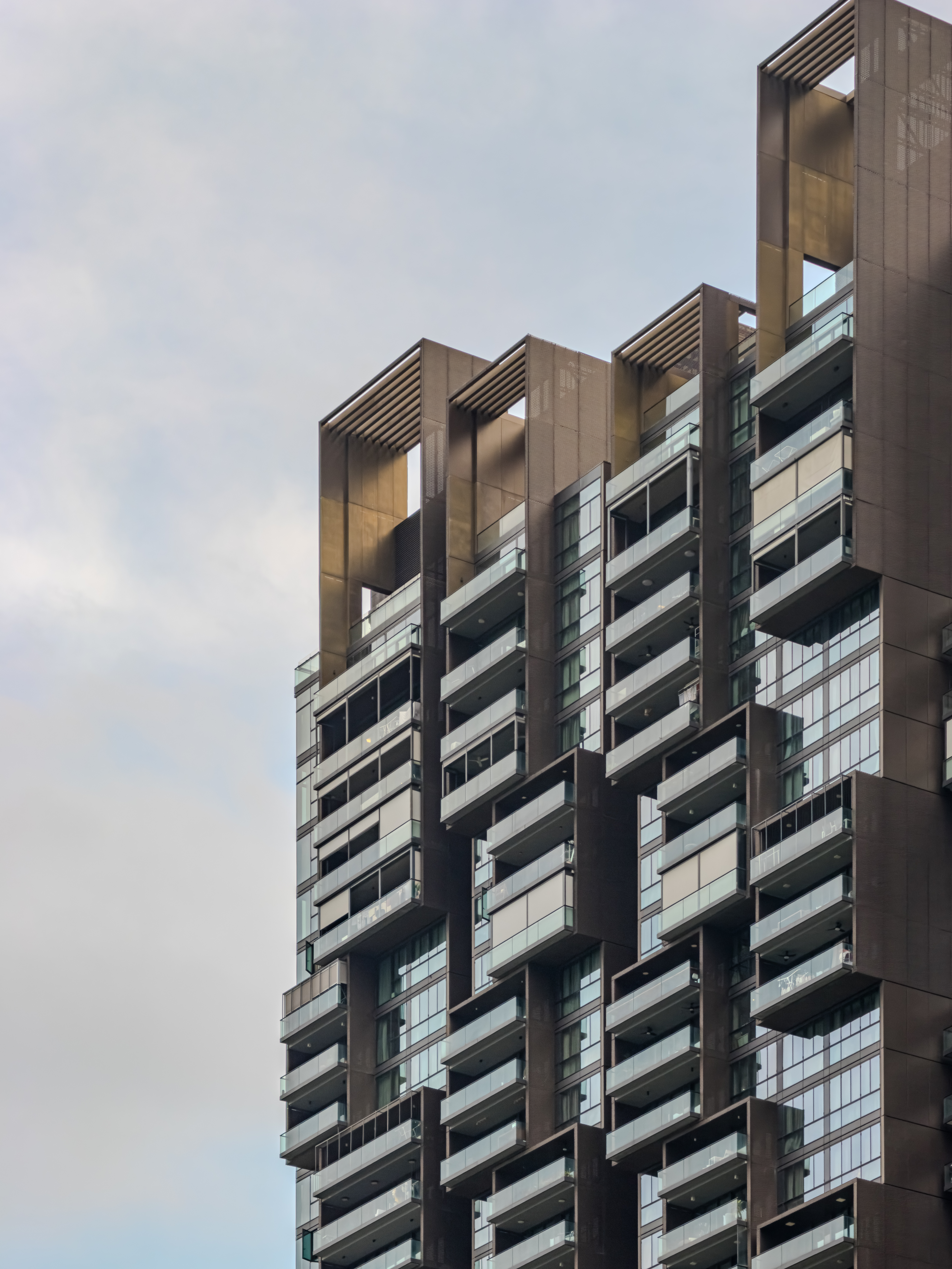
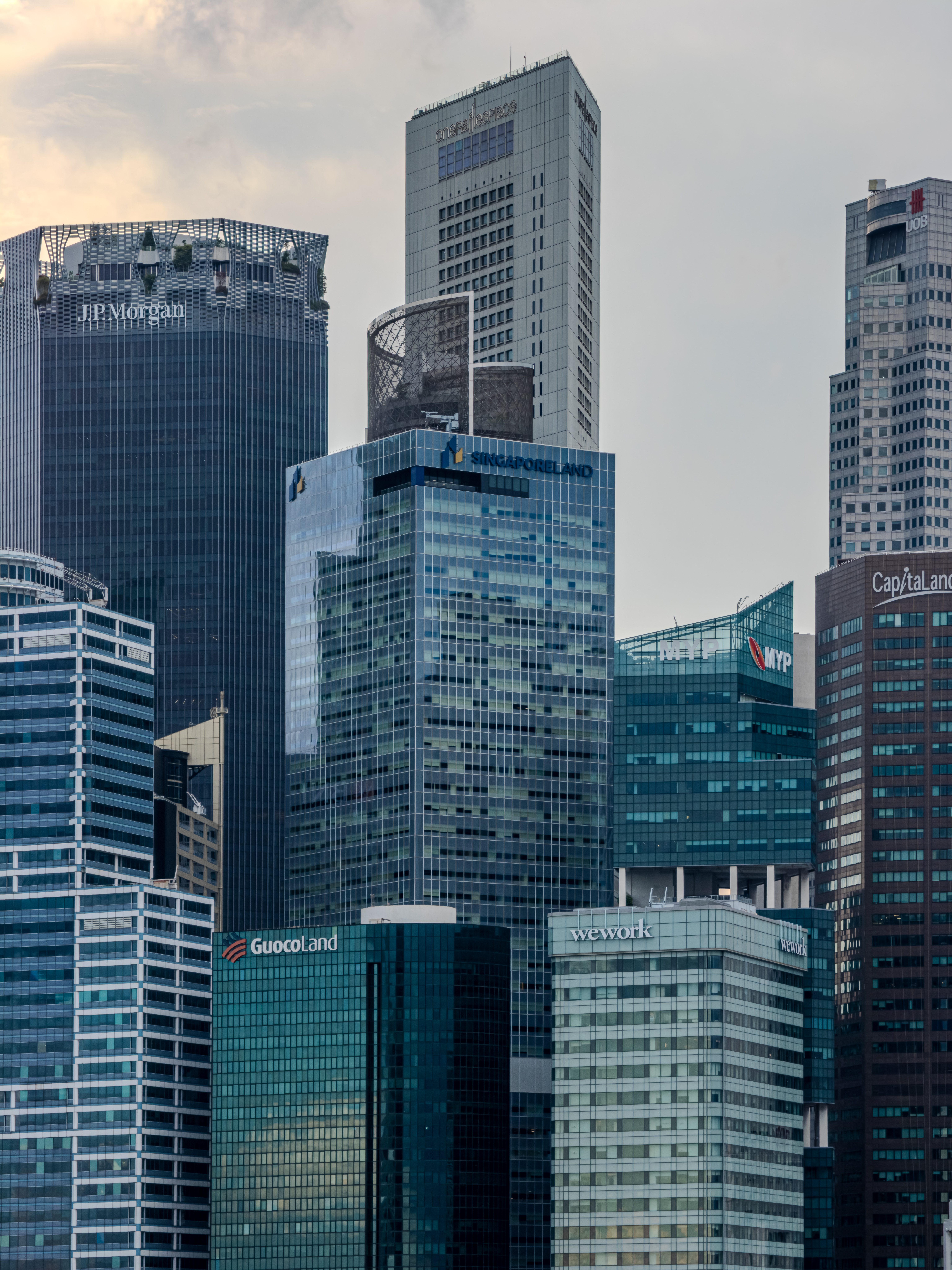
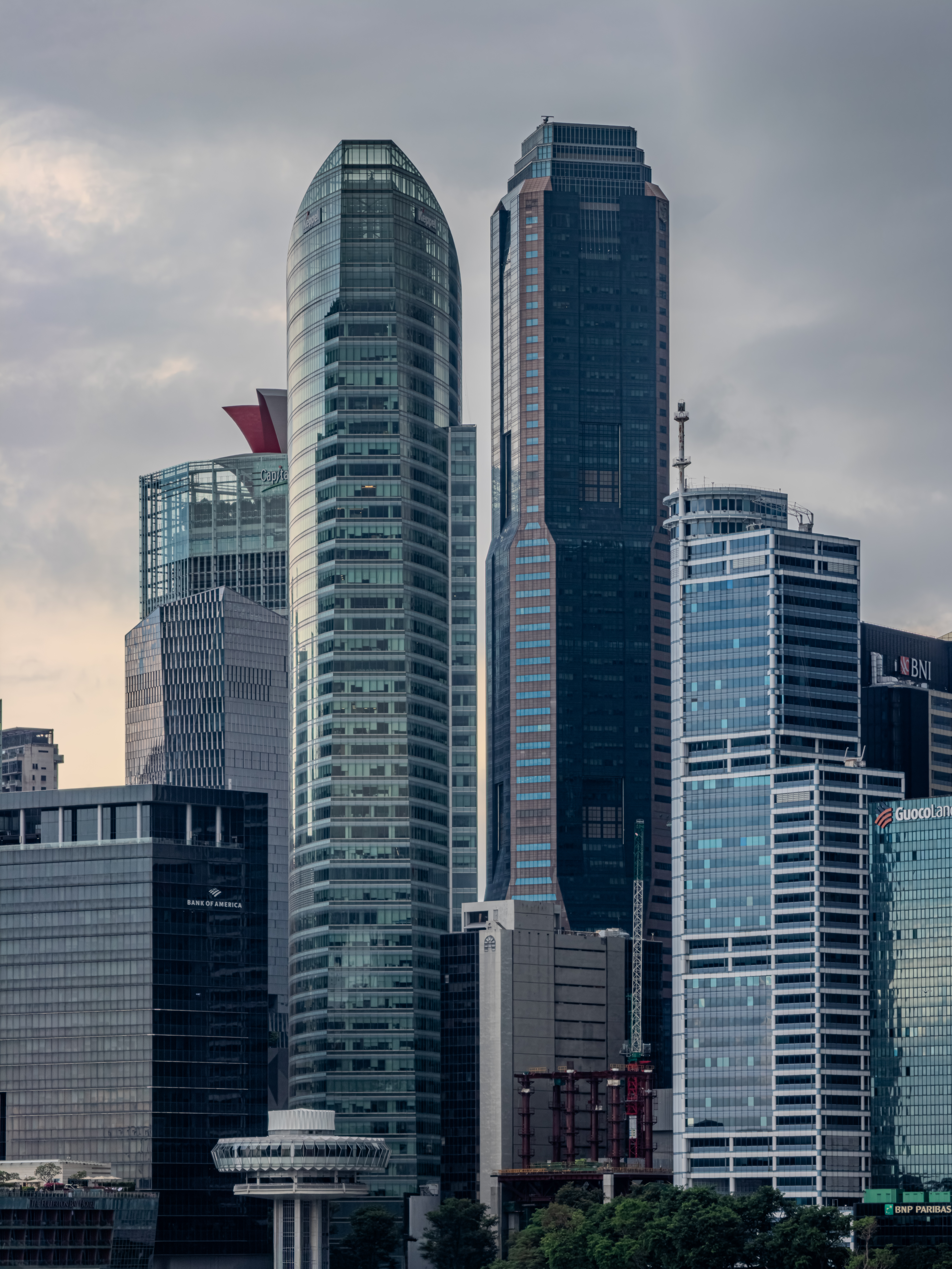
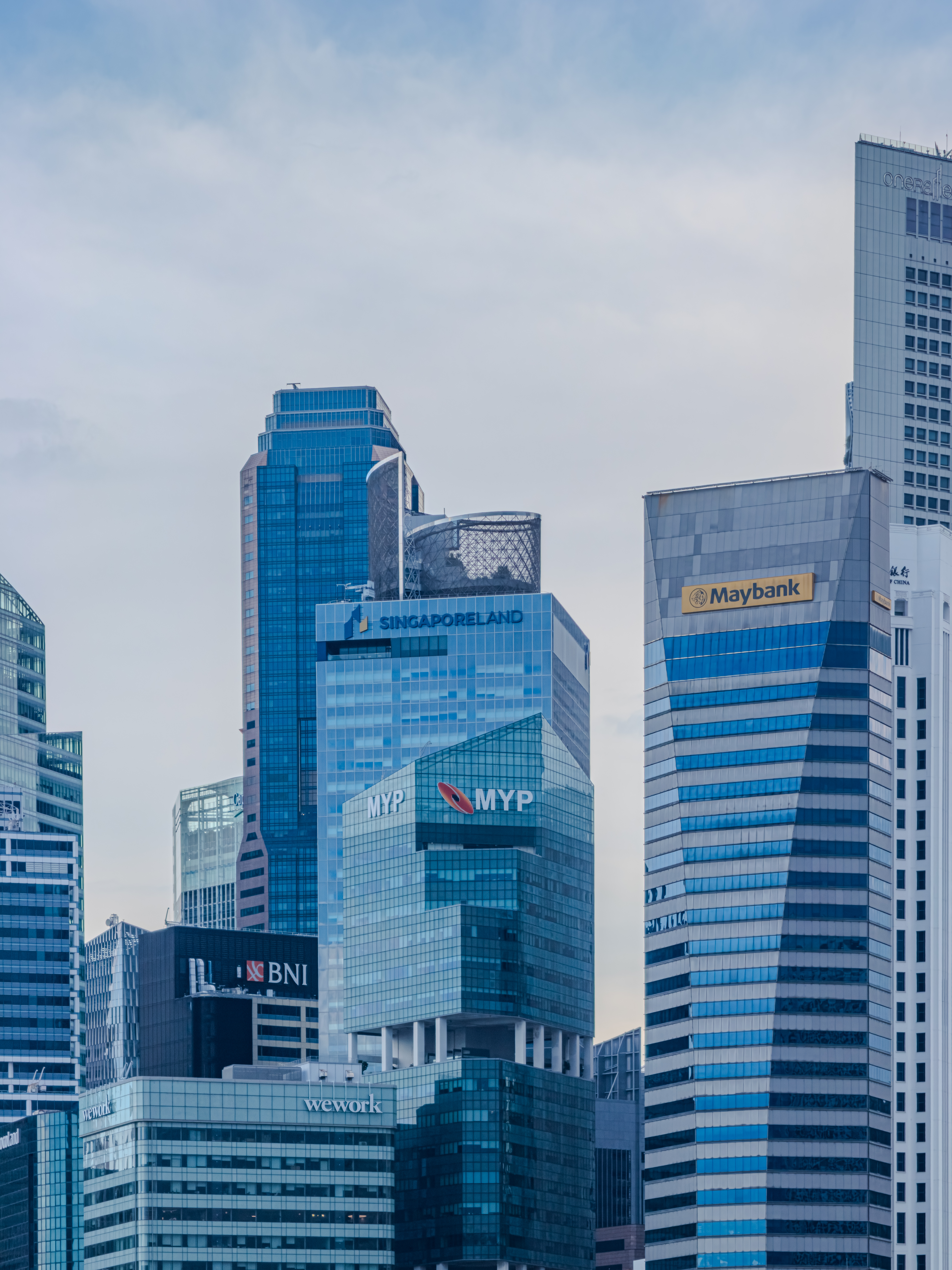
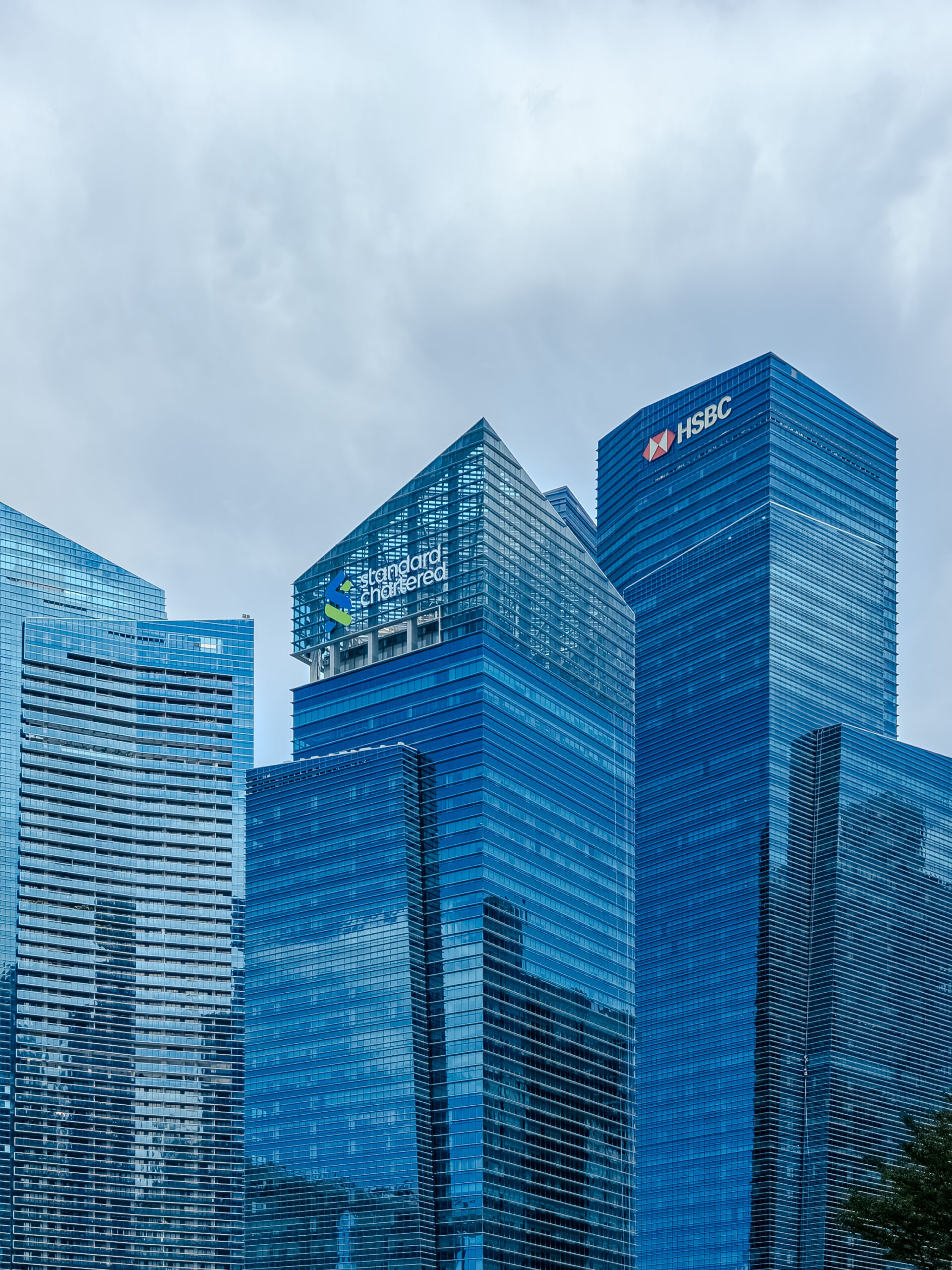
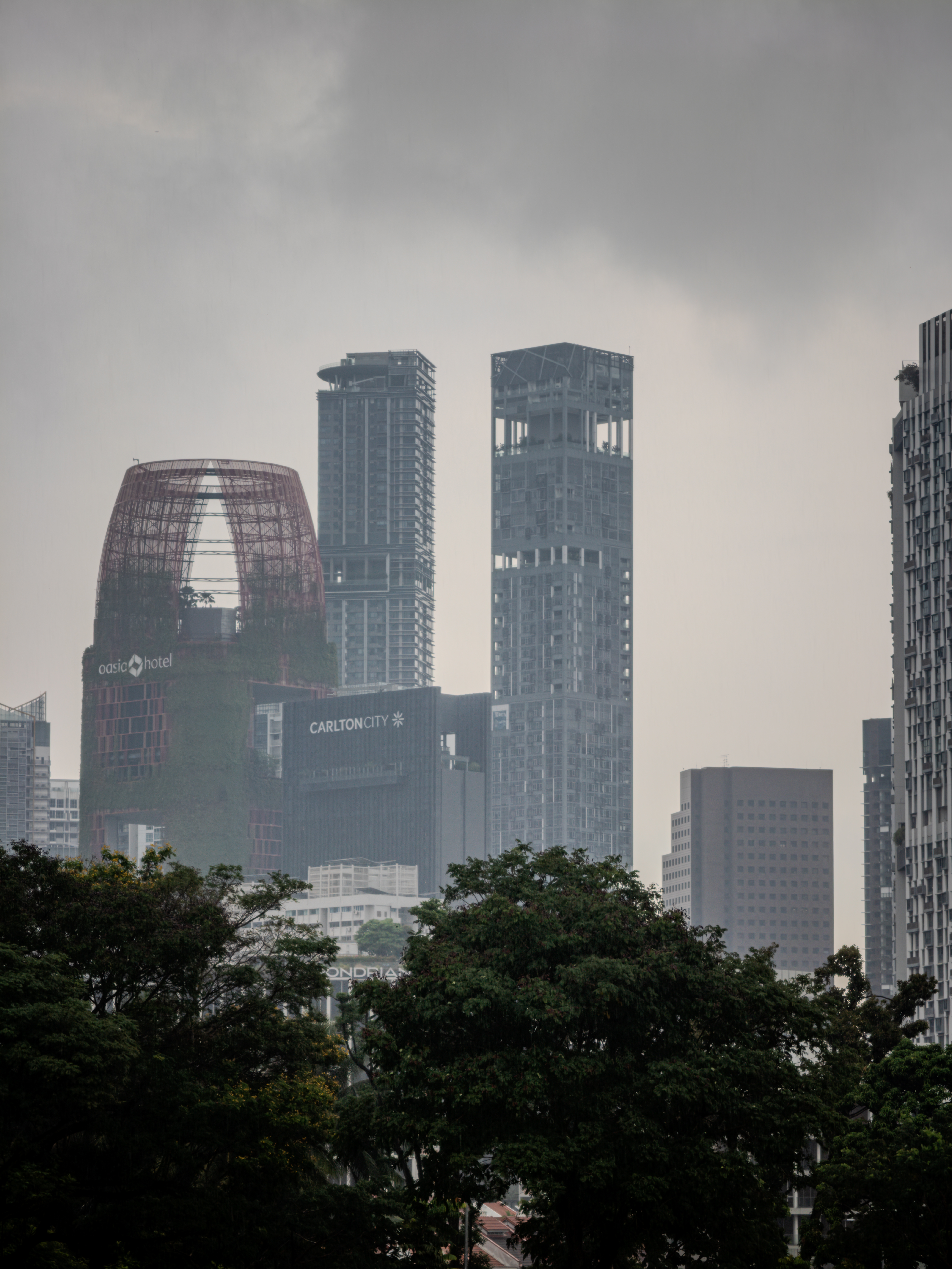
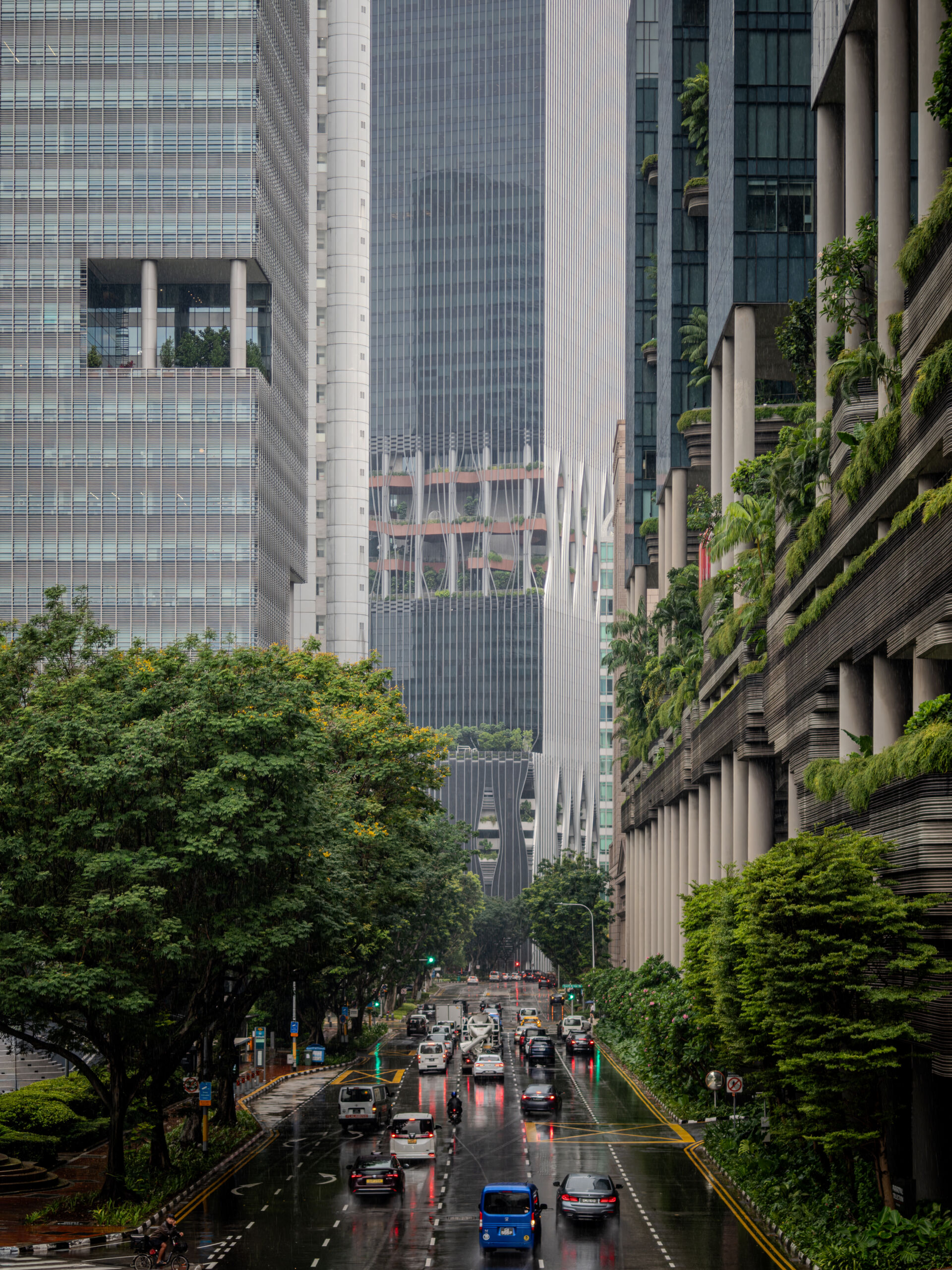
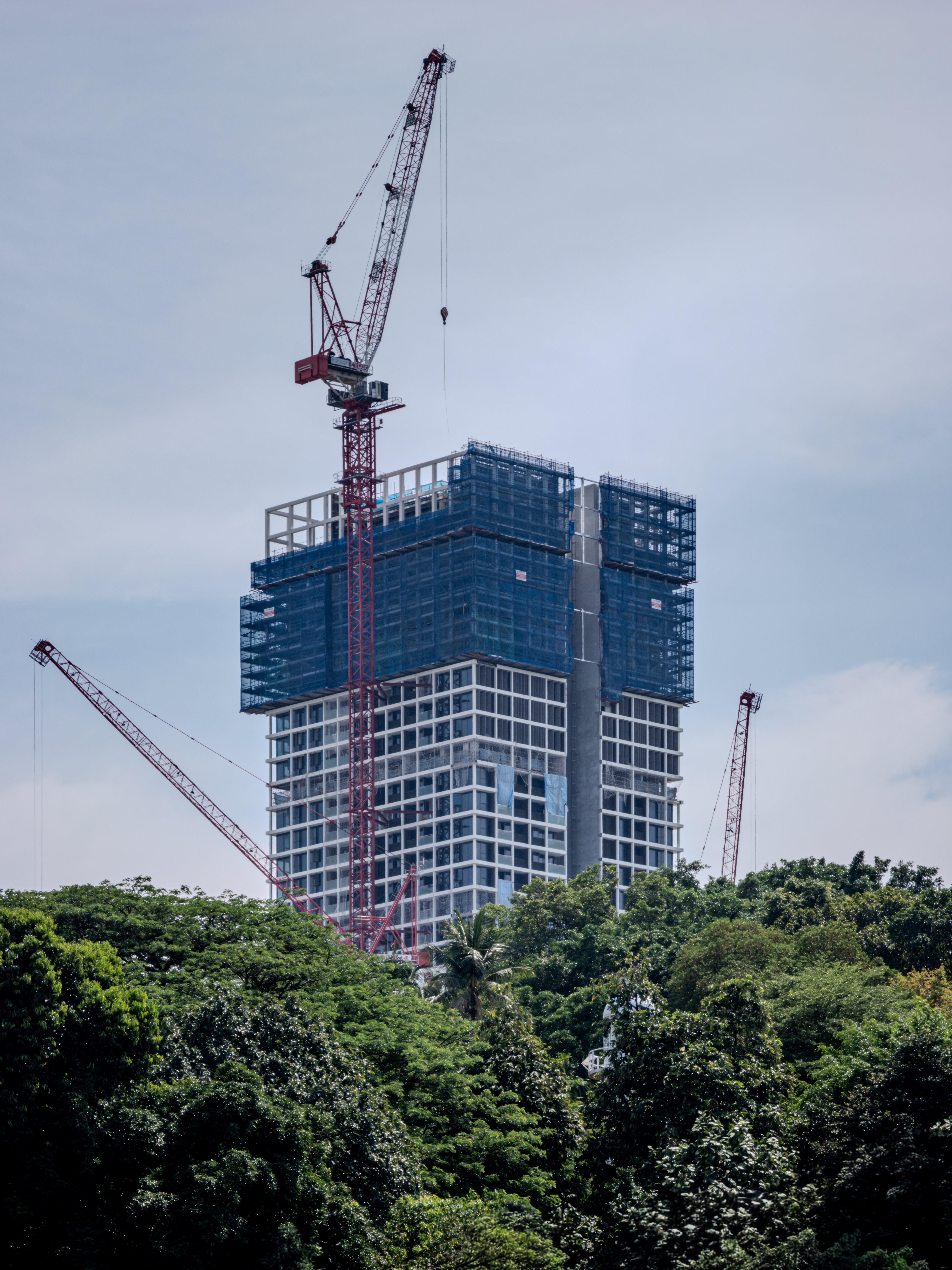
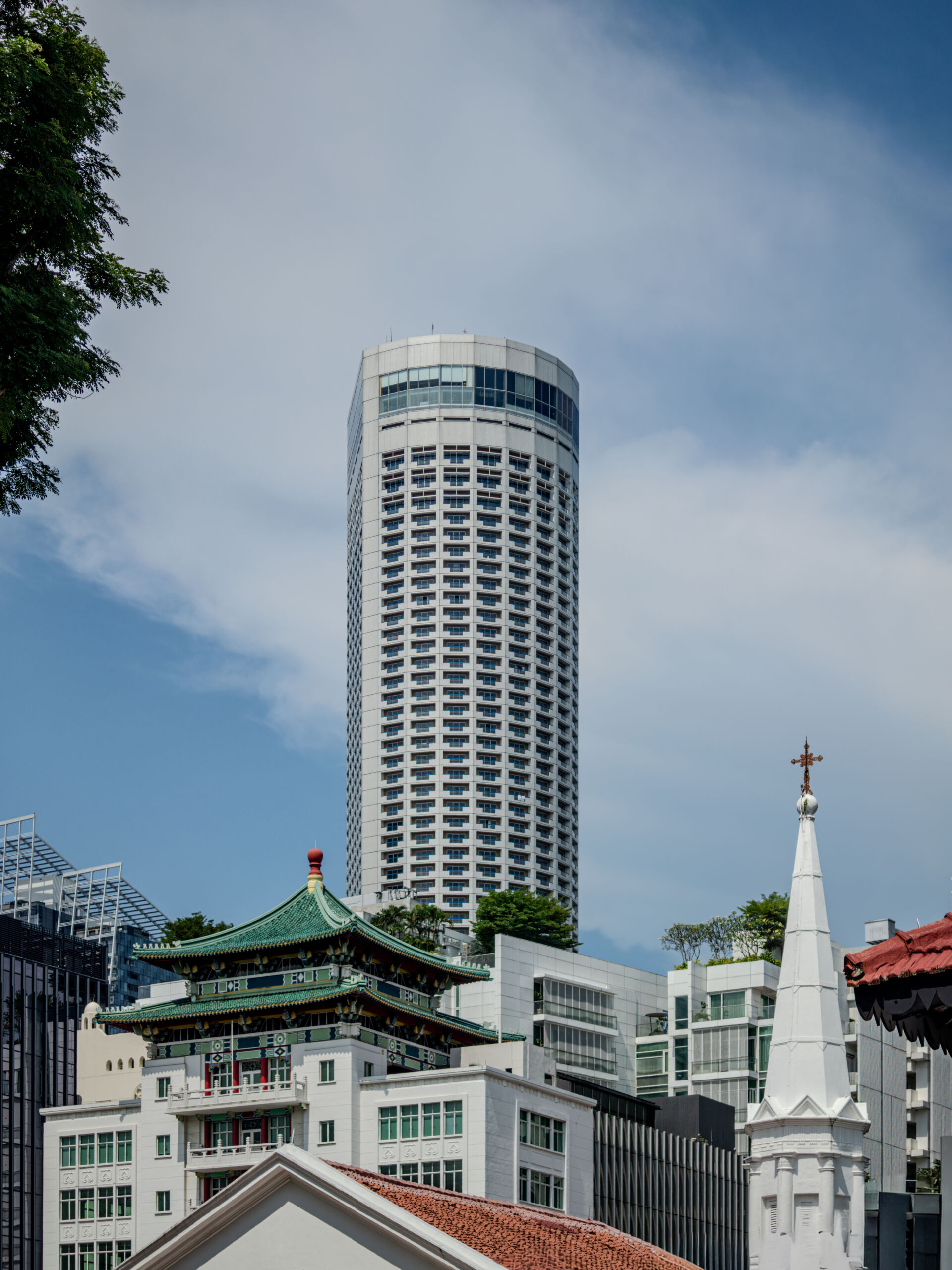
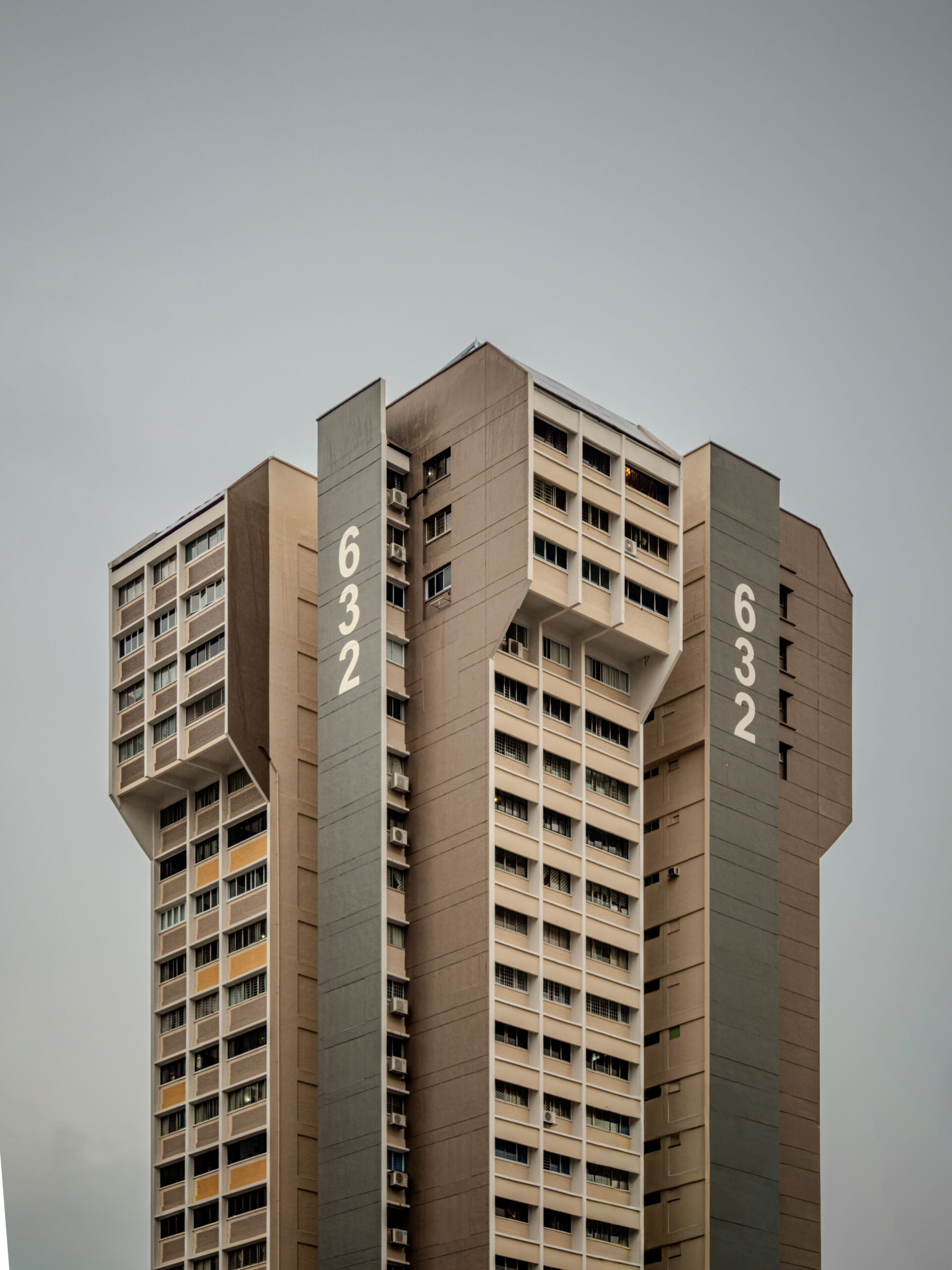
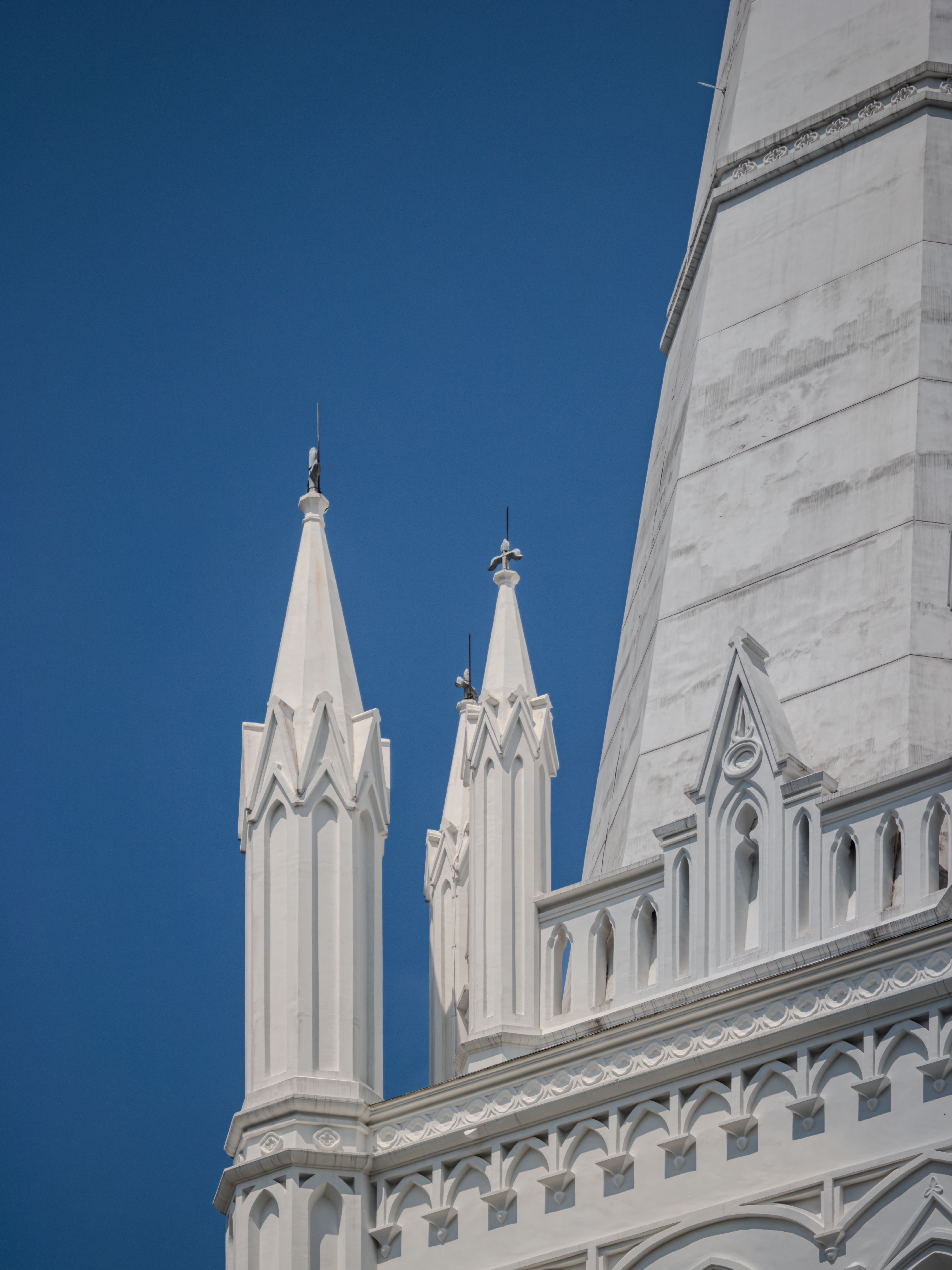
The MRT is the best way to get to all of these places. Tap in with Apple Pay or Google Pay – no card, no app, no nonsense like cash – and step out of the heat into air conditioning. As of 2026, the system runs about 242 km across six lines and 143 stations, carries roughly 3.49 million riders a day, and is on track to roughly double in length by 2040. We met a teenager on the East-West Line who was delighted to find tourists (or rather “a” tourist – me) interested in MRT trivia. He told us about ghost stations, which are fully built stations that are locked and waiting for the surrounding areas to develop enough to need them. Bukit Brown is the most famous one. There are also empty tunnel boxes reserved for future lines under places like ION Orchard. In Singapore, he said, city development follows public transportation, not the other way around, which is verifiable. They call this approach transit-oriented development. The Land Transport Authority’s (LTA) master plan dictates station locations decades in advance, and Housing and Development Board (HDB) blocks and shopping districts are built around them. Saigon has just announced a future metro network of about 1,000 km – we’ll see if it catches up with Singapore’s system.
Geylang, where we stayed, is a unique place. During the day, its streets are lined with popular restaurants bearing signs in Vietnamese, Indian, Chinese, and Malay. The owners and cooks, especially the Vietnamese ones, are visibly proud and busy. At lunchtime, the omnipresent smell of Vietnamese phở is indistinguishable from that of District 4’s side streets. The Vietnamese diaspora in Singapore is large, successful, and mostly invisible to tourists, who come to Geylang either for the food or because a guidebook gave them the wrong impression. At night, the neighborhood shifts: clubs, bars, karaoke, and crowds of young people take over. My boyfriend, who can obviously understand Vietnamese better than I can, overheard several phone conversations in Vietnamese over the course of the week – confident businesswomen discussing payment disputes, bad customer behavior, and the current deployment of girls in dance bars and “on the streets”. He heard five or six of these conversations in seven days. Geylang’s well-documented nightlife is no secret. To us, it was just part of the neighborhood’s character – that the same area is home to a proud diaspora that runs successful restaurants by day and the harder, quieter side of migration by night. Both are part of the place where we slept.
Dystopian utopia
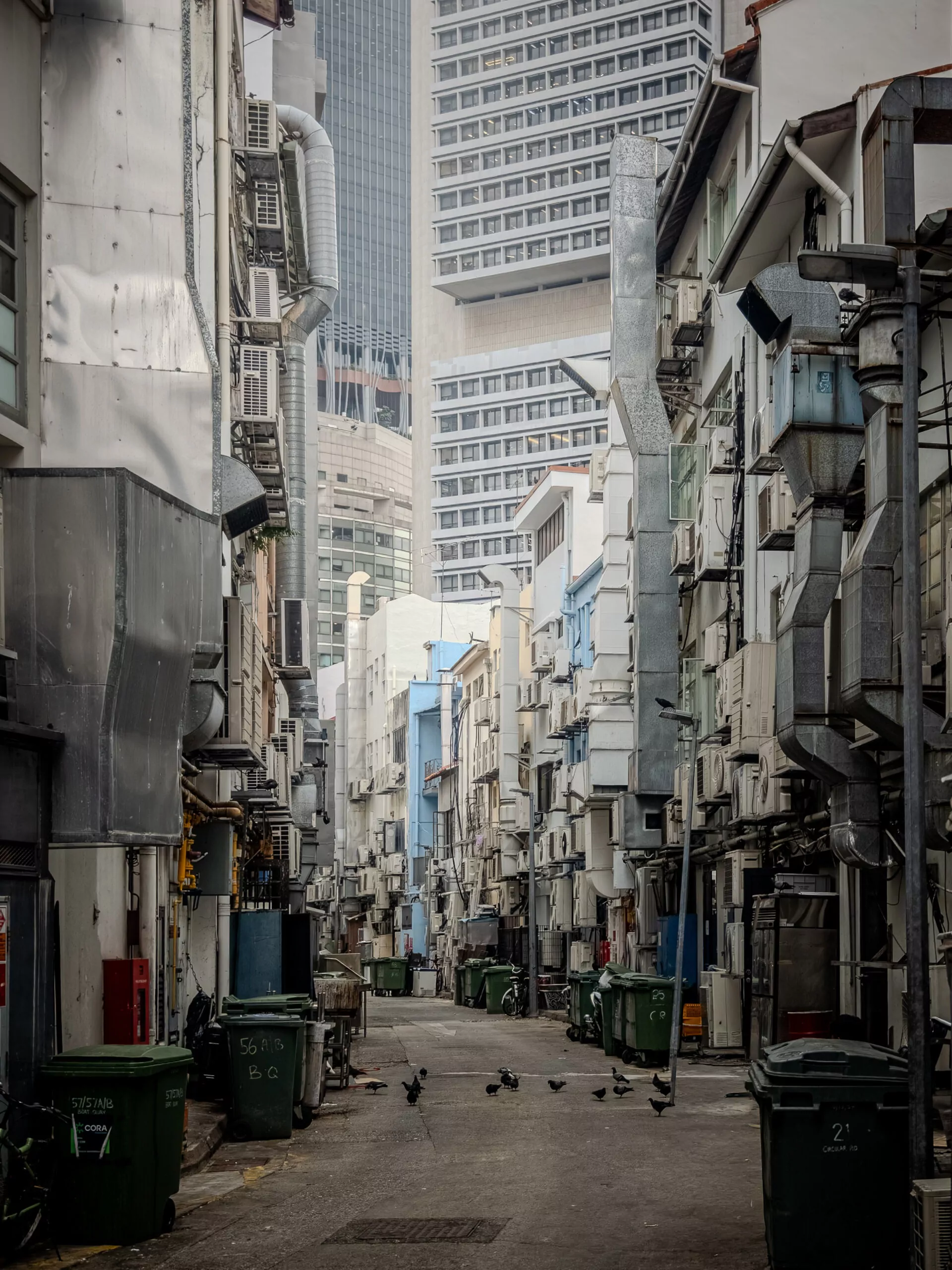
Singapore is the cleanest country I have ever visited. It’s not just “clean for Southeast Asia” clean; it’s actually clean. There are no motorbikes parked or driving on sidewalks, no street food stalls blocking foot traffic, no visible piles of trash, no low-hanging cables buzzing in the rain, no pee-streets, no potholes, and no traps. Crosswalks function. Traffic lights are obeyed. Canals run clear green instead of bubbling black. House facades retain their original color through tropical rains instead of streaking gray within just a year. Regardless of how it’s done, the result is a city you can walk through without constantly watching your step.
Yet it’s the how that evokes feelings. There are fines for everything. There are reminders everywhere. Cameras are everywhere. The government’s tone of voice in public communications is the strangest I’ve ever encountered from a state – a kind of serious mother register: direct, oddly flowery, and genuinely caring, but with an unmistakable undertone of “and we will know if you don’t”. You feel watched because you are. You feel taken care of because you are. It’s a dystopian utopia – not an original observation, but perhaps one of the truest. I don’t know how I feel about it yet. I know I felt safe. I also felt slightly observed. But only by the system, not by the people. We held hands and kissed in public spaces – on the metro, in malls, and in parks – and almost no one cared. It’s a kind of freedom within a system built on strict rules.
Surprisingly, the city had street musicians, live performances, and small markets everywhere. There were more than I expected from a country with an international reputation for being “extremely orderly”. This orderliness seems to allow for spontaneity; it just determines where things go.
Coming home
We landed back in Sài Gòn on a Friday evening, and I immediately bought a Vietnamese coffee. Singapore coffee is fine. But after a week of drinking it, my boyfriend and I quietly missed the deep black, hyper sweet, condensed milk bomb that is a proper cà phê sữa đá – the kind that costs 25k VND on a plastic stool somewhere and tastes like the climate it grew in. We also missed the breeze. Despite being only marginally warmer on paper, Singapore felt 10 to 15 degrees hotter than home because Sài Gòn almost always has wind moving through it, and Singapore somehow doesn’t. So when I got out of the airport, the first thing I noticed was that the air was actually moving. Well, and it was also thicker; much more polluted.
I’m still thinking about the orchid guard. About the lady at the beverage booth. I think about the spider on the crocodile sign, the hornbill singing into a hollow trumpet of her own bill, and the rat snake that walked the trail with us. She was respectful and patient, sharing a few minutes of attention before disappearing back into the forest. I’m thinking about a city that unintentionally and then intentionally protected six hectares of its original forest and saved a wetland when a thousand people showed up for a tour in 2001. Singapore was full of quiet places, nature, wildlife, and related wonders. If you can see them. It’s easy to walk past your own miracles on the way out the door when you’ve lived somewhere long enough.
In seven days, we took fewer than 400 photos. Each one mattered. Not one of them was of the Merlion.


