Jayden's Kitchen, Batch One Too salty? Add sugar

Boiled quail eggs, spicy fried pork, pumpkin soup. The next day it’s spicy lemongrass tofu with a sweet papaya soup, then sweet coconut banana with spicy chili pork and an opo squash soup, then spicy ginger chicken with a sweet-and-sour pineapple shrimp soup, then salty fried garlic shrimp with a sweet-sour fish soup – and the day after that, none of the above, because Jayden knows dozens of these and doesn’t do reruns.
Almost every evening he walks to the grocery store around the corner, alone or with me if I’m back from work in time, and dinner gets decided right there between the shelves. It’s always three parts: rice, a main dish, a soup. Every dish is Vietnamese, every one he learned from his mom back home in Cà Mau, and every one is so good that I’ve stopped pretending I’m not addicted to them.
The best part is that he loves it. Cooking is how Jayden comes down from a long, messy day: his family on the line via Zalo or a League of Legends stream running, a pot doing its thing, and him visibly relaxing into it. Some people meditate; Jayden braises chicken while a streamer throws a game in mid lane.
My role in all this is sous-chef, and I use the term generously: I cut things. Ginger into strips, chicken into bite-sized pieces, tomatoes into dice – whatever Jayden points at, I turn into smaller pieces of itself, and then I get out of the way, because at the actual cooking I’m pretty useless. With cakes, cookies and sweet pastries it’s the other way around (my baking record runs from a 2012 marble cake that calls for up to two bottles of rum, most of which never reach the batter, to a carrot cake I served an entire office before tasting it myself): there I lead and he assists. He spices things up; I sweeten them.
A while ago Jayden started writing some of his dishes down – the easy ones, the ones he’s cooked dozens of times. His notes read like this: season with a little salt, sugar, MSG, fish sauce, caramel and stir-fry until chicken is firm. No dish names, no amounts, just the moves. That’s exactly how his mom taught him, and it works beautifully if you grew up next to her stove; for everyone else I’ve turned his notes into something you can follow – Vietnamese names, amounts, steps in order, and a word on the ingredients you might not have met yet. The amounts are Jayden’s hand converted into spoons and grams, so treat them as a starting point and let your tongue have the last word.
I’ll share them one batch at a time, and every batch will look easy on paper: short ingredient lists, a handful of steps. That’s the facade; fish sauce, sugar, MSG, ginger and garlic stack into a depth of flavor the shopping list never warns you about, so these dishes LOOK simple and taste like anything but. Batch one is three mains and a soup, which conveniently makes a full dinner with a main to spare.
The compensation principle
Jayden’s notes keep returning to one rule, and he gives it a name: the principle of compensation between saltiness and sweetness. Every dish has a target somewhere on the axis between salty and sweet, and when you overshoot, you don’t start over – you compensate: too salty, add sugar; too sweet, add salt; then taste again. It sounds like kitchen folk wisdom until you notice it’s a feedback loop, and the engineer in me loves it a little too much.
Most targets sit further toward sugar than a northern cook would like. Cà Mau is the southern tip of Vietnam, and the south cooks sweet – sugar in the braise, sugar in the stir-fry, sugar in the soup, and nobody apologizes for it.
And yes, MSG: it’s in three of the four recipes, and it stays there. The whole panic goes back to a single reader’s letter to a medical journal in 1968, and the research since hasn’t been kind to it; in Vietnam it sits next to the salt in every kitchen, sold as bột ngọt (sweet powder). Leave it out if you must – the dish will taste a little flatter, and Jayden will be a little disappointed in you.
One more thing he writes into every single recipe: filtered water. In Sài Gòn the tap is for washing, not for cooking, so it’s filtered every time; wherever your tap water is drinkable, just use the tap.
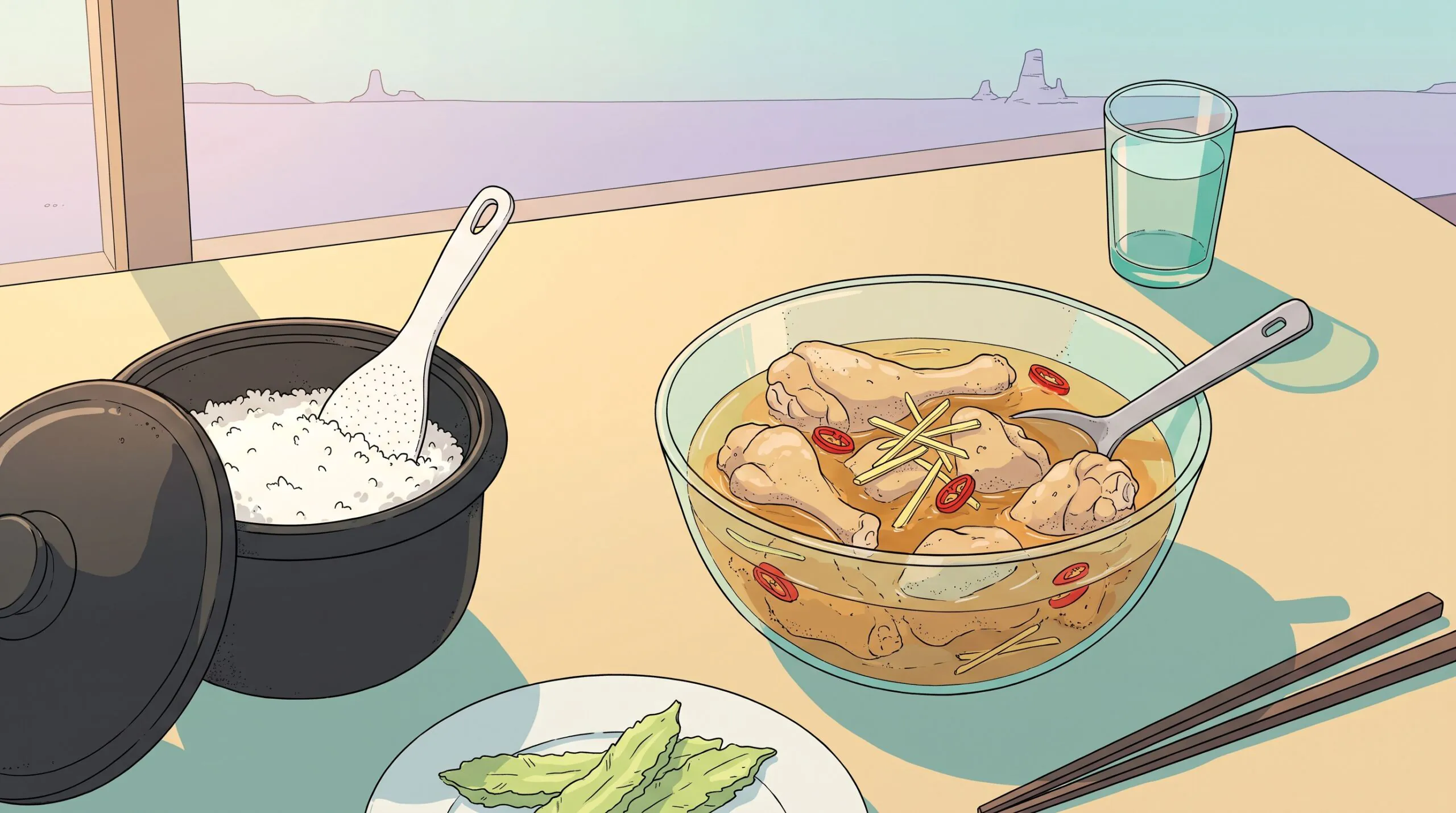
Gà kho gừng – ginger braised chicken
Ginger in quantities that would alarm a German grandmother, chicken simmered golden, and a thin, spicy broth you’ll want to pour over far too much rice. Target: a little saltier than sweet, and it serves two with rice.
Shopping list
- 500 g chicken drumsticks or thighs, bone in, chopped into bite-sized pieces
- a thumb-sized piece of ginger (≈40 g), peeled and cut into thin strips
- 3 cloves garlic, minced
- 1-3 fresh red chilies, sliced
- 1 tbsp fish sauce
- 1 tsp sugar, plus more to taste
- ½ tsp salt, plus more to taste
- ½ tsp MSG
- 1 tsp nước màu (Vietnamese caramel sauce, see below)
- ≈300 ml water, enough to just cover the chicken
- 1 tbsp cooking oil
Cooking
- Heat the oil in a pot or deep pan over medium-high heat and sauté the garlic until it smells good, about 30 seconds.
- Add the chicken and stir-fry for a minute, then add the ginger and keep stir-frying.
- Season with the salt, sugar, MSG, fish sauce and caramel, and stir-fry until the chicken turns firm and takes on color, 3-4 minutes.
- Pour in water until the chicken is just covered, add the chili and bring it to a boil. Let it bubble until the chicken is cooked through, ≈10 minutes.
- Taste the broth: it should be a little saltier than sweet. If it tastes thin, add salt and sugar; if you overshoot, compensate.
- Turn off the heat and serve with rice, the broth spooned over it.
Nước màu (literally “color water”) is dark caramel thinned with a little water, and it’s what gives Vietnamese braises their color – here only a touch, so the broth stays golden instead of going full mahogany. Asian grocery stores sell it bottled, sometimes labeled “caramel sauce” or “cooking caramel”. To make it yourself, melt 2 tbsp sugar in a dry pan over medium heat, let it go dark amber (not black – black is bitter), take it off the heat and carefully add 2 tbsp water. It will spit at you, and it keeps in a jar for weeks.
On the chili, Jayden’s original note says a little or a lot depending on bb, and bb is me. We call each other bb, after BB from Death Stranding, which I was playing when we met – pronounced bee-bee, not baby, even though BB is technically a baby in a jar. Calibrate to your own bb.
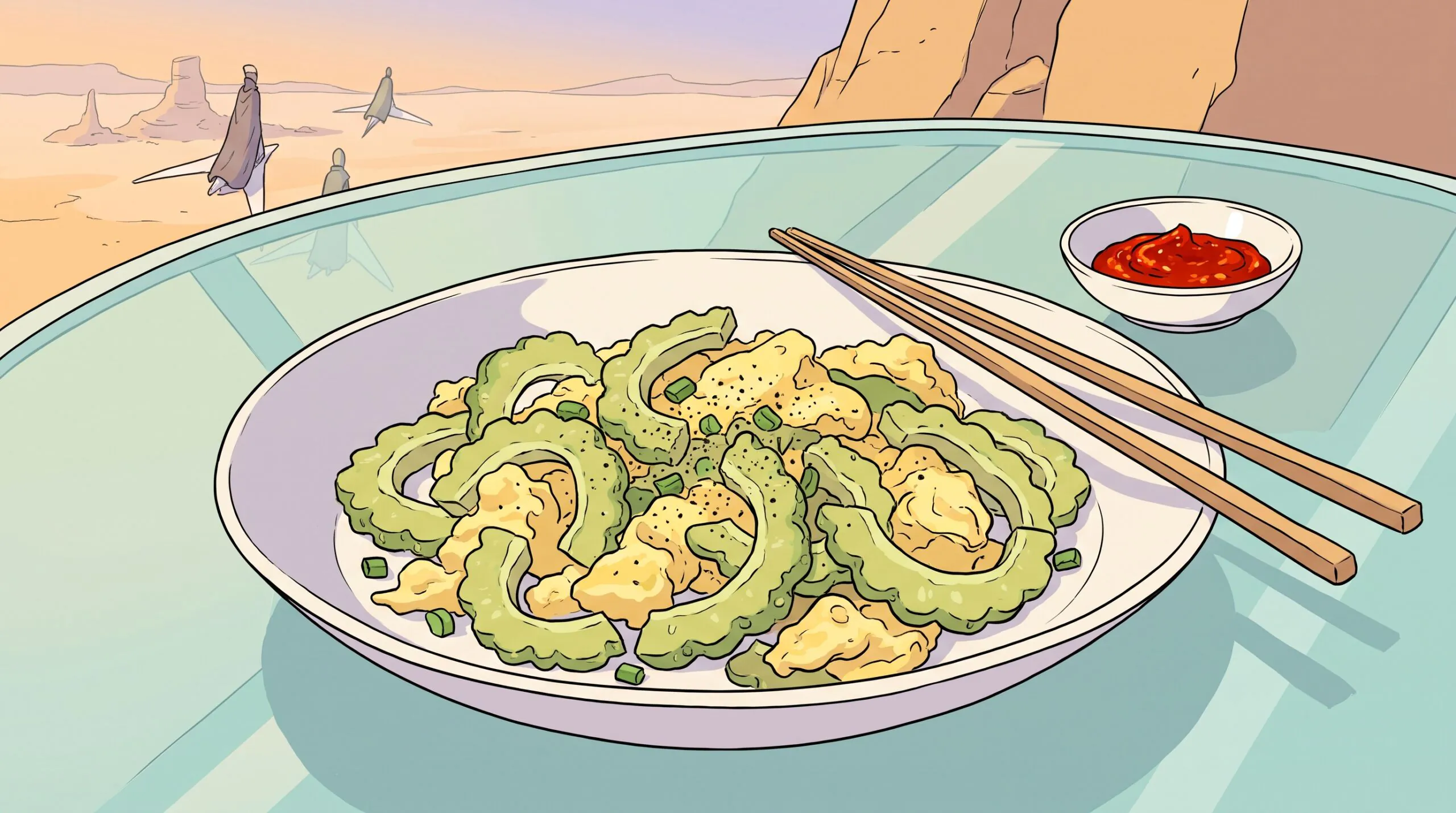
Khổ qua xào trứng – bitter melon stir-fried with egg
The name does half the work: khổ qua sounds like “the suffering passes”, which is why southern families serve it stuffed, in a soup, at Tết. Here it’s less ceremonial – thin slices, scrambled egg, and enough sugar to talk the bitterness down. Target: sweeter than salty, always, and it serves two with rice.
Shopping list
- 2 bitter melons (≈400 g)
- 3 eggs, or more – Jayden’s verdict on extra eggs is it is still delicious
- 2 cloves garlic, minced
- 2 green onions, cut into short lengths
- 1½ tsp sugar, plus more to taste
- ½ tsp salt
- ¼ tsp MSG
- 1 tsp fish sauce
- 3-4 tbsp water
- 1 tbsp cooking oil
Cooking
- Halve the bitter melons lengthwise, scrape out the seeds and the white pith with a spoon, and slice them thin, ≈3 mm – thinner slices, less bitterness.
- Heat the oil over medium-high heat and sauté the garlic until fragrant.
- Add the bitter melon, sugar, salt, MSG and fish sauce and stir-fry. Add the water a spoonful at a time whenever the pan runs dry, so nothing burns.
- Taste: you want a rich salty-sweet flavor with sweet clearly winning. The bitterness pulls everything down, so when in doubt, more sugar.
- Crack in the eggs and keep stirring so every slice of bitter melon gets coated, until the eggs have set and the pan is just dry.
- Add the green onions, stir once more and turn off the heat.
Bitter melon lives in any Asian grocery store; Indian stores sell a spikier, even more bitter cousin as karela, which works too if you go heavier on the sugar.
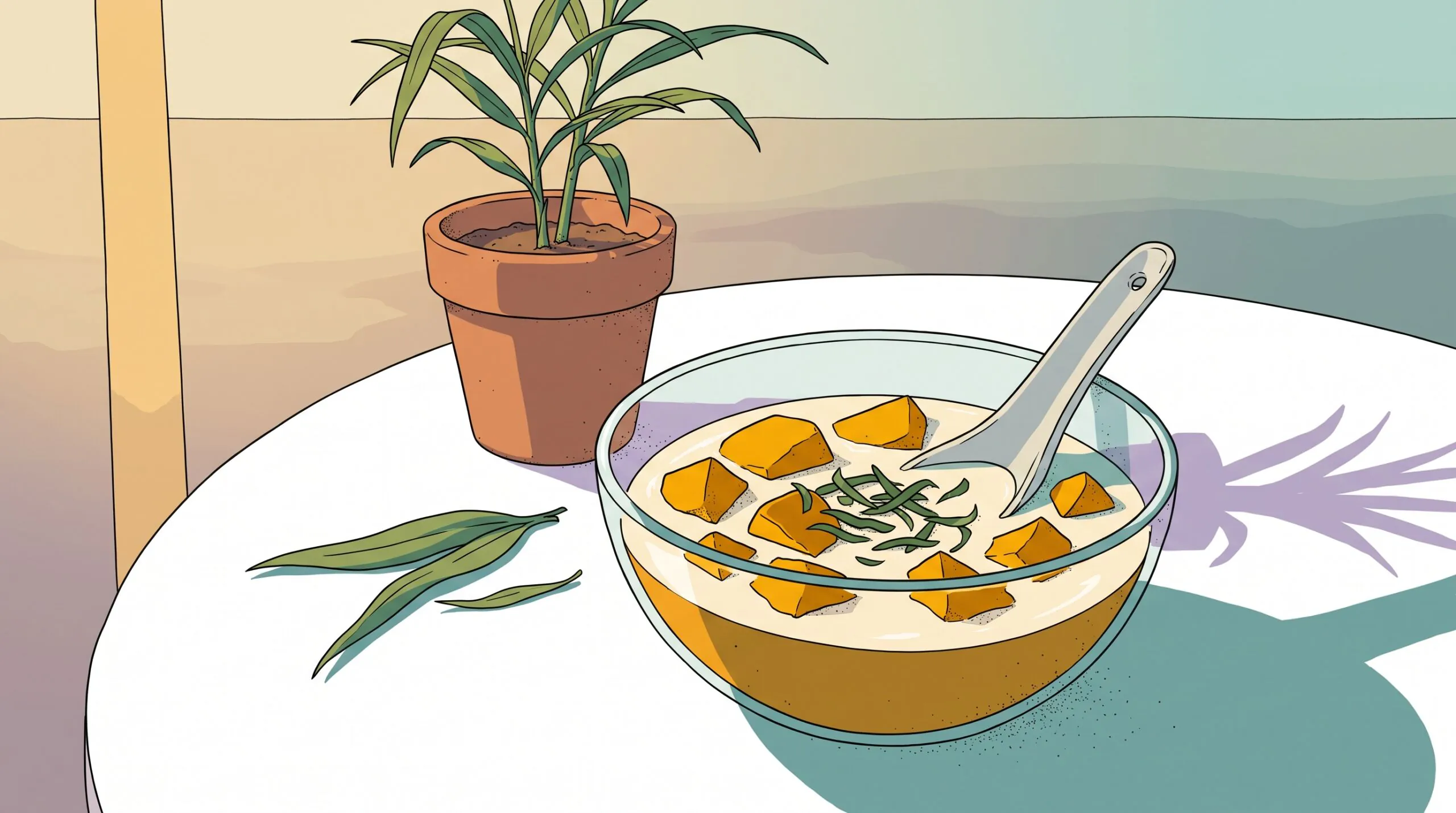
Bí hầm dừa – pumpkin coconut soup
The soup of the batch, and the sweetest thing in it: pumpkin, coconut milk, sugar, and a pinch of salt so the sweetness has something to stand on. If you’ve only ever met pumpkin soup as a blended orange purée with a swirl of cream on top (hello, Germany), this is the other thing – chunks, broth, coconut. Target: sweet, with salt you’d only notice if it were missing – enough for two to three.
Shopping list
- 500 g pumpkin (kabocha or butternut), peeled and cut into bite-sized pieces
- 400 ml coconut milk (one can)
- ≈300 ml water
- a small pinch of salt
- 2 tbsp sugar, plus more to taste
- a small handful of ginger leaves, finely sliced
Cooking
- Put the pumpkin in a pot with just enough water to come halfway up the pieces, bring it to a boil and simmer until soft, 10-15 minutes.
- Add the salt – very little – then the sugar, and stir gently; soft pumpkin breaks easily.
- Pour in the coconut milk and bring it back to a gentle simmer. Don’t let it boil hard, or the coconut milk splits.
- Taste and add sugar until the sweetness is where you want it.
- Add the ginger leaves and turn off the heat.
Ours come from the ginger plant in a flower pot on our balcony; one of us walks out and picks a few. Stores outside Southeast Asia rarely carry the leaves, so either stick a sprouting knob of ginger into a pot yourself and wait, or add a few thin slices of fresh ginger with the coconut milk, which gets you most of the way.
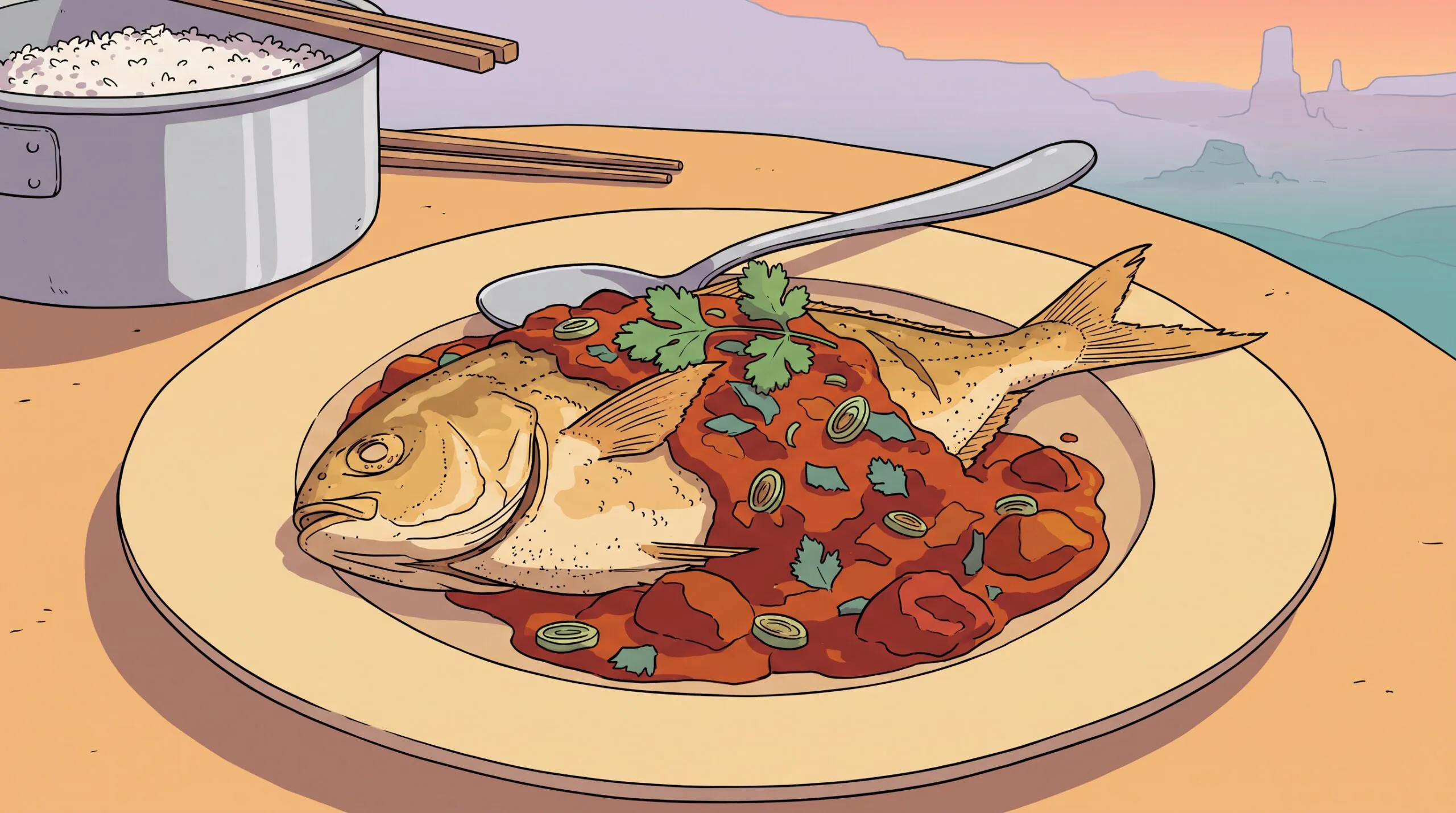
Cá sốt cà – fried fish in tomato sauce
Jayden’s notes title this one Fish tomatoes, followed by a fish emoji and a tomato emoji, and honestly, the name is accurate: cá sốt cà is literally fish, sauce, tomato, and in English the middle two words would start a fight with the nước mắm bottle, so Fish tomatoes it is. Crisp fried fish in a quick tomato sauce, and that’s the whole dish. Target: salty and sweet in equal measure – salty and sweet enough to eat, as Jayden puts it, meaning seasoned for rice rather than for sipping, and it serves two.
Shopping list
- ≈500 g whole pompano, one large or two small, scaled and gutted (see below for alternatives)
- 3 ripe tomatoes (≈400 g), diced
- 1 tsp sugar for the tomatoes, plus more to taste
- 3 cloves garlic, minced
- ½ tsp salt, plus more to taste
- ¼ tsp MSG
- 2 tsp fish sauce
- ≈150 ml water
- 2 green onions, sliced
- a handful of coriander, chopped, plus a few leaves for the top
- cooking oil for frying
Cooking
- Pat the fish dry (wet fish in hot oil is a war crime against your forearms) and fry it until golden brown on both sides, 5-6 minutes per side, then set it aside.
- Toss the diced tomatoes with the sugar and let them sit while the fish fries.
- Heat a little fresh oil in a pan and sauté the garlic, then add the tomatoes and stir-fry until they start to collapse.
- Add the salt, MSG and fish sauce, stir, then pour in the water and let it simmer for a couple of minutes.
- Taste, and if it’s not there yet, add salt and sugar in equal amounts until it is; overshot one way, compensate with the other.
- Stir in the green onions and the chopped coriander – it belongs in the sauce, not just on it – and turn off the heat. Lay the fried fish into the sauce and flip it once so it soaks up the sauce on both sides. A few extra coriander leaves on top if you want it pretty, then get the rice on the table.
Heat off before the fish goes in is deliberate: the crust takes on the sauce without turning into mush.
Jayden’s default is cá chim, pompano, which Western fishmongers sell too. Back home in Cà Mau it’s just as often cá phi (a tilapia), cá đối (mullet) or cá nâu (spotted scat), so any firm, whole fish in that size class does the job.
That’s batch one. If one of these turns out great in your kitchen, the credit goes to a mom in Cà Mau, by way of Jayden, by way of a German with a cutting board; if it turns out bad, taste it and compensate.
Too salty? Add sugar. Chúc ngon miệng 😋

