
DOS Gets It Right MURI: A DOS Platformer That Actually Gets It
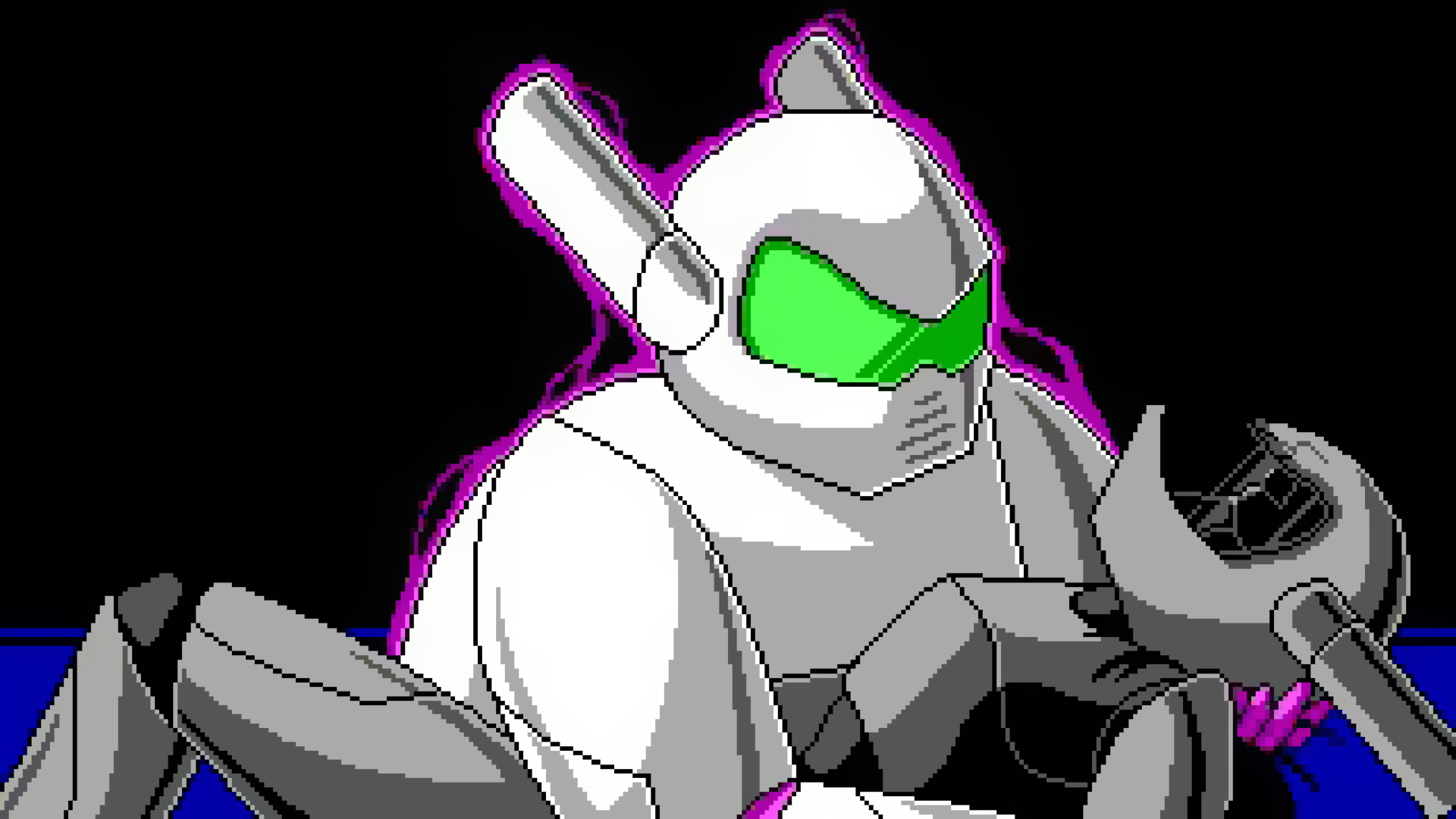

There’s a very specific feeling you get when you boot up a game from the early DOS era – a cocktail of visual and audio cues that bypasses your adult brain entirely and lands somewhere much further back. The chunky 16-color EGA palette. The single-channel PC speaker squawking at you. The blocky screen scroll. The complete absence of explanatory onboarding. And the flickering monitor… okay, we can leave at least this one out. IYKYK.
MURI gets it.
Released on December 7, 2013 by Swedish indie studio Ludosity – and designed by Daniel Remar, whose entire catalog of games is freeware except this one – MURI is a DOS-style run-and-gun platformer that draws directly from Commander Keen and the original Duke Nukem games. Not in the lazy, aesthetically-skin-deep way that a lot of retro-inspired games do. But in the way that makes you wonder whether Remar actually coded it in 1991 and just sat on it for two-and-a-half decades.
I came to MURI straight off a replay of Duke Nukem I – the original DOS game – and found it because I was hungry for more of the same. A few glasses of wine in, scrolling through Steam looking for something that scratched that exact itch. And there it was. Within minutes I was completely immersed, riding that nostalgic pixel wave from the early 90s with the warm, slightly embarrassing thought: so this is how a boomer feels when talking about boomer stuff. Except I’m a millennial, which, granted, is already two generations down the line – making me essentially a boomer reforged edition with a pixelated frosting.
The Plot, Which Is Actually Pretty Good
You play as Adwoa, a scientist and mother who helped design a powerful armored suit called MURI on a research station orbiting Mars. Her son Kojo was equipped with it. Earth and Mars, fearing what Kojo had become, sent their armies to destroy him – and then Mars just vanished. Gone. Poof.
So Adwoa suits up and goes looking.
The story is told through static pixel art text screens between levels, which is about as faithful as you can get to the DOS era without literally shipping a game on a 3.5″ floppy. It’s sparse, but it works – there’s genuine emotional weight in there if you’re paying attention, and the plot actually builds to something unexpected. The lore is deeper than the presentation suggests: Kojo absorbed all of Mars trying to rebuild it into something better, ended up comatose, and now the ghosts of an entire planet are haunting his suit. For a game that looks like it was made in 1991, that’s a surprisingly ambitious premise.
MURI Announcement Trailer
Running, Gunning, and Stomping
MURI is structured into four episodes with five levels each – which is more content than the runtime suggests, mostly because you’ll be hunting every hidden power-up across each stage. The main loop is classic: guide Adwoa to the exit, shoot or stomp everything in your way, grab power-ups, find secrets. There are six weapons, each with their own feel and use case, and the game automatically cycles you to your strongest available weapon rather than letting you hoard your best gear for later – a deliberate design decision that keeps combat flowing instead of stalling.
The Goomba Stomp mechanic is real and, interestingly, not just a Mario reference. According to Remar’s dev blog, it was implemented specifically to prevent accidental health loss from dropping onto enemies – a surprisingly thoughtful fix for what sounds like a minor annoyance. In practice it becomes a satisfying fallback when ammo runs tight, and adds a rhythm to combat that feels alive rather than mechanical.
Level and enemy design are both simple and deceptively challenging – which is exactly right for the genre. Nothing feels unfair, but nothing holds your hand either. The difficulty scales across four tiers, and unlike a lot of modern games that slap a “hard mode” label on slightly punchier enemies, MURI’s harder tiers feel genuinely different. Worth revisiting.
One notable authenticity feature: no save system. None. You play an episode from start to finish or you don’t. Brutal if you’re rusty. Absolutely correct.
The Sound of One Speaker Beeping
The aesthetic is where MURI either wins you completely or loses you in the first five minutes. 320×200 resolution. 16 CGA colors. A PC speaker audio system that can only play one sound at a time – layering is off the table entirely. You can toggle between 16 and 32 frames per second and choose between classic blocky screen scroll or smoother movement, which is a nice concession to playability without compromising the feel.
The absence of background music is the one thing most reviews flag, and I’ll be honest: I didn’t mind it. The limited soundscape felt right – atmospheric in a stripped-back way that modern games rarely manage because they’re too busy filling every silence with something. Whether the music-free choice reads as discipline or stubbornness probably depends on how deep your DOS nostalgia runs. For me, it ran deep enough.
What MURI absolutely nails is the visual design. Each episode has its own look and color palette, and within those tight constraints – 16 colors, pixel sprites, minimal animation – Remar crafted levels that feel distinct and considered. It’s the visual equivalent of a great sonnet: the constraint isn’t a limitation, it’s the point.
Short, Sharp, and Leaves You Wanting More
The total playtime lands somewhere between two and four hours, closer to four if you’re going for 100% completion on every level. And here’s my only real gripe: it ends too soon. Not in the satisfying “I want to replay this” way, but in the genuine “wait, that’s it?” way. The higher difficulty tiers give you a reason to return, and they’re worth doing – but what I actually wanted was more levels, more episodes, more world. MURI builds something you want to spend more time in, and then packs up and leaves.
That said, for what it is, the value math works out embarrassingly well in its favor. It currently sits at 93% Very Positive on Steam from over 300 reviews – which, for a game this niche and this uncompromising, is a genuine achievement. And if MURI leaves you hungry for more DOS-era platformers the way it did me, consider it less a complete meal and more an excellent appetizer.
It’s available on Steam. Costs less than a bánh mì. No excuses.
MURI at a glance
- Personal rating:
- Developer:
- Ludosity, Remar Games
- Publisher:
- Ludosity
- Release date (Steam):
- 7 Dec, 2013
- Genre:
- Action platformer
- Where to buy: