
Baking Through the Heatwave Bitter orange cake – a recipe in three attempts
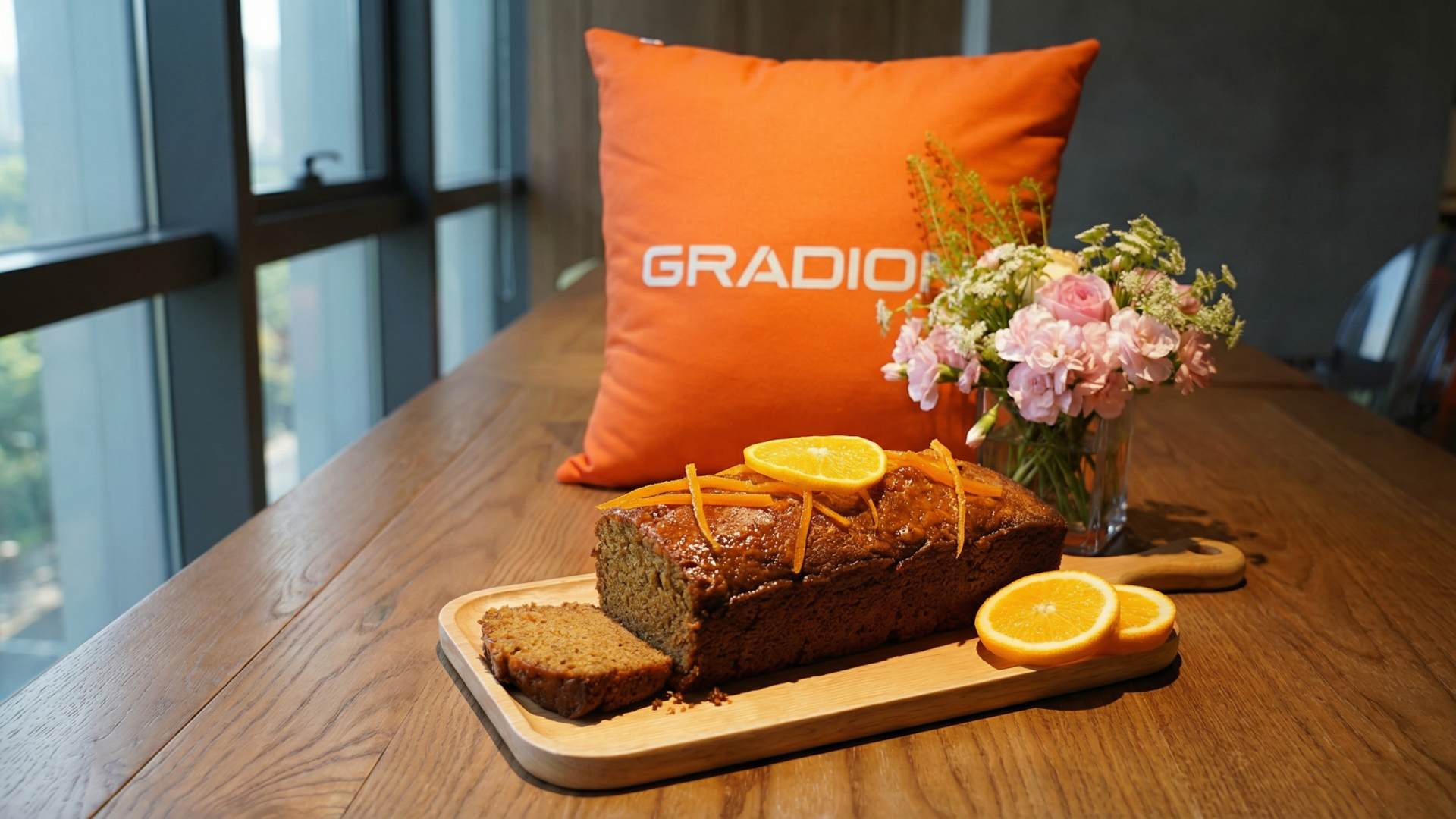

Sài Gòn in April pushes 37°C before noon. With humidity factored in, the “feels like” drifts somewhere north of 45°C – the kind of heat that makes your phone throw up a weather warning and your skin go damp the second you step onto the balcony. So naturally, this is when I decided to iterate on a cake recipe. Three versions. Over the course of two weeks. In a kitchen with an oven that has the temperament of a feral cat.
Version 1: Too sweet, too dry, still gone in minutes
The first attempt went straight to the office. My colleagues have long accepted their role as my involuntary test kitchen – every new recipe gets deployed to their desks first, accompanied by the standard disclaimer that their bellies might start bubbling after eating this. Everyone knows it’s a joke – but we keep saying it, because the bit is funnier the twentieth time than the first, and because what I bring to the office is usually rock solid (not literally) and delicious. We talk with a wink around here.
So: a bitter orange loaf cake – Seville orange marmalade folded into the batter, ground almonds for texture, citrus juice for brightness. The concept was solid. The execution was… eager. Too much sugar, not enough moisture, and my oven – which has never once in its life followed a temperature dial with any kind of loyalty – ran a little hot. The result was a cake that tasted good but hit your palate like a sugar freight train and crumbled like it had given up on structural integrity. My colleagues ate it anyway, because free cake on a Monday morning is free cake on a Monday morning, but the feedback was honest: too… (caught)… sweet (caught caught).
Fair.
Version 2: The one my boyfriend loved
Adjustments. Less sugar, yogurt worked into the batter for moisture and a subtle tang that plays well against the marmalade’s bitterness. Different oven settings – lower temperature, slightly longer bake time – because you don’t tame this oven, you negotiate with it. Like a hostage situation, but with cake.
Version 2 went home. My boyfriend (future husband, if he keeps eating my cakes with this much enthusiasm) had it with freshly brewed coffee – the beans hand-milled from a friend’s plantation in the Central Highlands, the kind of friend who grows coffee and tea and durian and just… sends you things. Never an announcement, never a price tag – just a package at your door one day because someone up in the mountains was thinking of you. (If you don’t have friends like that, I’m sorry. I’d share, but I’m not sharing).
The pairing was accidental and perfect. Strong Vietnamese coffee, bitter and full-bodied from beans that were probably still on the tree a week ago. Fresh lotus tea, brewed bitter and fragrant in a way that makes supermarket tea bags feel like a personal insult. And the cake – sweet, yes, but now balanced with the marmalade’s sharp citrus bite and the faintest sour note from the yogurt. Three kinds of bitterness meeting one kind of sweetness. He loved it. I loved it. We had seconds.
Version 3: Monday morning therapy
Fine-tuning. More yogurt, less sugar, and oven settings I’ve now committed to muscle memory because writing them down would imply my oven respects written agreements. Version 3 went back to the office – a Monday morning deployment, if you will.
If you’ve ever worked in an office, you know what Monday mornings feel like. Garfield wasn’t a cultural phenomenon because of the lasagna jokes – it was the Monday thing. That bone-deep, existential reluctance. The fluorescent lights feel brighter on Mondays, the coffee machine sounds like it’s judging you, and everyone in the room is wearing the expression of someone who got kidnapped from their weekend and dropped into a spreadsheet. That’s the room this cake walked into.
It disappeared in minutes. Soft, moist, full-bodied – the crumb held together but gave way easily, the marmalade’s bitterness cutting through the sweetness just enough to keep each bite interesting instead of cloying. Fruity and refreshing, which sounds like a wine review but genuinely applies here – in 37-degree heat, a heavy chocolate number would sit in your stomach like a brick. This one doesn’t. It’s light enough to feel like a treat, not a commitment.
Even one of my bosses – a man whose standards for baked goods have been calibrated by years of American cookies and cakes, the kind of rich-sweet-heavy tradition that makes European baking look restrained – said he liked it. Whether that’s diplomatic politeness or genuine approval, I’ll take it. The cake earned its spot.
The recipe
What you’re making here is a loaf cake. Nothing fancy, no showpiece – a Kastenkuchen, a loaf pan cake you can slice and serve with coffee or tea without needing a pastry degree or a particularly clean kitchen. The star ingredient is Seville orange marmalade – the proper kind, bitter and aromatic, with fine shreds of peel suspended in the jelly. I use Robertson’s Golden Shred (the one with Paddington on the label, imported, available at places like Annam Gourmet if you’re in Sài Gòn), but any quality bitter orange marmalade will do. What matters is that it’s made from Seville oranges and has actual peel in it – not the smooth, sweet stuff that tastes like orange-flavored sugar.
Ingredients
- 100 g unsalted butter (room temperature – unsalted matters here, most butter in Vietnam is lightly salted or even sweetened)
- 2 eggs
- 60 g unsweetened yogurt
- 200 g all-purpose flour
- 100 g sugar
- 60 g ground almonds
- 2 tsp baking powder
- 1 pinch of salt
- 3 tbsp bitter orange marmalade (for the batter – with peel shreds, not smooth)
- 3 tbsp bitter orange marmalade (for the glaze)
- Zest of 1 untreated lemon
- 6 tbsp orange juice (fresh is better, but bottled works)
- 6 tbsp lemon juice
Instructions
- Cream the base
Beat butter, sugar, and salt until light and fluffy. Add eggs one at a time, mixing well after each. - Build the batter
Stir in the 3 tablespoons of bitter orange marmalade, yogurt, and lemon zest. Add the ground almonds. Then alternate between adding the flour (mixed with baking powder) and the combined orange-lemon juice, folding gently until everything is just incorporated. Don’t overmix – you want a batter, not a paste. - Bake
Line a 25 cm loaf pan with parchment paper. Pour in the batter and smooth the top. Bake at 180°C (top and bottom heat, no fan) for about 45 minutes. Every oven is different (mine is aggressively different), so start checking at 40 minutes – a skewer inserted in the center should come out clean or with just a few moist crumbs. - Glaze
Let the cake cool completely in the pan. Once cooled, turn it out and brush a thin layer of bitter orange marmalade over the top. That’s it. Skip the powdered sugar, forget the fondant – just a glossy, sticky layer of marmalade that hits you with that Seville orange bitterness the second you take a bite.
Pairing notes
This cake was born to go with bitter drinks. Vietnamese coffee brewed strong, lotus tea, a sharp espresso – anything with its own bitterness will push back against the cake’s sweetness and let the citrus shine. It also works surprisingly well on a hot day (and if you’re in Sài Gòn right now, every day is a hot day) because it’s not heavy. You won’t find chocolate or cream cheese frosting or three layers of ganache weighing it down. Just butter, almonds, citrus, and enough sugar to make it a cake and not a bread.
If someone tells you it’s too bitter – they bought the wrong marmalade. Get the proper stuff. Paddington wouldn’t settle for less, and neither should you.
Hero image: Photo taken by me. It was visually extended on April 13, 2026, at 11:12 PM with the help of google/nano-banana-pro.